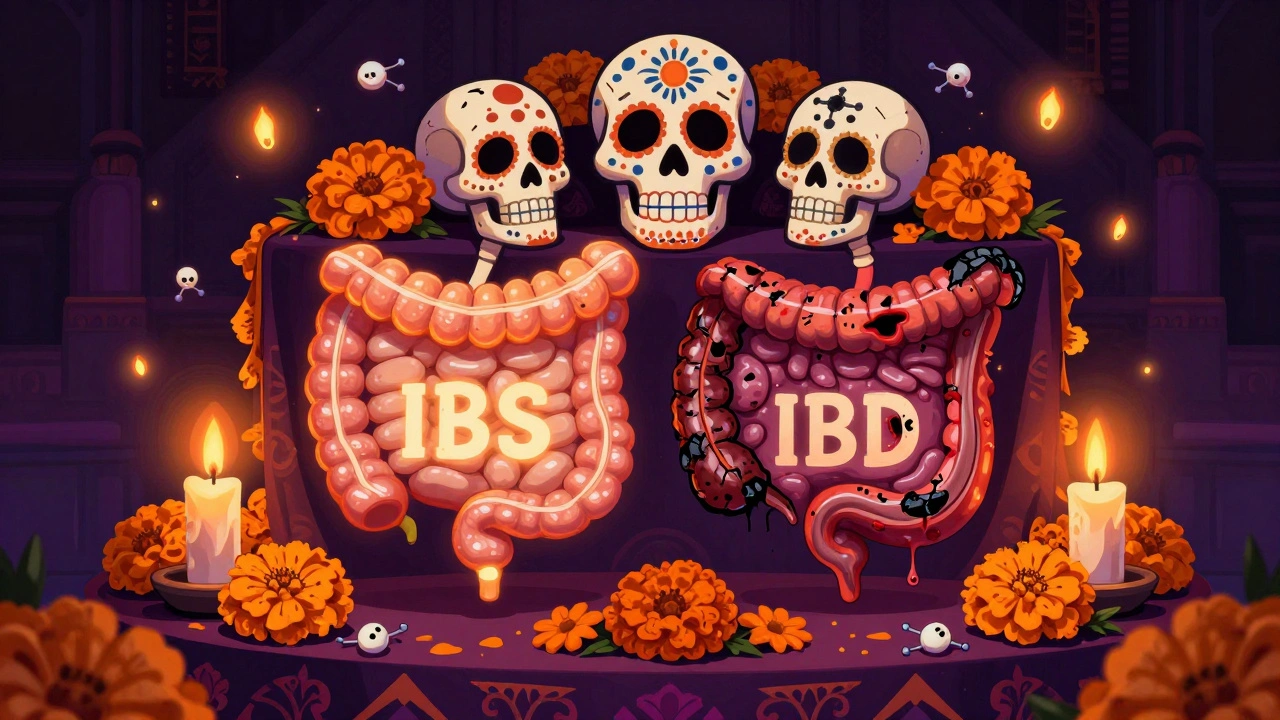
IBS vs IBD: Key Differences, Symptoms, and What You Need to Know
When your stomach is acting up, it’s easy to assume it’s just irritable bowel syndrome, a common functional gut disorder that causes cramping, bloating, and altered bowel habits without visible damage. Also known as functional bowel disorder, it affects up to 15% of people worldwide—but it’s not the same as inflammatory bowel disease, a group of chronic conditions involving immune-driven inflammation of the digestive tract.
IBS doesn’t cause ulcers, bleeding, or tissue damage. It’s like your gut’s alarm system is stuck on high, even when there’s no fire. IBD, on the other hand, includes Crohn’s disease, a condition where inflammation can hit any part of the GI tract, from mouth to anus, often leading to deep ulcers and strictures and ulcerative colitis, inflammation limited to the colon and rectum that causes bloody diarrhea and urgent bowel movements. These aren’t just "bad digestion"—they’re autoimmune conditions that can lead to hospitalizations, surgeries, and increased cancer risk if untreated.
People with IBS often feel better after a bowel movement. Those with IBD? They usually don’t. IBS symptoms flare with stress or certain foods—like dairy, beans, or spicy meals. IBD flares happen because the immune system attacks the gut lining, regardless of diet. Blood tests, colonoscopies, and biopsies can tell them apart. IBS shows up normal. IBD shows red flags: swelling, ulcers, abnormal tissue.
Treatment? IBS is managed with diet tweaks (low FODMAP), fiber, stress tools, and sometimes gut-targeted meds. IBD needs stronger stuff—anti-inflammatories, immunosuppressants, or biologics. You can’t treat IBD like IBS. And you can’t ignore IBD and hope it goes away. Misdiagnosing one for the other delays real care.
Both can make you feel isolated. Both can mess with your work, travel, and sleep. But only one requires lifelong monitoring for complications. If you’ve been told you have IBS but keep losing weight, having fevers, or noticing blood in your stool—get rechecked. It might be IBD. And if you have IBD and someone says it’s "just stress"—they’re wrong. This isn’t in your head. It’s in your gut.
Below, you’ll find real, evidence-based posts that break down how these conditions overlap in symptoms, how they’re diagnosed, what treatments actually work, and how to spot the warning signs that mean it’s time to see a doctor—not just pop an antacid.