
Ever wonder why some prescription drugs still cost hundreds of dollars a month-even after years on the market-while others suddenly drop to $10 with a generic version? It’s not random. It’s not a glitch. It’s the result of legal, technical, and financial barriers built into the system to protect profits, not patients.
Patents Aren’t the Only Roadblock
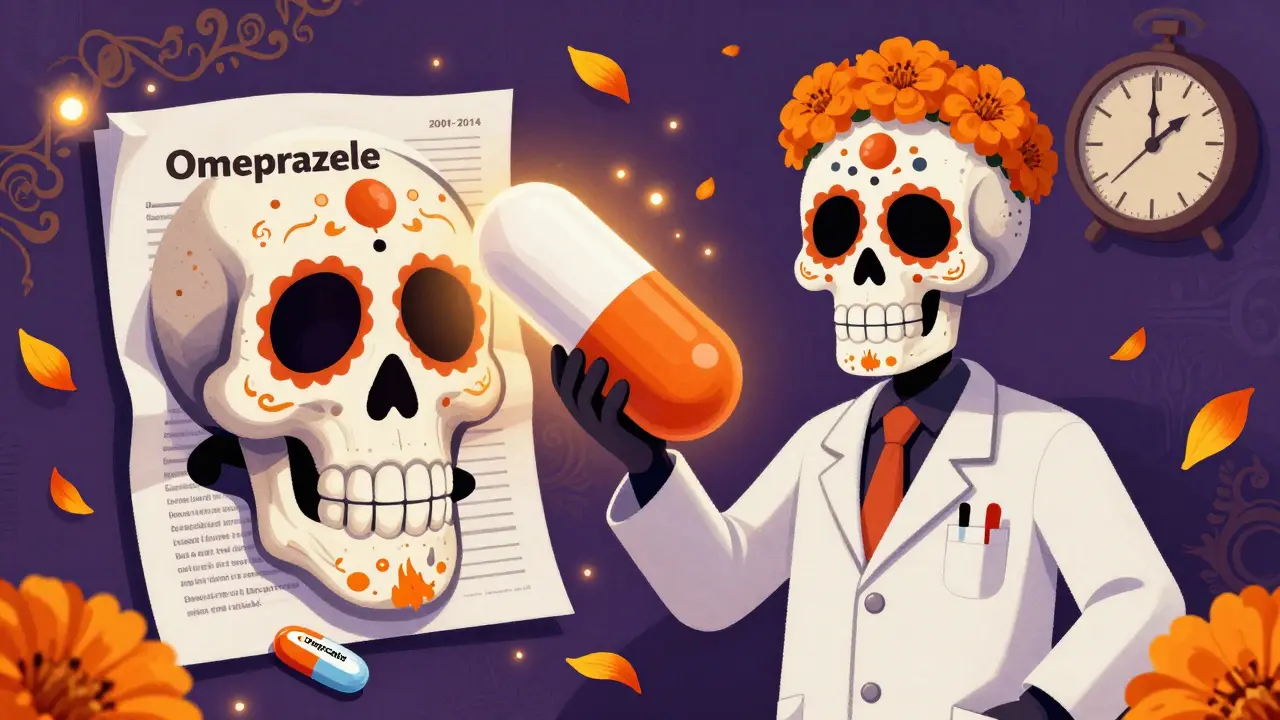
Most people think generic drugs become available as soon as a brand-name drug’s patent expires. That’s the simple story. The real one? It’s messy. The original patent for a drug usually lasts 20 years from the date it’s filed. But that’s just the starting line. Pharmaceutical companies file dozens, sometimes hundreds, of additional patents covering everything from the pill’s coating to how it’s made, when it’s taken, or even how it’s packaged. These aren’t always about innovation-they’re about delay. Take Nexium (esomeprazole). The original drug, Prilosec (omeprazole), lost its patent in 2001. But AstraZeneca didn’t let go. They tweaked the formula slightly, patented the new version, and rebranded it as Nexium. Suddenly, they had another 13 years of exclusivity. This tactic, called “product hopping,” is common. It doesn’t make the drug better-it just keeps generics off the shelf.Some Drugs Can’t Be Copied
Not all drugs are made the same. Simple pills with one active ingredient? Easy to copy. Complex mixtures? Not so much. Take Premarin, a hormone therapy for menopause. Its active ingredients come from the urine of pregnant horses. It’s not one compound-it’s a mix of 10 or more estrogen molecules, many of which aren’t even fully identified. No lab can perfectly replicate that exact blend. Even if a company tries, the FDA won’t approve it as “therapeutically equivalent” because the body may react differently. The same goes for Humira (adalimumab), a biologic used for rheumatoid arthritis and Crohn’s disease. Biologics aren’t made from chemicals-they’re grown in living cells. Tiny changes in the process change the final product. That’s why they don’t have generics. They have biosimilars, which are similar but not identical. The first biosimilar for Humira didn’t hit the U.S. market until 2023-seven years after its patent expired-because of legal battles and complex testing requirements.Manufacturing Is a Hidden Hurdle
Even when the active ingredient is simple, how the drug is delivered can block generics. Think of an inhaler like Advair Diskus. The active ingredients-fluticasone and salmeterol-are known. But the device that delivers them? That’s the real magic. The powder’s particle size, how it’s aerosolized, how deeply it reaches the lungs-all of it matters. A generic version might have the same chemicals, but if the delivery system doesn’t match, the drug won’t work the same way. The FDA requires extensive testing to prove equivalence, and many companies just don’t bother. Same with extended-release pills like Prozac Weekly. These are designed to release the drug slowly over days. Change the coating or the granules even slightly, and the release profile shifts. That could mean too much drug at once-or not enough. The risk is too high for many generic manufacturers to take on without guaranteed returns.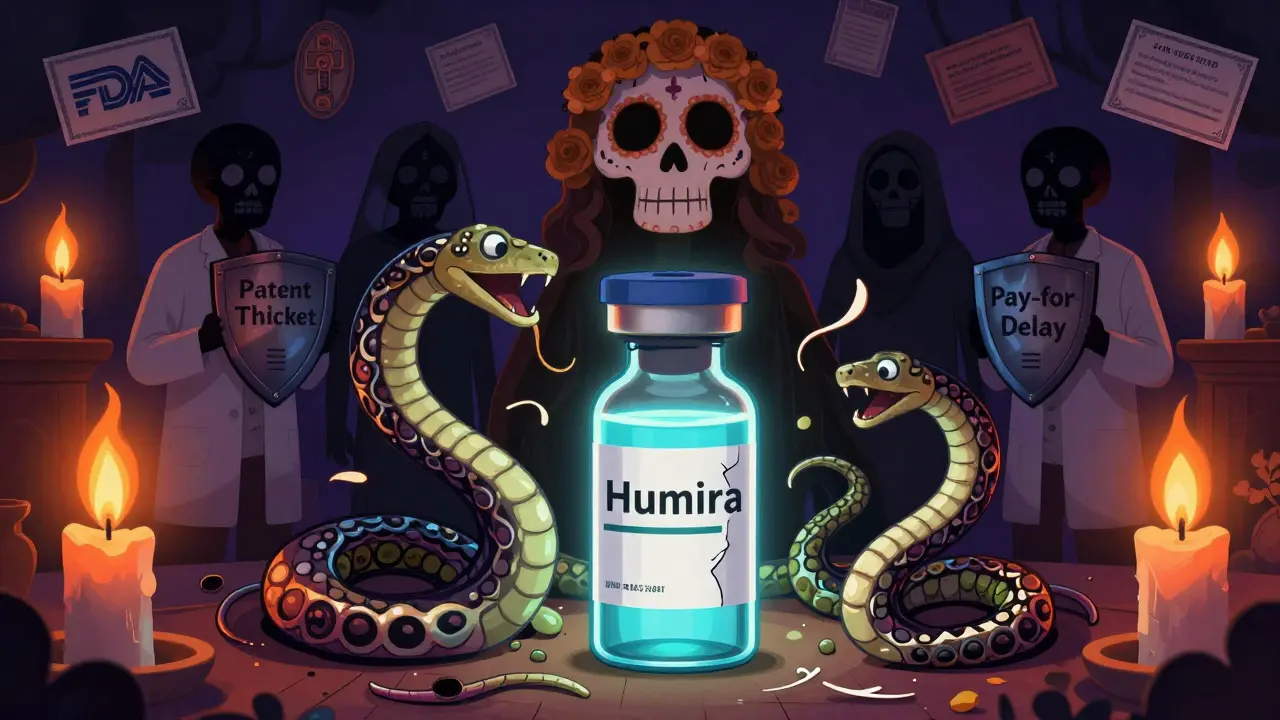
Price Gaps Are Stark
The cost difference between brand-name drugs with and without generics isn’t close. A 2022 GoodRx analysis found that brand-name drugs with no generic alternative cost, on average, 437% more than similar drugs that do have generics. For example, the EpiPen-an epinephrine auto-injector-cost over $600 for a two-pack in 2016. After years of patent extensions and design tweaks, it still had no true generic. By 2023, a generic version finally arrived… and it cost $150. That’s still expensive, but it’s a 75% drop. Compare that to Lipitor (atorvastatin). When its patent expired in 2011, more than 20 generic versions flooded the market. Within a year, the price dropped 85%. Today, a 30-day supply costs less than $10. Patients with chronic conditions like epilepsy, thyroid disease, or heart failure feel this most. Even small differences in drug absorption can cause serious side effects. That’s why some doctors and patients stick with the brand-even when it’s 10 times more expensive.Legal Tactics That Delay Generics
There’s a dark side to the system: “pay-for-delay” deals. Sometimes, the brand-name company pays a generic manufacturer to stay away. Yes, you read that right. In exchange for cash, the generic maker agrees not to launch its version for months or even years. The Federal Trade Commission found 297 of these deals between 1999 and 2012, costing consumers over $3.5 billion a year. The CREATES Act of 2019 tried to stop this by forcing brand-name companies to provide samples to generic makers for testing. Before that, some companies refused to sell samples, making it impossible for generics to even begin testing. Now, it’s illegal-but enforcement is slow.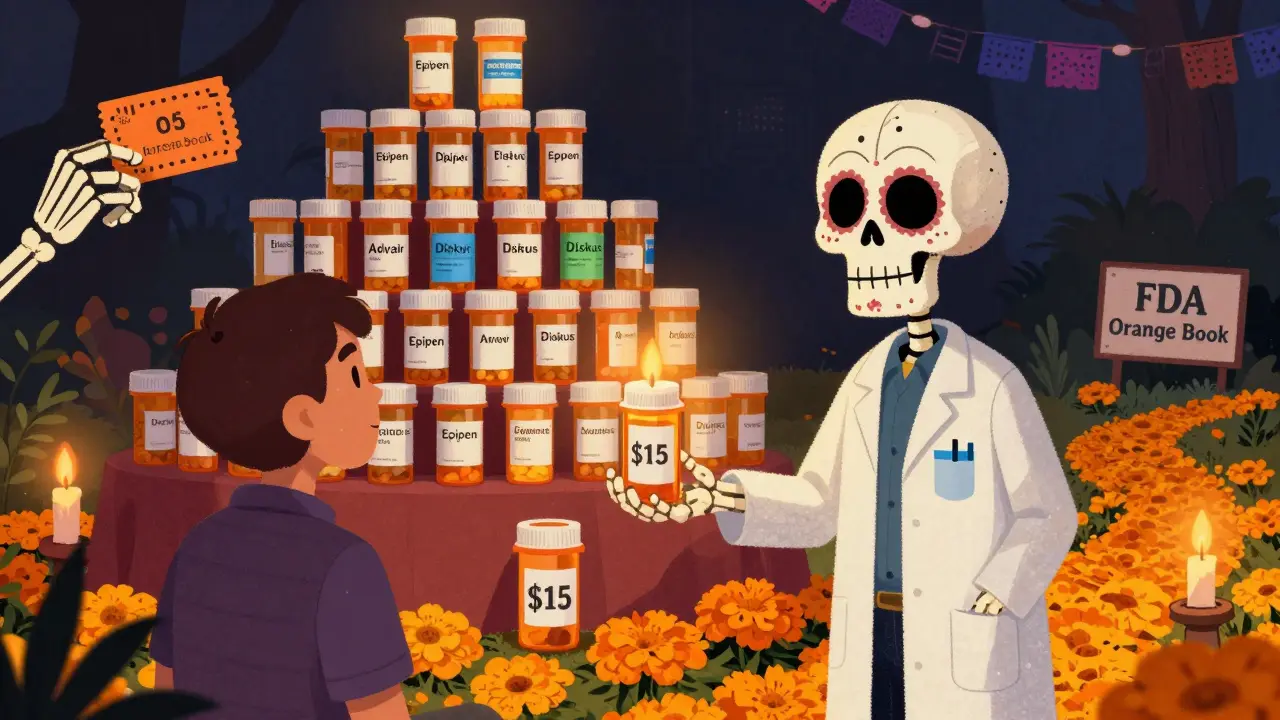
Why Some Drugs Stay Exclusive Forever
About 25% of top-selling brand-name drugs still have no generic version-even after patents expire. Why?- Complex biologics (like insulin, cancer drugs, and autoimmune treatments) require years of testing and cost millions to develop.
- Drugs with narrow therapeutic windows (where the difference between a helpful dose and a dangerous one is tiny) demand extreme precision.
- Orphan drugs for rare diseases have tiny markets. No company wants to invest in making a generic for 5,000 patients.
- Patent thickets-dozens of overlapping patents-can extend exclusivity by 5 to 7 years beyond the original term.
What Patients Can Do
You don’t have to accept high prices without a fight.- Check the FDA’s Orange Book. It lists all patents and exclusivity periods for brand-name drugs. If a patent expired years ago and there’s still no generic, ask your pharmacist why.
- Ask if a different drug in the same class works. For example, if Viibryd (vilazodone) has no generic, sertraline or fluoxetine might work just as well-and cost a fraction.
- Use tools like GoodRx or SingleCare. Even without a generic, you can often find discount coupons that cut the price in half.
- Talk to your doctor about patient assistance programs. Many drugmakers offer free or low-cost versions to those who qualify.
The Future: More Generics, But Not All
The FDA approved 27% more complex generics in 2022 than in 2021. Biosimilars are on the rise-75 are expected by 2025. That’s progress. But experts agree: about 5% of drugs will likely never have true generics. These are the ultra-complex biologics, the ones made from living cells, the ones with delivery systems too intricate to copy. For those, we’ll rely on biosimilars-and hope they’re affordable. The bottom line? Generics aren’t a magic fix. But when they’re available, they save lives and money. When they’re blocked, it’s not because they can’t be made-it’s because someone decided it wasn’t profitable to let them.Why can’t generic companies just copy any drug once the patent expires?
They can copy simple pills with one active ingredient-but not complex drugs. Some drugs, like biologics or those with unique delivery systems (inhalers, patches, extended-release tablets), require exact replication of manufacturing processes, inactive ingredients, or physical design. Even small changes can affect how the drug works in the body. The FDA requires extensive testing to prove safety and effectiveness, and many companies can’t justify the cost.
Are generic drugs less effective than brand-name drugs?
For most drugs, no. The FDA requires generics to have the same active ingredient, strength, and dosage form-and to be absorbed at the same rate and amount as the brand. But for drugs with narrow therapeutic windows-like epilepsy or thyroid meds-even small differences can matter. Some patients report feeling different on generics, and in those cases, staying on the brand may be necessary. Always talk to your doctor before switching.
What is product hopping, and how does it block generics?
Product hopping is when a drug company makes a minor change to its drug-like switching from a pill to a capsule, or adding a new coating-just before the patent expires. They then market the new version as improved and get a new patent. This resets the clock on generic competition. It doesn’t make the drug better, but it keeps generics off the market for years. Nexium is a famous example.
Why are some drugs so expensive even after their patent expires?
If no generic enters the market, the brand-name company still has a monopoly. They can keep prices high because patients have no cheaper alternative. This often happens with complex drugs, orphan drugs, or when patent thickets or pay-for-delay deals prevent generics from launching. Even after patent expiration, legal and regulatory barriers can delay competition for years.
Can pharmacists help me find cheaper alternatives?
Yes. Pharmacists know which drugs have generics and which ones can be substituted safely. If your drug has no generic, they can often suggest another medication in the same class that does. For example, if Viibryd has no generic, sertraline or fluoxetine might work just as well at a fraction of the cost. Always ask your pharmacist before filling a prescription.
Lauren Wall
January 22, 2026 AT 02:42This is why I refuse to take brand-name meds unless absolutely necessary. Pharma’s just playing games with our lives.
And yet, people still act shocked when their co-pay hits $500.
Wake up.
It’s not magic. It’s greed.
Jasmine Bryant
January 22, 2026 AT 23:09Wait so if a drug has a complex delivery system like an inhaler, why can’t they just copy the device too? I mean, it’s not like the tech is secret, right? I’ve seen generic nebulizers and stuff…
Or is it that the FDA makes it so expensive to test that no one wants to bother?
Also, I think I read somewhere that some companies buy up the patents just to sit on them… is that true??
Also also, anyone know if this applies to insulin too?? I’m trying to figure out why mine still costs $300…
Liberty C
January 23, 2026 AT 20:47Let’s be brutally honest: the pharmaceutical industry is a legalized extortion racket dressed up in white coats and FDA seals.
They don’t innovate-they litigate.
They don’t cure-they cobble together patent thickets like a toddler stacking Legos to block the door to the candy jar.
And the public? We’re the suckers who keep handing over our paychecks while they sip champagne in Zurich.
Meanwhile, a child in rural India can’t get a generic version of a drug that’s been off-patent for a decade because some lawyer in Delaware filed a ‘method of administration’ patent on a Tuesday.
It’s not capitalism. It’s feudalism with a corporate logo.
shivani acharya
January 25, 2026 AT 14:53Oh wow, so now we’re supposed to believe this is just about ‘complexity’ and ‘testing’?
Let me guess-next they’ll tell us the reason your iPhone battery dies in 2 hours is because ‘the tech is too advanced to replicate’.
Wake up, people. This is all orchestrated.
Big Pharma owns the FDA. They own the doctors. They own the patents. They own the lobbyists.
And they’re not just delaying generics-they’re killing people slowly so they keep buying $600 EpiPens.
Remember when they hid the opioid crisis behind ‘pain management’?
Same playbook.
Same evil.
Same blood money.
And now they’re doing it with asthma inhalers and insulin.
They don’t care if you die.
They care if you stop paying.
Neil Ellis
January 25, 2026 AT 20:58Honestly, I think there’s hope here.
Look at how biosimilars are finally starting to come online-75 by 2025? That’s huge.
And the FDA approving 27% more complex generics? That’s momentum.
It’s slow, sure. But it’s movement.
And every time someone asks their pharmacist, checks the Orange Book, or switches to a cheaper alternative… that’s a win.
We’re not powerless.
We just have to be smarter than the system thinks we are.
And hey-if you’re reading this, you already are.
Lana Kabulova
January 26, 2026 AT 19:58Wait-so if Humira’s patent expired in 2016, why did the first biosimilar only come out in 2023? That’s SEVEN YEARS?
And you’re telling me it’s because of ‘legal battles’ and ‘complex testing’?
But what if those ‘legal battles’ are just companies paying each other to delay?
And what if the ‘complex testing’ is just a cover so they can drag it out for a decade?
And why does the FDA allow this?
Why isn’t there a law that says if a patent expires, the generic must be approved within 12 months?
Why isn’t this illegal?
Why isn’t this a criminal offense?
Why are we still letting this happen?
And why does no one talk about this on the news?
Someone answer me.
PLEASE.
Rob Sims
January 27, 2026 AT 02:21Oh wow, so the real villain here isn’t the greedy CEO-it’s the *FDA* for being too slow?
Let me guess-you also think the sun rises because the rooster crows.
Let’s be real: the FDA is just the janitor cleaning up after Big Pharma’s crime scene.
The real problem? The entire system is designed to fail patients.
And you know who profits? The same people who write the laws.
And you know who votes for them?
Us.
So yeah, blame the system.
But first, blame yourself for letting it exist.
arun mehta
January 28, 2026 AT 14:30Respectfully, the situation is far more nuanced than mere corporate malice.
Biologics require living cell cultures, precise pH levels, temperature-controlled environments, and sterile conditions that cannot be replicated without decades of R&D investment.
Moreover, regulatory agencies worldwide demand clinical equivalence data across thousands of patients-a process that takes 5–7 years and costs upwards of $100 million.
While patent abuse is regrettable, the technical and financial barriers are real.
That said, we must advocate for policy reforms that incentivize biosimilar development without compromising safety.
Let us not confuse frustration with fact.
Thank you for raising this critical issue.
May we all strive for balance, transparency, and compassion in healthcare.
🙏
Chiraghuddin Qureshi
January 30, 2026 AT 13:39Bro, I live in India, and my cousin gets insulin for $5 a vial here.
Same drug.
Same company.
But here, no patent tricks.
Just plain old competition.
So yeah, it’s not about science.
It’s about where you live.
And that’s the real tragedy.
🌍💊