
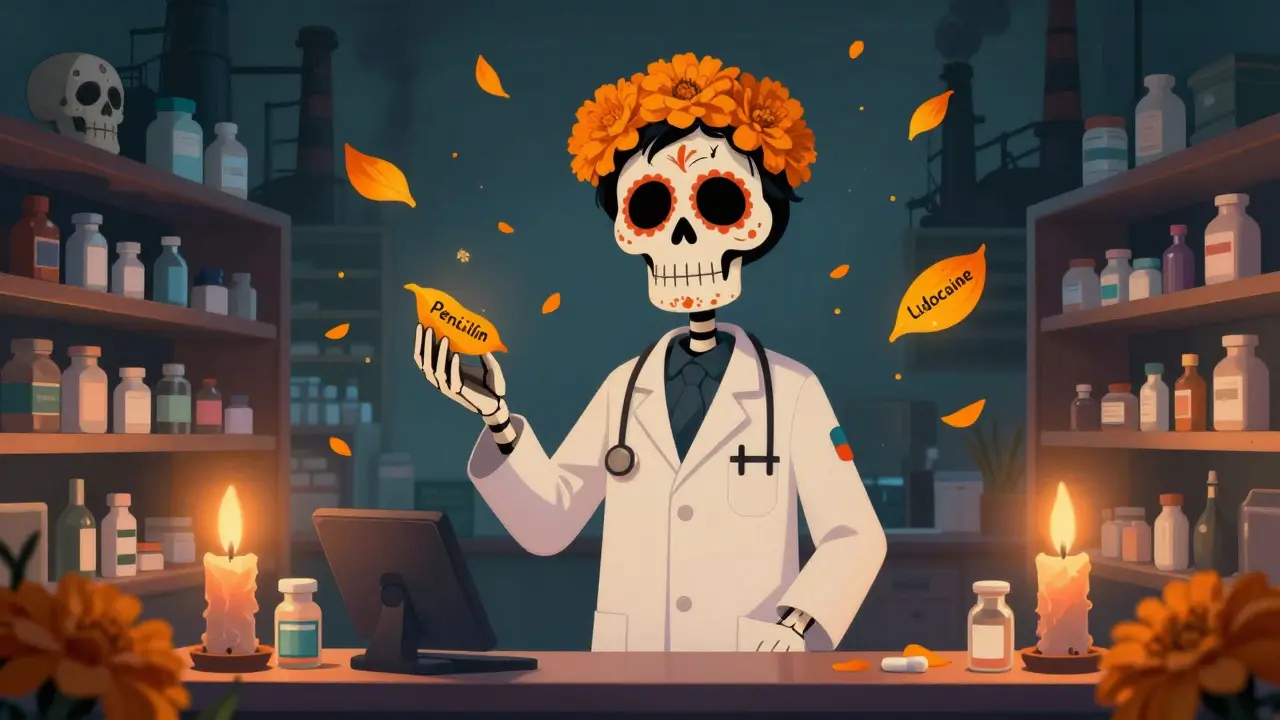
Every year, hospitals in the U.S. scramble to find basic medications-antibiotics, anesthesia, chemotherapy drugs-that should be easy to get. But they’re not. These aren’t rare or experimental drugs. They’re the generic drugs millions of Americans rely on every day. And for years, they’ve been disappearing from shelves. The reason isn’t one single mistake. It’s a broken system built on thin margins, overseas factories, and zero backup plans.
Manufacturing Problems Are the #1 Cause
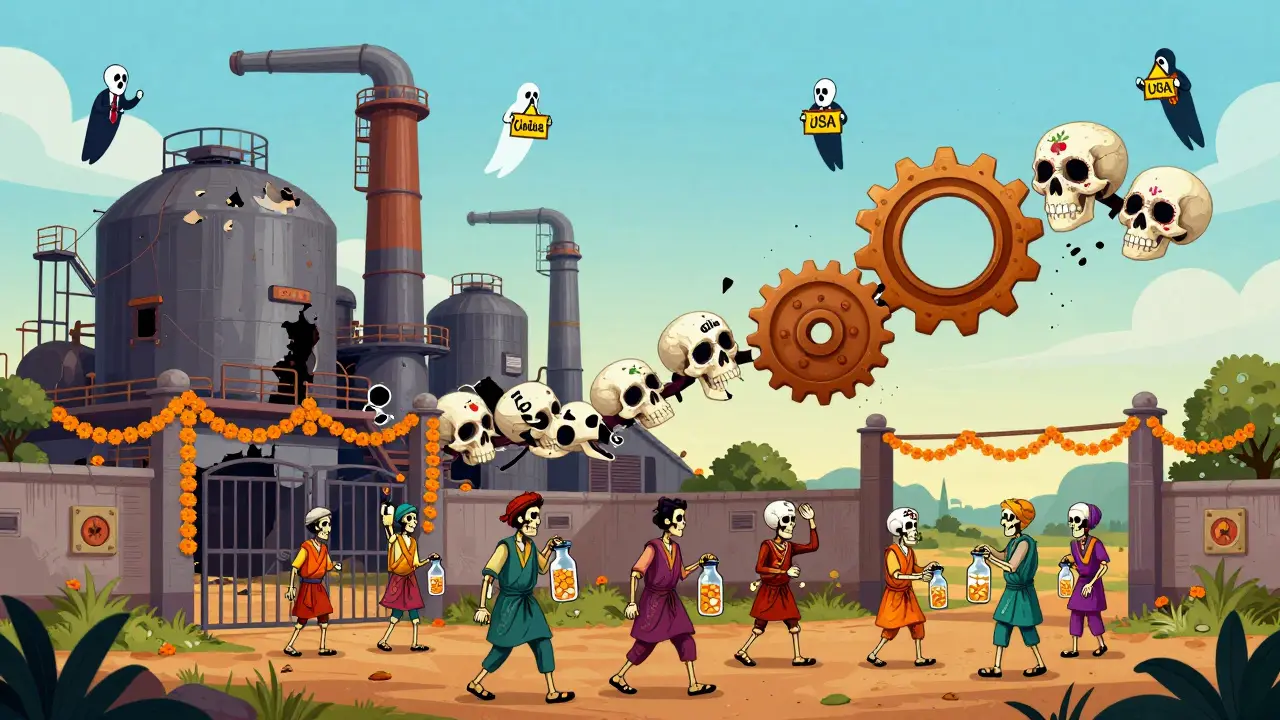
More than 60% of all drug shortages in the U.S. come from manufacturing failures. That’s not a guess-it’s FDA data from 2020. A single contaminated batch can shut down an entire production line. Equipment breaks. Clean rooms fail. Inspectors shut down facilities because of poor hygiene or outdated systems. These aren’t big, flashy failures. They’re quiet, avoidable mistakes that happen because manufacturers are cutting corners to survive.
Generic drug makers operate on razor-thin profits. While brand-name drugs can earn 30-40% margins, generics often make less than 15%. That leaves little room for investment in modern equipment, staff training, or quality control. When a factory gets flagged by the FDA, it doesn’t just lose a few weeks of production. It loses months-or sometimes, it never restarts. And when one plant goes dark, there’s often no one else who can make the same drug quickly.
Overseas Dependence Creates a Single Point of Failure
Eighty percent of the active ingredients in generic drugs come from just two countries: China and India. That’s not diversity-it’s a gamble. One flood in a Chinese factory. A labor strike in an Indian plant. A customs delay at a port. Any of these can ripple across the entire U.S. supply chain.
Most U.S. drugmakers don’t own the factories that make the raw materials. They outsource everything. That means they have no control over what happens after the API-active pharmaceutical ingredient-leaves the factory. And because these suppliers serve dozens of clients, they prioritize bigger, more profitable orders. If a hospital needs 10,000 vials of a generic antibiotic, but a big pharmacy chain orders 500,000 vials of a different generic, the smaller order gets pushed to the back of the line.
Worse, many of these overseas facilities aren’t inspected as often as they should be. The FDA can’t be everywhere. And even when they do inspect, they can’t force changes. They can only warn. And if a company doesn’t fix the problem fast enough, the drug gets pulled from the market. No warning. No backup. Just silence.
No Extra Capacity Means No Safety Net
Think of a factory like a restaurant. If you only have one oven and it breaks, you can’t serve meals until it’s fixed. That’s how generic drug manufacturing works. Companies don’t build extra capacity because it’s too expensive. They run their lines at 95%+ capacity. No slack. No buffer. No room for error.
This isn’t smart business. It’s desperation. When you’re making pennies per pill, spending millions to build a second production line doesn’t make sense-until the first one fails. Then it’s too late. There’s no one else who can fill the gap. And because the market is so price-sensitive, no new company wants to enter. Why invest millions to build a plant when you might lose money on every bottle you sell?
That’s why over 3,000 generic drugs have been discontinued since 2010. Not because they’re unsafe. Not because they’re outdated. Because no one can make them profitably anymore.
Consolidation Killed Competition
Thirty years ago, dozens of companies made generic drugs. Today, just a handful control most of the market. A few big players produce the same drugs in the same factories. That means when one fails, everyone suffers.
Pharmacy Benefit Managers (PBMs)-the middlemen who negotiate drug prices for insurers and employers-control about 85% of prescription spending. They push for the lowest possible price. And manufacturers, desperate to stay in business, lower their prices even further. This creates a death spiral: lower prices → lower profits → less investment → more shutdowns → fewer suppliers → even higher prices when supply returns.
And here’s the cruel twist: PBMs often don’t even tell hospitals or pharmacies which drugs are in short supply. They just switch the formulary without warning. So a hospital orders a drug, gets a shipment, and finds out it’s the wrong version-or none at all. No heads-up. No plan B.
The U.S. Has No Stockpile. Canada Does.
Canada doesn’t have fewer shortages. But it handles them better. Why? Because they plan ahead. Canada has a national stockpile of critical drugs. If a shortage hits, they pull from reserves. They coordinate between regulators, hospitals, and manufacturers. They know who makes what, where, and how much is left.
The U.S. has a stockpile too-but it’s only for disasters like bioterrorism or natural catastrophes. Not for a routine shortage of a heart medication or an antibiotic. There’s no federal system to track inventory across states. No national alert. No emergency protocol. Just hospitals calling each other, begging for vials.
One study found that one in five drug shortages involve a single supplier. No alternatives. No backups. Just one factory, one country, one company holding the entire supply.

Patients Pay the Price
When a drug disappears, it’s not just a logistics problem. It’s a medical emergency.
Hospitals have to switch patients to less effective or more toxic alternatives. Cancer patients get delayed treatments. ICU patients get weaker anesthetics. Diabetics get insulin with different absorption rates. Pharmacists spend 50-75% more time tracking down drugs than they did 10 years ago.
And in a quarter of all shortage cases, no one knows why the drug disappeared. No explanation. No timeline. Just an empty shelf.
What’s Being Done? Not Enough.
There are bills in Congress trying to fix this. The RAPID Reserve Act proposes building a national stockpile of critical generic drugs and offering tax incentives for U.S.-based manufacturing. The FTC is investigating PBMs for anti-competitive behavior. The AMA is pushing to stop formulary switches that favor drugs in short supply.
But these are Band-Aids. The real fix? Change the economics. Pay manufacturers enough to make generic drugs profitably. Reward companies that keep extra capacity. Fund domestic API production. Force transparency so everyone knows where drugs are and who’s making them.
Until then, the system will keep breaking. And patients will keep waiting.
Andrew Gurung
December 26, 2025 AT 22:16Paula Alencar
December 28, 2025 AT 21:04When a hospital is forced to substitute a life-sustaining chemotherapy agent with a less efficacious alternative due to supply chain fragility, we are not witnessing a logistical inconvenience-we are witnessing a preventable tragedy. The FDA’s regulatory oversight, while well-intentioned, is structurally impotent without the authority to enforce capital investment in manufacturing resilience.
Moreover, the dominance of Pharmacy Benefit Managers in dictating pricing dynamics has created a perverse incentive structure wherein profitability is sacrificed on the altar of lowest-bid procurement. This is not free-market competition; it is predatory consolidation disguised as efficiency.
Canada’s national stockpile model is not merely prudent-it is morally superior. Why do we insist on reinventing the wheel with each crisis, when the blueprint for resilience has been demonstrated across borders?
Nikki Thames
December 29, 2025 AT 19:08And let’s be honest: if this were happening to insulin for rich people’s kids, Congress would’ve passed a law yesterday. But it’s just ‘generic’ drugs. For the poor. The elderly. The uninsured. So we shrug. And wait for the next quiet crisis.
Chris Garcia
December 30, 2025 AT 13:22China and India produce the world’s generics because they have scale, yes-but also because they have state-backed incentives. The U.S. has no vision. Only spreadsheets. We have forgotten that health is not a market-it is a covenant between society and its most vulnerable.
Let us not praise Canada’s stockpile as if it were magic. Let us build our own-with dignity, with foresight, and with the courage to pay what is necessary to save lives.
James Bowers
January 1, 2026 AT 06:15Janice Holmes
January 2, 2026 AT 15:23And now they want to ‘optimize’ the supply chain further? Are you kidding me? We’re not optimizing-we’re gambling with chemotherapy schedules. This isn’t a business model. It’s a death sentence wrapped in a PowerPoint.
Alex Lopez
January 3, 2026 AT 08:50Also, PBMs? They’re being investigated. Bills are moving. Change is coming. Maybe not fast enough. But it’s coming. 🤞
Gerald Tardif
January 4, 2026 AT 07:23What we need isn’t just policy. It’s respect. Pay the workers. Pay the manufacturers. Treat them like the lifeline they are. Then, and only then, will the shelves stop going empty.
Monika Naumann
January 5, 2026 AT 17:37