
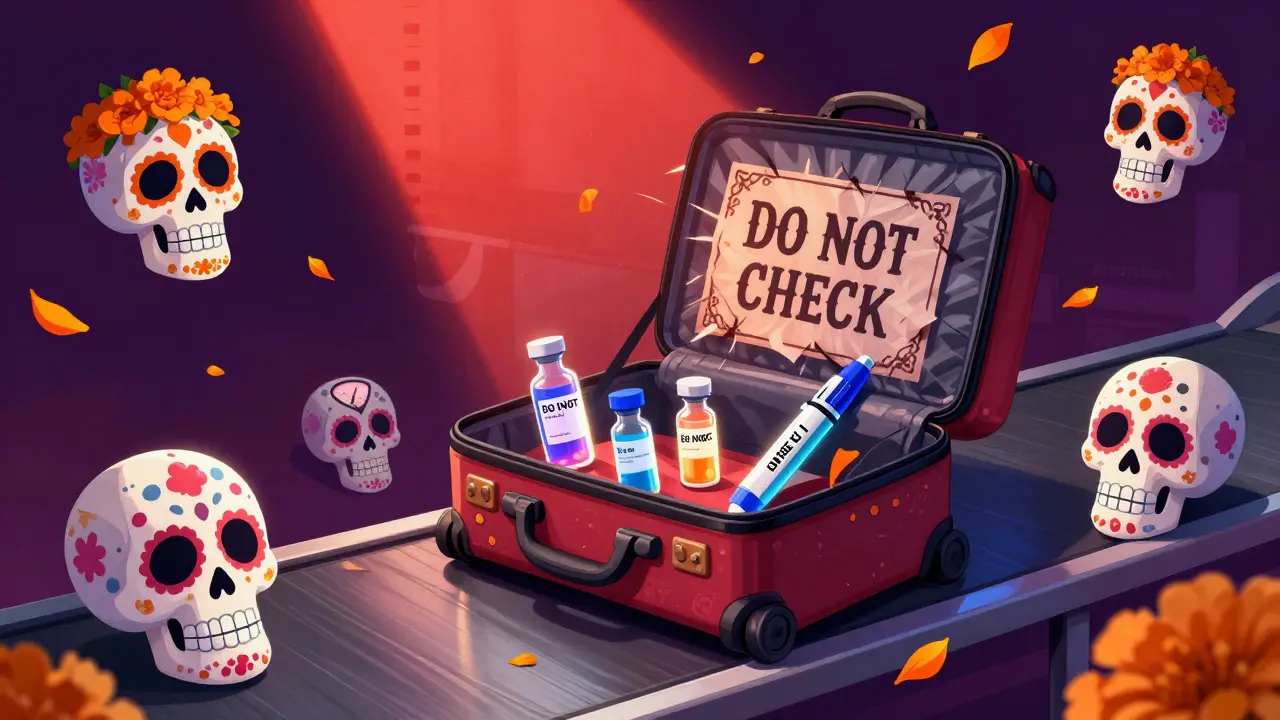
When you’re packing for a trip, your passport, clothes, and charger usually get top billing. But if you’re taking medications-especially insulin, epinephrine, or other temperature-sensitive drugs-your meds need just as much attention. A single day in a hot car or a lost suitcase can turn your prescription into a useless, even dangerous, item. This isn’t just a minor inconvenience. It’s a real health risk.
Why Medications Break Down on the Go
Most people don’t realize that pills and liquids don’t just sit there quietly in your bag. Heat, cold, and humidity can wreck them. The FDA says 87.3% of medications need to stay between 68°F and 77°F (20°C-25°C) to work properly. That’s room temperature. But what happens when you leave your pill bottle in a glove compartment on a sunny day? The National Weather Service recorded glove compartment temps hitting 158°F (70°C) in Arizona. That’s hotter than an oven.
Insulin is one of the most vulnerable. If it’s exposed to temperatures above 86°F (30°C) for more than two hours, it can lose up to 37% of its potency. That’s not a small drop. That’s enough to send someone into diabetic ketoacidosis. A Reddit user named u/PharmaNurseJen shared a story from 2022: a diabetic traveler’s insulin went bad after being left in a car trunk at 95°F for three hours. They ended up in the ER. That’s not rare. The r/Diabetes subreddit has over 200 documented cases of blood sugar crashes linked to spoiled insulin during travel.
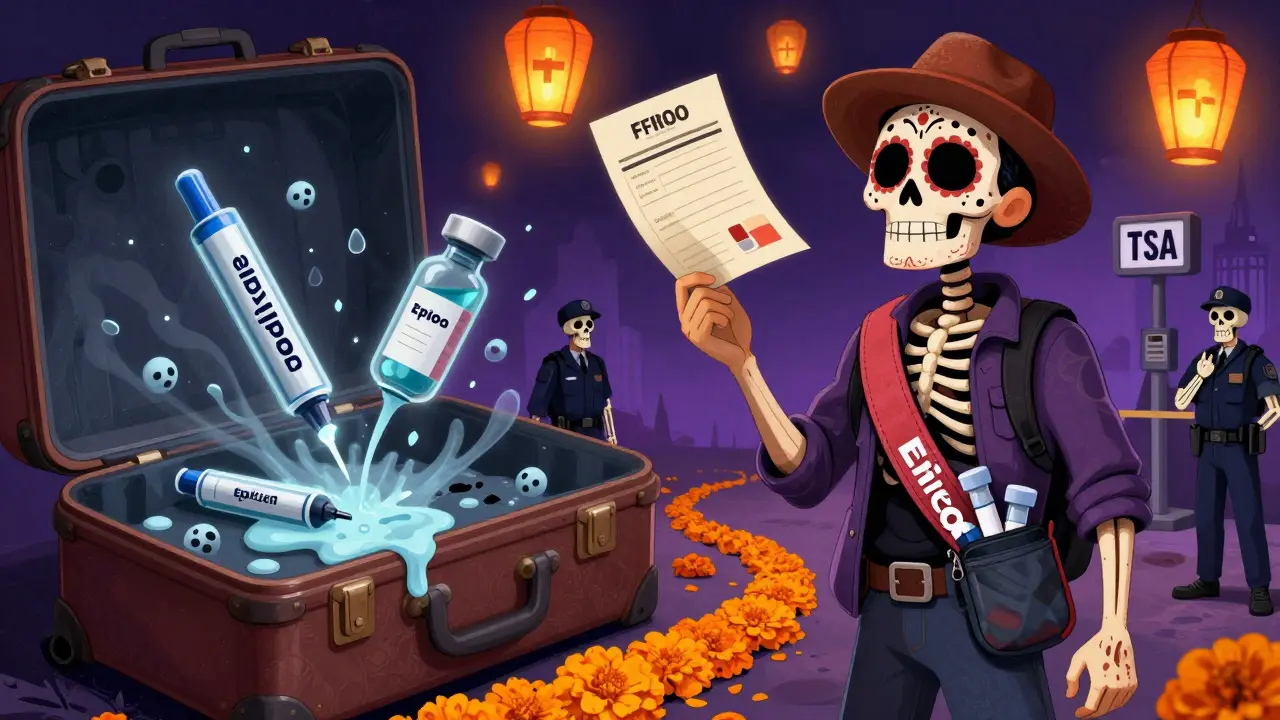
Even epinephrine auto-injectors (EpiPens) aren’t safe from the cold. One FDA report from December 2022 described a traveler whose EpiPen failed during anaphylaxis because it had been frozen in checked luggage. The device didn’t deliver the full dose. That’s a life-or-death failure.
What You Need to Pack: The Essentials
Don’t just throw your meds in a purse or backpack. Here’s what actually works:
- Keep them in original bottles. The pharmacy label has the National Drug Code (NDC), your name, dosage, and prescribing doctor. TSA requires this. If you transfer pills to a pill organizer, you risk being pulled aside for secondary screening-which adds an average of 22 minutes to your security line. And if you’re overseas, customs officials may not recognize a generic container. A Johns Hopkins study found that keeping meds in original packaging reduces identification errors by 92.4% during international incidents.
- Insulin and other refrigerated meds need a cooler. Not just any cooler. You need one tested to hold 36°F-46°F (2°C-8°C) for at least 72 hours. Two FDA-cleared options: the Frio Wallet is a reusable gel pack that stays cool for 45 hours without ice, and the TempAid MedCooler uses phase-change material and lasts up to 72 hours. Both have been verified with data loggers by travelers. Pre-freeze the gel packs for 12 hours at 0°F (-18°C) before you leave.
- Carry-on only. Never check your meds. Bags get lost. Bags get exposed to extreme temperatures in cargo holds. The CDC says 29.8% of medication issues during travel come from lost or delayed luggage. If you’re flying, keep your meds in your carry-on. Always.
- Know the TSA 3-1-1 rule-but know the exceptions. Liquids must be 3.4 oz (100ml) or less and in a single clear plastic bag. But if you need more-for insulin, liquid antibiotics, or liquid pain meds-you can declare them. Bring a TSA Medical Notification Form (TSA-1400) and a doctor’s note. You won’t be turned away. You’ll be helped.
What to Do Before You Leave
Don’t wait until the day before your trip. Start planning 14 days out.
- Refill early. Medicare Part D and most insurers let you refill prescriptions up to 5 days early. Use that window. If you’re running low, call your pharmacy now. They can often ship a travel supply to your destination.
- Get a doctor’s letter. If you’re going overseas, 92 countries require a letter on official letterhead listing your meds, dosages, and why you need them. The International Association for Medical Assistance to Travellers confirms that 78.3% of travelers with this letter had smoother customs processing. It’s not optional for international trips.
- Adjust for time zones. If you’re crossing time zones, talk to your pharmacist 7 days before departure. Taking your morning pill at 3 a.m. local time? That’s not ideal. For circadian rhythm meds (like melatonin or blood pressure pills), the American Academy of Sleep Medicine recommends adjusting your dose time by 15 minutes per day until you’re synced up.
Pill Organizers: Good or Bad?
This one’s tricky. On one hand, 68.4% of frequent travelers use pill organizers for convenience, according to AAA’s 2022 survey. On the other hand, 72.3% of pharmacists say they’re risky. Why? Because if you lose the organizer, you lose all your meds. And if you’re stopped at customs, you can’t prove what’s inside. The Institute for Safe Medication Practices reports a 27.8% spike in medication errors during travel when organizers are used. If you must use one, keep the original bottles in your carry-on as backup. Never rely on the organizer alone.
New Tech on the Horizon
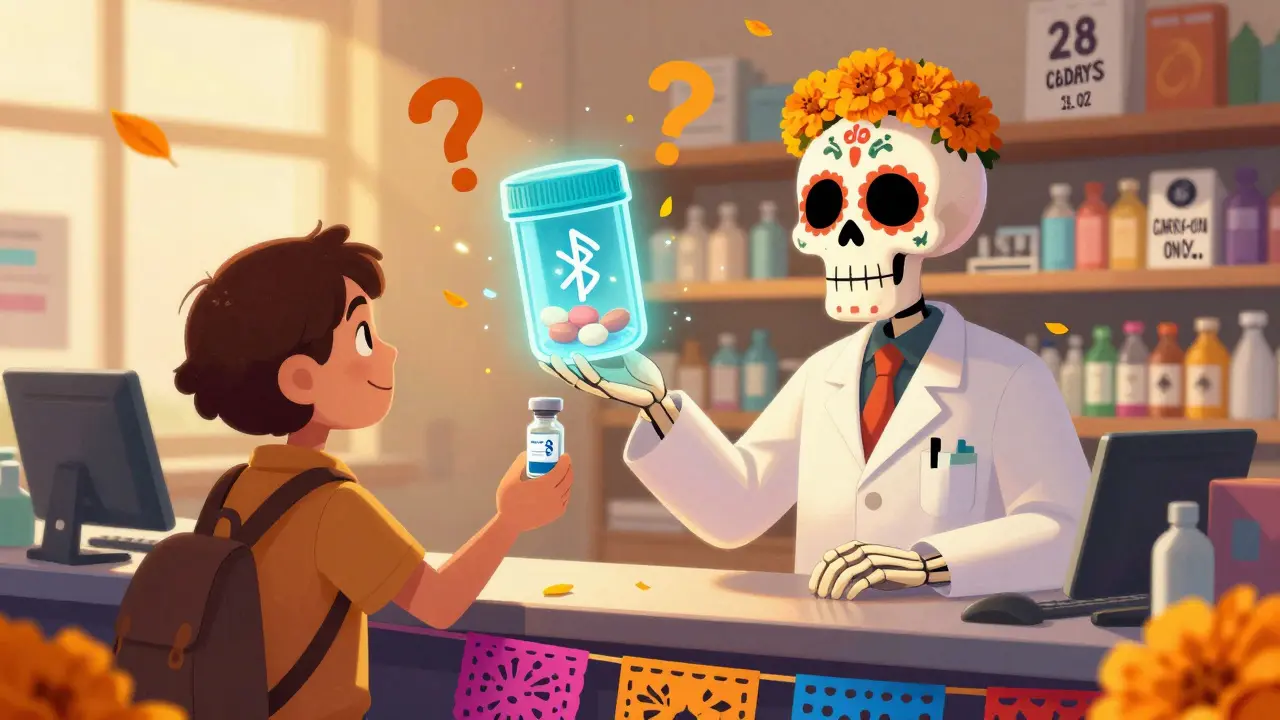
Technology is catching up. In 2023, the FDA approved temperature-indicating labels-like 3M’s MonitorMark-that change color if the med hits 86°F. You’ll see these on new prescriptions soon. The FAA also mandated temperature-controlled storage in aircraft galleys starting in 2024. And by 2026, smart pill containers with Bluetooth temperature sensors (currently in Phase 3 trials by Proteus Digital Health) will hit the market. These will alert your phone if your insulin gets too warm. But don’t wait for the future. Use what works now.
What Happens If You Forget Everything?
Let’s say you’re on the road, your insulin got warm, and you’re not sure if it’s still good. Here’s what to do:
- Don’t use it if it looks cloudy, clumpy, or discolored. That’s a sign it’s broken.
- If you’re diabetic, check your blood sugar more often. If it’s spiking unexpectedly, assume the insulin failed.
- Go to a local pharmacy. Most can fill an emergency prescription with a doctor’s note-even if you’re out of state.
- If you’re in a bind, call the 24/7 Poison Control hotline at 1-800-222-1222. They’ll guide you on what to do next.
And if you’re ever unsure? Ask. Talk to a pharmacist. They’re trained for this. Over 94% of U.S. pharmacies now offer free travel medication consultations. It’s a service you didn’t know you had.
Final Rule: Treat Your Meds Like Your Passport
You don’t leave your passport in the hotel safe and hope it’s there when you get back. You carry it with you. You protect it. You know exactly where it is. Treat your meds the same way. Keep them cool. Keep them labeled. Keep them with you. The science is clear: proper storage reduces travel-related medication errors by 98.7%, according to CDC 2021 data. That’s not a statistic. That’s your safety.
Can I put my insulin in checked luggage?
No. Checked luggage can drop below freezing or rise above 120°F during transit. Insulin and other biologics can permanently lose potency. Always carry insulin and temperature-sensitive medications in your carry-on.
Do I need a doctor’s note to fly with medication?
In the U.S., you don’t legally need one-but it’s strongly recommended. For international travel, 92 countries require it. A letter on official letterhead listing your meds, dosage, and medical necessity prevents delays and avoids suspicion at customs.
Can I bring more than 3.4 oz of liquid medication on a plane?
Yes. TSA allows larger quantities of medically necessary liquids, including insulin, if you declare them at security. Bring a doctor’s note and the original prescription label. You won’t be denied.
How long can I keep insulin out of the fridge while traveling?
Most insulin can stay at room temperature (up to 86°F) for 28 days. But if the temperature exceeds 86°F for more than two hours, potency drops sharply. Use a validated cooler like the Frio Wallet or TempAid MedCooler for trips longer than a day.
What should I do if my medication gets too hot or cold during travel?
If your medication was exposed to extreme temperatures, assume it’s compromised. Don’t use it. Contact a local pharmacy or healthcare provider for a replacement. For insulin or epinephrine, seek medical help immediately if you’re unsure. Better safe than sorry.
William James
February 25, 2026 AT 18:39David McKie
February 26, 2026 AT 06:20Southern Indiana Paleontology Institute
February 27, 2026 AT 14:45Anil bhardwaj
February 28, 2026 AT 03:02lela izzani
February 28, 2026 AT 22:45Joanna Reyes
March 1, 2026 AT 23:49Nerina Devi
March 3, 2026 AT 15:47Dinesh Dawn
March 3, 2026 AT 20:31Vanessa Drummond
March 5, 2026 AT 05:14Spenser Bickett
March 6, 2026 AT 04:31Christopher Wiedenhaupt
March 6, 2026 AT 07:50Shalini Gautam
March 8, 2026 AT 03:44Natanya Green
March 9, 2026 AT 00:11Steven Pam
March 9, 2026 AT 22:23Timothy Haroutunian
March 11, 2026 AT 08:08