
Millions of people take statin medications every day to lower their cholesterol and protect their hearts. But for many, the promise of a heart attack prevention comes with a price: nagging muscle pain, weakness, or cramps that make them wonder if the drug is worth it. If you're on a statin-or thinking about starting one-you’ve probably heard conflicting things. Some say it’s a miracle drug. Others swear it wrecked their legs. So what’s really going on?
How Statins Lower Cholesterol (And Why It Matters)
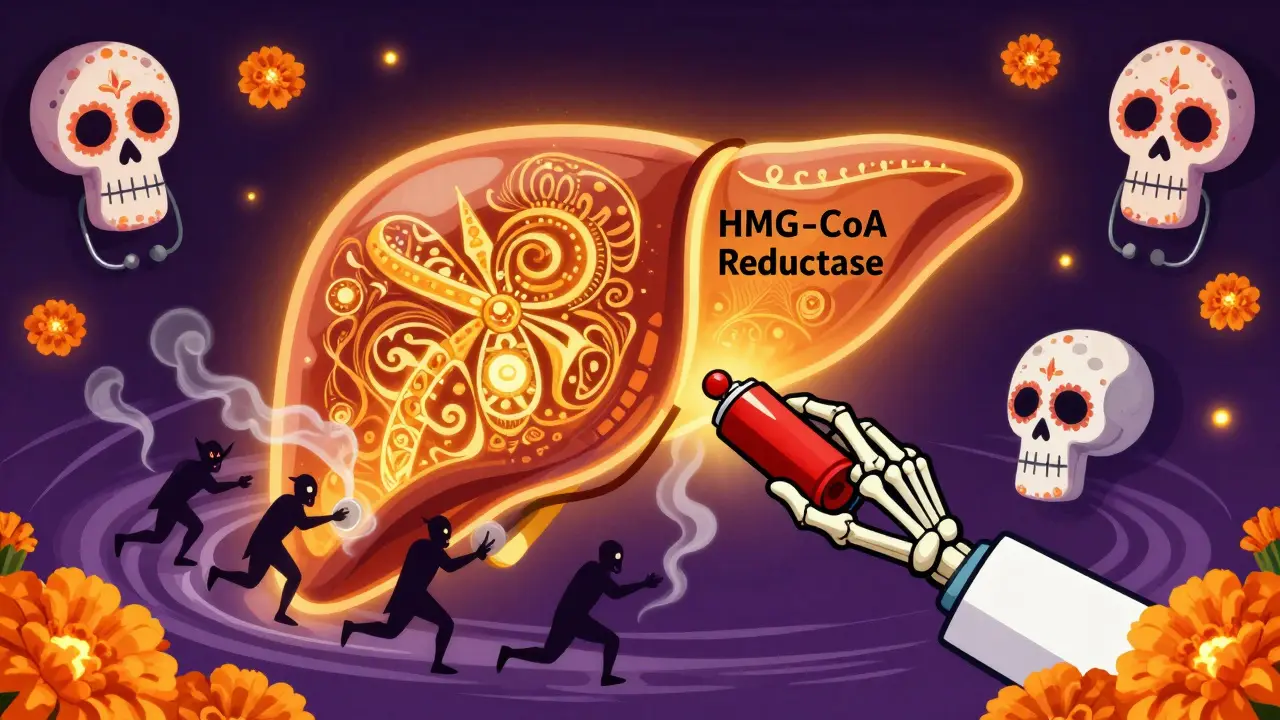
Statins, also known as HMG-CoA reductase inhibitors, don’t just reduce cholesterol. They attack the problem at its source: your liver. Your body makes about 75% of its own cholesterol, and that’s where statins step in. They block the enzyme HMG-CoA reductase, which is like the main switch your liver flips to produce cholesterol. When that switch gets turned off, your liver starts pulling more LDL (bad) cholesterol out of your bloodstream to compensate. This is why statins are so effective: they don’t just lower cholesterol-they make your body actively clean it up.
On average, statins reduce LDL cholesterol by about 70 mg/dL. That might sound like a number, but here’s what it means in real terms: for every 1 mmol/L drop in LDL, your risk of a heart attack or stroke drops by roughly 22%. That’s not theory-it’s backed by decades of clinical trials. The Scandinavian Simvastatin Survival Study (4S) and the Heart Protection Study (HPS) both showed that statins cut major heart events by about 30% in high-risk patients. For someone with a history of heart disease, that could mean the difference between living another 10 years and not making it past five.
But statins don’t just work on cholesterol. They also reduce inflammation in your blood vessels, stabilize plaque buildup, and improve how your arteries respond to stress. These “pleiotropic” effects mean even people with normal cholesterol can benefit if they’re at high risk for heart disease. That’s why guidelines from the American College of Cardiology and the American Heart Association now recommend statins not just for those with high LDL, but for anyone with diabetes, high blood pressure, or a family history of early heart disease.
The Most Common Complaint: Muscle Pain
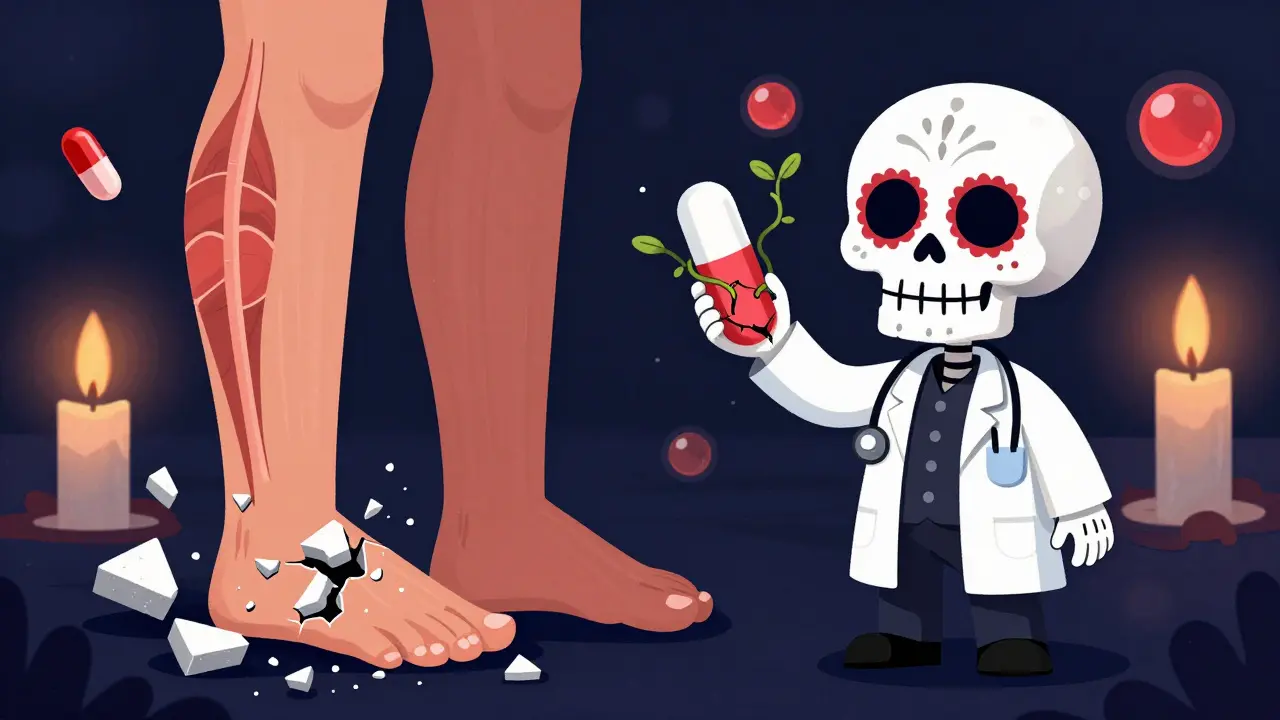
If you’ve ever felt soreness in your thighs, shoulders, or calves after starting a statin, you’re not alone. Muscle pain, or myalgia, is the most frequently reported side effect. Studies estimate it affects between 5% and 29% of users, depending on how it’s measured. Some people get a dull ache. Others get sharp cramps that wake them up at night. A few can barely walk without discomfort.
It’s important to know: not all muscle pain from statins is the same. Most cases are mild and temporary-your body adjusts within a few weeks. But for some, the pain sticks around. And in rare cases, it can turn into something more serious: rhabdomyolysis. That’s when muscle tissue breaks down so badly it releases toxins into the bloodstream, potentially damaging your kidneys. It’s extremely rare-less than 0.1% of users-but it’s real.
Why does this happen? Statins interfere with more than just cholesterol production. They also affect how your muscles make certain proteins and use energy. One theory is that statins reduce levels of coenzyme Q10, which your muscles need to generate energy. Another is that they alter how muscle cells handle calcium, leading to stiffness and pain. It’s not fully understood, but the link is strong enough that doctors routinely ask about muscle symptoms when someone starts a statin.
Not All Statins Are Created Equal
Just because one statin gives you muscle pain doesn’t mean all of them will. Different statins have different chemical structures, and your body reacts differently to each. For example:
- Atorvastatin (Lipitor) and rosuvastatin (Crestor) are the most commonly prescribed in the U.S. and are very potent. They’re great for lowering LDL fast, but they’re also more likely to cause muscle issues in sensitive people.
- Simvastatin (Zocor) is cheaper and effective, but it’s linked to higher rates of muscle pain-especially at doses above 40 mg.
- Pravastatin (Pravachol) and fluvastatin (Lescol) are less potent, but they’re also less likely to cause muscle problems. Many patients who can’t tolerate other statins do fine on pravastatin.
Switching statins isn’t a sign of failure-it’s standard practice. If you’re having trouble with one, your doctor may try a different one, lower the dose, or switch you to a non-daily schedule (like taking rosuvastatin every other day). Some patients find relief just by changing which statin they use.
What to Do If You Have Muscle Pain
If you start feeling muscle soreness after beginning a statin, don’t just quit. Talk to your doctor. Here’s what usually happens next:
- Check your creatine kinase (CK) levels. This blood test measures muscle damage. If it’s normal, you probably don’t have rhabdomyolysis.
- Try a different statin. As mentioned, switching from atorvastatin to pravastatin often helps. Many patients report improvement within weeks.
- Lower the dose. Sometimes, half the dose still gives you 80% of the benefit. A 10 mg dose of atorvastatin may be enough if you’re not at very high risk.
- Consider coenzyme Q10. While studies aren’t conclusive, some people swear by it. It’s safe, inexpensive, and worth a trial if your doctor agrees.
- Don’t stop without a plan. Stopping statins cold can spike your risk of heart attack. If you’re not sure, get a second opinion.
One patient I spoke with (who asked to remain anonymous) had severe leg cramps on rosuvastatin. After switching to pravastatin at half the dose, the pain vanished within two weeks. Her LDL only went up 5 points-still well below her target. That’s the sweet spot: enough protection, no pain.
Who Shouldn’t Take Statins?
Statins aren’t for everyone. If you fall into one of these groups, talk carefully with your doctor before starting:
- People with liver disease. Statins are processed by the liver. If your liver is already struggling, adding statins can make things worse.
- Pregnant or breastfeeding women. Statins can harm fetal development. They’re not safe during pregnancy.
- Those taking certain medications. Some antibiotics, antifungals, and grapefruit juice can interact with statins and raise the risk of muscle damage.
- People with a history of rhabdomyolysis. If you’ve had it before, statins are usually avoided.
Also, older adults (especially over 75) may be more sensitive to side effects. But that doesn’t mean they should avoid statins-it means they need careful monitoring. Many seniors benefit greatly from statins, especially if they’ve had a heart attack or stroke.
The Big Picture: Benefits vs. Risks
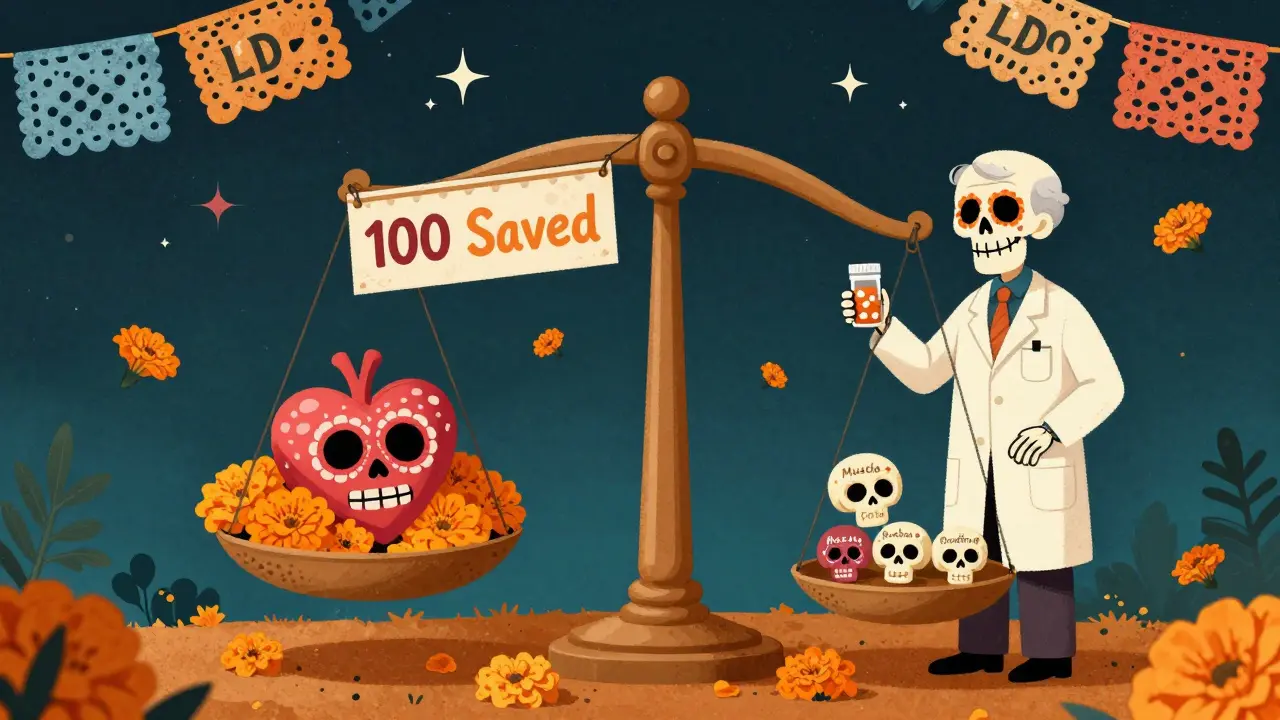
Let’s put this in perspective. For every 10,000 people on statins for a year:
- About 100 will avoid a heart attack or stroke.
- About 1 might develop rhabdomyolysis.
- About 500 to 2,000 will report mild muscle pain.
The math is clear: the benefits vastly outweigh the risks for most people who need them. But “most” doesn’t mean “all.” If you’re low-risk-say, a 55-year-old with slightly elevated cholesterol and no other health issues-you might not need a statin at all. Lifestyle changes (diet, exercise, weight loss) can do wonders. But if you’ve had a heart attack, have diabetes, or have a strong family history, skipping statins could be dangerous.
Here’s the bottom line: statins are one of the most studied drugs in medical history. Their ability to prevent heart disease is unmatched. But they’re not magic pills. They’re tools. And like any tool, they work best when used wisely-with the right dose, the right person, and the right follow-up.
What Comes Next?
Researchers are already working on smarter statins. Scientists at Stanford and other labs are trying to isolate the cholesterol-lowering effects from the muscle-affecting ones. One promising direction involves targeting statins specifically to liver cells, so they don’t reach muscle tissue at all. Genetic testing for the SLCO1B1 gene variant-which predicts who’s more likely to get muscle pain from simvastatin-is already available in some clinics. In the next five years, we may see personalized statin therapy become routine.
For now, the best approach is simple: know your risk, know your options, and don’t assume muscle pain means you have to stop. Work with your doctor. Try alternatives. Give it time. And remember: the goal isn’t to avoid side effects at all costs. It’s to live a longer, healthier life without a heart attack.
Can statins cause permanent muscle damage?
In almost all cases, no. Muscle pain from statins is usually temporary and goes away when you stop the drug or switch to another one. Permanent muscle damage is extremely rare and typically only occurs in cases of severe rhabdomyolysis, which affects far less than 0.1% of users. Even then, most people recover fully with proper treatment.
Do I need to take statins for life?
For most people who are prescribed statins for heart disease prevention, yes-especially if they have diabetes, a history of heart attack, or other major risk factors. Stopping statins often leads to a rapid rise in LDL cholesterol and increased risk of events. However, if your risk level changes-for example, you lose weight, get your blood pressure under control, or improve your diet-you and your doctor may reconsider whether you still need the medication.
Are natural alternatives like red yeast rice as effective as statins?
Red yeast rice contains a compound similar to lovastatin, the first statin. It can lower LDL by about 20-30%, which is less than most prescription statins. But it’s not regulated like pharmaceuticals, so potency varies widely between brands. It also carries the same muscle pain risks as prescription statins. For people who need strong cholesterol reduction, prescription statins are safer, more predictable, and more effective.
Can I take statins with other supplements?
Most supplements are fine, but some can interact. Avoid large doses of niacin or fish oil without medical supervision, as they can increase the risk of muscle issues when combined with statins. Coenzyme Q10 is generally safe and may help with muscle symptoms, though evidence is mixed. Always tell your doctor what you’re taking-even vitamins or herbal products.
Why do some people have no side effects while others can’t tolerate statins?
Genetics play a big role. The SLCO1B1 gene affects how your body processes certain statins. People with a specific variant of this gene are more likely to develop muscle pain, especially with simvastatin. Age, gender, kidney or liver function, and other medications also influence how you respond. That’s why personalized medicine is becoming more common-what works for one person might not work for another.
If you’re on a statin and feeling unsure, you’re not alone. Millions are in the same boat. The key is not to panic, but to act. Talk to your doctor. Get tested. Try alternatives. And remember: the goal isn’t to live without any side effects-it’s to live longer, healthier, and with fewer heart problems.
Hugh Breen
March 14, 2026 AT 02:14Byron Boror
March 15, 2026 AT 18:12Lorna Brown
March 16, 2026 AT 03:58Rex Regum
March 17, 2026 AT 01:23Kelsey Vonk
March 18, 2026 AT 11:49Emma Nicolls
March 20, 2026 AT 03:47Jimmy V
March 20, 2026 AT 05:11Richard Harris
March 20, 2026 AT 14:18Kandace Bennett
March 22, 2026 AT 00:59Tim Schulz
March 22, 2026 AT 15:56Jinesh Jain
March 24, 2026 AT 07:41Noluthando Devour Mamabolo
March 24, 2026 AT 14:28Jimmy V
March 24, 2026 AT 22:39douglas martinez
March 26, 2026 AT 16:09