
Itching that won’t quit-no rash, no bug bite, just relentless, deep-seated itch that keeps you up at night. For people with cholestatic liver disease, this isn’t just annoying. It’s debilitating. Up to 70% of those with primary biliary cholangitis (PBC) experience this type of itching, known as cholestatic pruritus. And it’s not caused by allergies or dry skin. It’s tied to bile buildup in the blood because the liver can’t move bile out properly. Traditional antihistamines? They don’t work. That’s because this isn’t histamine-driven itching. It’s something else entirely.
Why Bile Acids Cause Itching
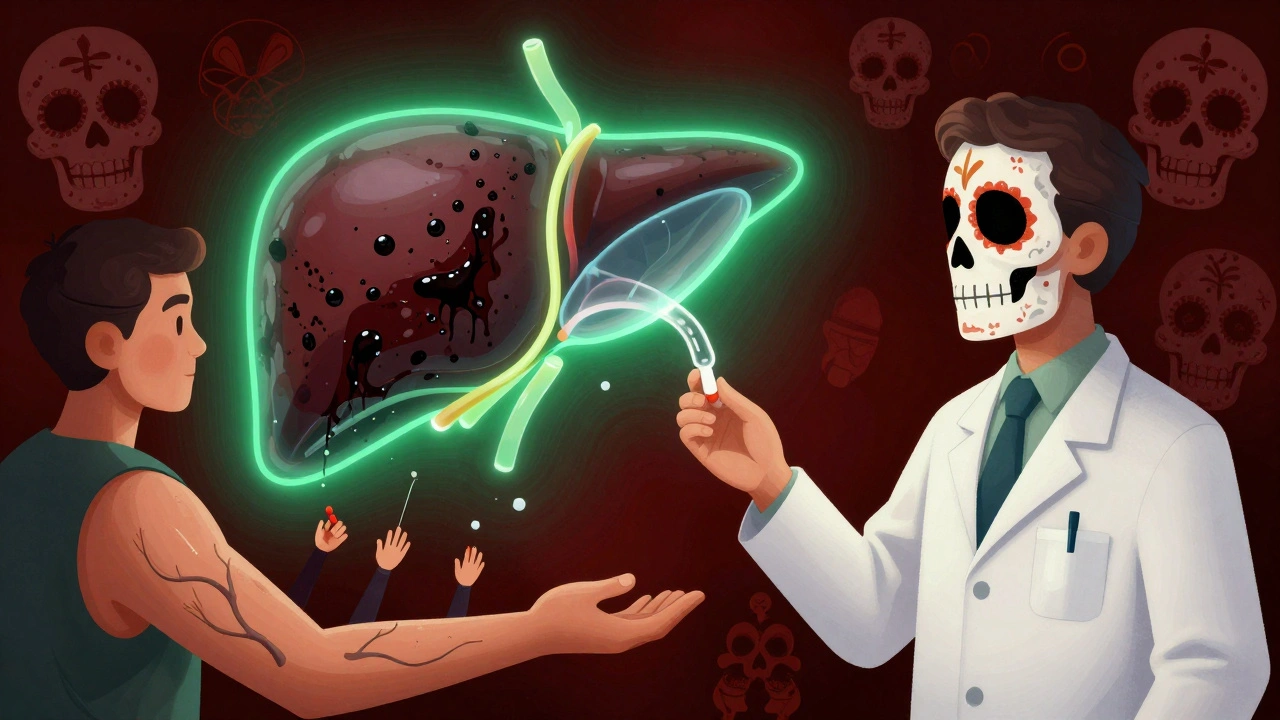
The exact reason bile causes itching is still being figured out, but researchers now know it’s not just one thing. Bile acids themselves play a role, but so do other molecules like lysophosphatidic acid (LPA), which is made by an enzyme called autotaxin. When bile flow slows down, autotaxin levels rise, and LPA activates nerve endings in the skin that trigger itch signals. This pathway is now considered the main driver of cholestatic pruritus. That’s why treatments targeting bile acids or this specific pathway are more effective than old-school options.
First-Line Treatment: Bile Acid Resins
Cholestyramine (brand name Questran) has been the go-to first-line treatment for decades. It’s a powder that binds bile acids in the gut so they can’t be reabsorbed. Instead, they’re flushed out in stool. This lowers the amount of bile acids circulating in the blood, which often reduces itching.
The standard dose starts at 4 grams once a day, then slowly increases to 16-24 grams daily, split into two or three doses. But here’s the catch: cholestyramine tastes awful. It’s gritty, chalky, and mixes poorly with water. A 2020 survey in Liver International found 78% of patients hated the taste. Another study showed 65% of people quit using it within three months because of how it felt in their mouth or because it caused bloating and constipation.
There’s also a big practical issue: cholestyramine binds to other medications. If you take it at the same time as your thyroid pill, blood thinner, or birth control, it can stop them from working. The fix? Take cholestyramine at least one hour before or four to six hours after any other drug. Many patients forget this rule-and end up with uncontrolled conditions because their meds aren’t absorbed.
Second-Line: Rifampin
If cholestyramine doesn’t cut it after four weeks, doctors turn to rifampin. It’s an antibiotic usually used for tuberculosis, but at low doses (150-300 mg daily), it helps reduce itching in cholestasis. How? It boosts liver enzymes that break down bile acids and other itch-causing substances. In PBC patients, about 70-75% see improvement within two to four weeks.
But rifampin has its own downsides. It turns urine, sweat, and tears orange-a harmless but startling side effect. Some people get flu-like symptoms, nausea, or elevated liver enzymes (in 15-20% of cases). And like cholestyramine, it interferes with other drugs. Rifampin speeds up how fast your body breaks down over 50 medications, including birth control pills, blood thinners, and some antidepressants. You need to work closely with your doctor to adjust doses.
Third-Line: Naltrexone and Sertraline
When bile acid resins and rifampin fail, two off-label options come into play: naltrexone and sertraline.
Naltrexone blocks opioid receptors in the brain. There’s evidence that endogenous opioids build up in cholestasis and contribute to itching. Naltrexone (Revia) is started at just 6.25 mg daily and slowly increased to 50 mg over several weeks. About half to 60% of patients report relief. But the first few days? Rough. About 30% experience nausea, anxiety, and symptoms that feel like opioid withdrawal-even if they’ve never used opioids. That’s why slow titration is key.
Sertraline (Zoloft), an SSRI antidepressant, is used off-label for itching in PBC. It’s not clear why it works, but studies show 40-50% of PBC patients get relief at doses of 75-100 mg daily. It’s less effective in other types of cholestasis like PSC. The advantage? It can help if you’re also dealing with depression or anxiety, which are common in chronic liver disease. Side effects include mild nausea and sleep changes, but it’s generally better tolerated than naltrexone.
Newer Options: Maralixibat and Beyond
The biggest shift in treatment came in 2021 when the FDA approved maralixibat (Mytesi) for children and adults with Alagille syndrome, a rare genetic liver disorder that causes severe pruritus. Maralixibat is an IBAT inhibitor-it blocks bile acids from being reabsorbed in the gut, similar to cholestyramine, but as a pill, not a powder.
In the MARCH trial, maralixibat reduced itching by 47% on a visual scale, compared to 42% for cholestyramine. But here’s the game-changer: only 12% of patients stopped taking maralixibat due to side effects, compared to 35% for cholestyramine. Patients reported better taste, once-daily dosing, and fewer GI issues. A Cleveland Clinic survey in 2023 found 82% of patients stayed on maralixibat after six months.
Other new drugs are on the horizon. Volixibat, another IBAT inhibitor, showed 52% itch reduction in a 2023 trial with only 18% discontinuation. Even more exciting are drugs targeting autotaxin-the enzyme that makes LPA. IONIS-AT332-LRx, an antisense oligonucleotide, cut autotaxin levels by 65% and reduced itching by 58% in a 2023 phase 2 trial. These aren’t just symptom relievers. They’re targeting the root cause.
What Doesn’t Work (Despite Common Use)
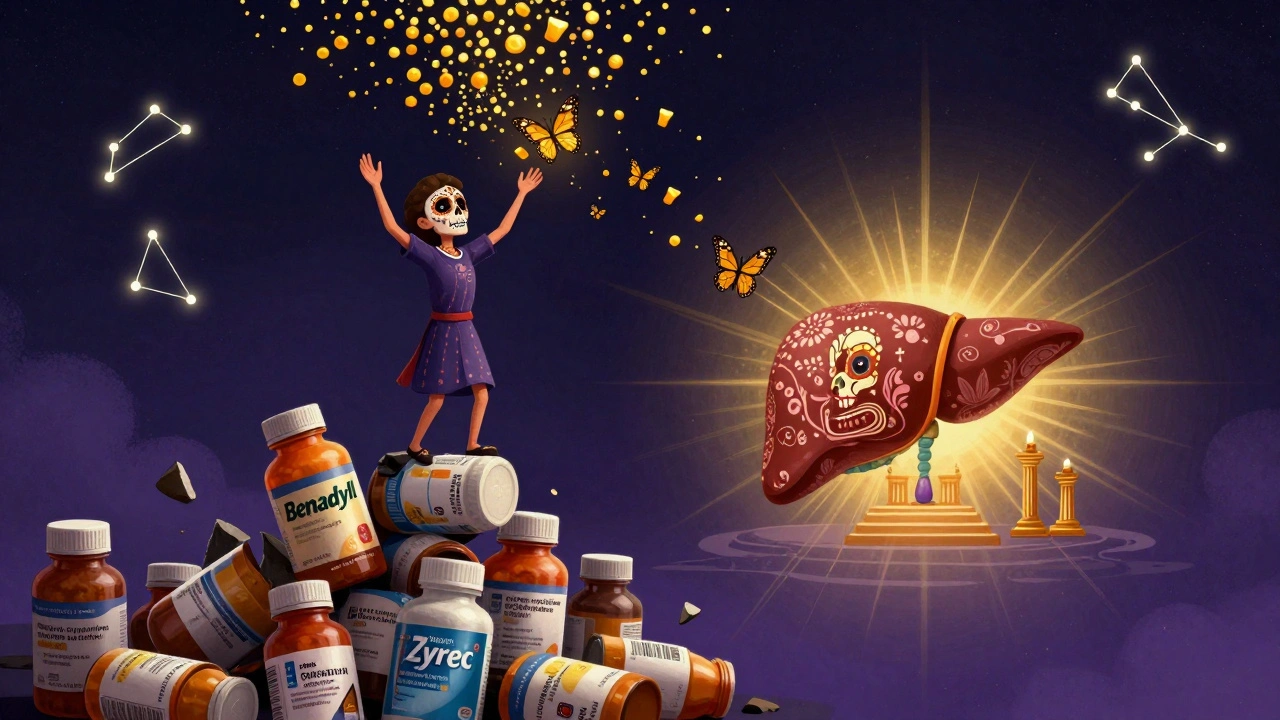
Antihistamines like diphenhydramine (Benadryl) or cetirizine (Zyrtec) are still prescribed by many primary care doctors for itching. But they’re ineffective in cholestatic pruritus. The AASLD guidelines from 2022 explicitly say not to use them first-line. A 2022 survey found 68% of primary care physicians still reach for antihistamines-even though research shows they don’t reduce bile acid-driven itch. It’s a gap between guidelines and practice.
Topical creams, cool baths, and moisturizers help with comfort but won’t fix the underlying problem. They’re supportive care, not treatment.
When Everything Else Fails: Transplant
For the small number of patients who don’t respond to any medication, liver transplant remains the only cure. After transplant, 95% of patients see their itching disappear completely. But it’s not a decision made lightly. It’s reserved for those with advanced liver disease, poor quality of life, or complications like malnutrition from chronic itching.
Practical Tips for Managing Daily Itch
- Use fragrance-free emollients. Moisturizing helps break the itch-scratch cycle.
- Take cool showers. Hot water makes itching worse.
- Wear loose, cotton clothing. Synthetic fabrics irritate sensitive skin.
- Keep nails short. Scratching can lead to infections and scarring.
- Track your triggers. Stress, heat, or certain foods may worsen itching for some.
Cost and Access: The Real-World Challenge
Cholestyramine costs about $65 a month. Maralixibat? Around $12,500. That’s a massive gap. Insurance coverage varies, and many patients can’t afford newer drugs without financial assistance programs. A 2023 study in the Journal of Clinical Gastroenterology found that access to newer therapies is much higher in academic medical centers (78% use the stepwise protocol) than in community clinics (only 45%). If you’re not near a liver specialist, you might be stuck with outdated options.
What’s Next?
The future of cholestatic pruritus treatment is moving away from broad, blunt tools like cholestyramine and toward precision medicine. Drugs targeting autotaxin, LPA, and bile acid transporters are in development. GLP-1 receptor agonists (like semaglutide) are even showing unexpected benefits-reducing itching in diabetic PBC patients in a 2023 study.
One thing is clear: we’re no longer just managing symptoms. We’re starting to fix the biology behind the itch. That means better quality of life, fewer sleepless nights, and less reliance on drugs that are hard to tolerate.
Why don’t antihistamines work for cholestatic itching?
Cholestatic pruritus isn’t caused by histamine, which is the chemical released in allergic reactions. Instead, it’s driven by bile acids and other molecules like lysophosphatidic acid (LPA) that activate itch nerves directly. Antihistamines block histamine receptors, so they have no effect on this type of itching. Despite this, many doctors still prescribe them because they’re familiar and available over the counter.
Can cholestyramine be taken with other medications?
No, not at the same time. Cholestyramine binds to many drugs in the gut, preventing them from being absorbed. This includes thyroid medications, blood thinners, birth control pills, antibiotics, and even some antidepressants. To avoid this, take cholestyramine at least one hour before or four to six hours after any other medication. Always check with your pharmacist or doctor before starting it.
How long does it take for rifampin to work?
Most patients notice improvement in itching within two to four weeks of starting rifampin. Some report relief as early as one week. The full effect usually builds over four weeks. If there’s no change after that, your doctor may switch you to another option. Keep in mind that rifampin turns bodily fluids orange-that’s normal and harmless.
Is maralixibat better than cholestyramine?
Yes, in several ways. Maralixibat reduces itching just as well as cholestyramine (47% vs. 42% on itch scales), but it’s taken as a daily pill instead of a chalky powder. It has fewer side effects-especially gastrointestinal-and a much higher continuation rate. In one study, 82% of patients stayed on maralixibat after six months, compared to only 45% for cholestyramine. The downside? Cost: maralixibat is over 190 times more expensive.
What should I do if my itching gets worse?
If itching worsens despite treatment, contact your hepatologist. It could mean your liver disease is progressing, or you need a different medication. In some cases, especially with bile duct blockage, a stent may be needed to restore bile flow. Never increase doses of medications like naltrexone or rifampin without medical supervision. Sudden changes can cause serious side effects or liver damage.
shalini vaishnav
December 3, 2025 AT 11:41Cholestyramine is a joke. A 1970s relic that tastes like chalk mixed with regret. Modern hepatology should be embarrassed to still recommend it as first-line. The fact that we're still relying on a powdered resin that binds everything in the gut like a chemical sponge shows how stagnant liver medicine has become. Maralixibat isn't just better-it's the only rational choice for anyone who values dignity and compliance. If your doctor still pushes cholestyramine, ask them when they last updated their textbooks.
Gene Linetsky
December 3, 2025 AT 12:35They're hiding something. Maralixibat was approved after a trial funded by Big Pharma. That 82% continuation rate? Probably because patients were paid to stay on it. And why does rifampin turn your tears orange? That's not a side effect-that's a warning sign. The liver doesn't just make bile-it makes toxins. They're treating the symptom while ignoring the real problem: gut dysbiosis and glyphosate poisoning. You think your liver is broken? It's your food. It's your water. It's the government.
Chloe Madison
December 3, 2025 AT 18:41For anyone struggling with cholestatic pruritus-you’re not alone, and you’re not failing. I’ve seen patients go from sleepless nights to full days of laughter after finding the right combo. Start with the basics: cool showers, cotton clothes, moisturizing right after bathing. Then work with your hepatologist to move step by step. Cholestyramine? Hard, but doable if you mix it with applesauce and chill it. Rifampin? Yes, your pee turns orange-but that’s your liver finally breathing again. And maralixibat? If you qualify, fight for it. Your quality of life matters more than the cost tag. You deserve relief.
Vincent Soldja
December 5, 2025 AT 14:23Antihistamines don't work. Maralixibat is expensive. Rifampin turns things orange. Naltrexone causes withdrawal. Transplant is last resort. That's it. No more.
Makenzie Keely
December 6, 2025 AT 17:47Let’s be clear: cholestatic pruritus is not “just itching.” It is a profound, systemic, neurologically driven suffering that erodes sleep, self-worth, and social connection. The fact that antihistamines are still prescribed as first-line treatment by primary care providers-despite AASLD guidelines-is a systemic failure of medical education. We must advocate for better training, faster access to IBAT inhibitors, and insurance reform that prioritizes quality of life over cost containment. Maralixibat isn’t “expensive”-it’s a lifeline. And if your provider dismisses it because of price, find one who understands the difference between cost and value.
Francine Phillips
December 8, 2025 AT 08:36Been on cholestyramine for a year. Hated it. Quit. Started rifampin. Orange pee was weird but fine. Itching dropped 70%. Still take it. No big deal. Don’t overthink it.
Katherine Gianelli
December 10, 2025 AT 02:16I know what it’s like to scratch until your skin bleeds and still feel the itch. I’ve sat in the dark at 3 a.m. wondering if this is what my life is now. But here’s the thing-it doesn’t have to be. I found maralixibat through a clinical trial. It didn’t make me a new person, but it gave me back my nights. I sleep. I laugh. I hug my kid without flinching. You’re not broken. You’re just waiting for the right tool. Don’t give up. Talk to a liver specialist. Ask about autotaxin inhibitors. They’re coming. And you? You’re stronger than this itch.
Joykrishna Banerjee
December 11, 2025 AT 10:18Autotaxin-LPA axis? Pathetic. You're all chasing molecular red herrings. The real culprit is the Western diet-excess omega-6, industrial seed oils, and fructose-induced endotoxemia. All this fancy pharmacology ignores the elephant in the room: your gut is rotting. Maralixibat? A Band-Aid on a severed artery. Fix the microbiome. Cut the carbs. Fast. Heal the liver. Then the itch vanishes. No pill needed. You're being manipulated by Big Pharma's profit-driven narrative.