

Pregnancy Medication Safety Checker
Check Your Medication Safety
This tool helps you understand if your blood pressure medication is safe during pregnancy based on current medical guidelines.
When you're pregnant and have high blood pressure, finding the right medication isn't just about managing your numbers-it’s about protecting your baby’s life. Many women don’t realize that common blood pressure drugs like ACE inhibitors and ARBs can cause serious, sometimes fatal, harm to a developing fetus. These medications, often prescribed for years before pregnancy, become dangerous the moment conception happens. The risks aren’t theoretical. They’re documented, repeated across global studies, and backed by every major medical organization in the world.
Why ACE Inhibitors and ARBs Are Dangerous in Pregnancy
ACE inhibitors (like lisinopril, enalapril, and ramipril) and ARBs (like losartan and candesartan) work by blocking the renin-angiotensin-aldosterone system, or RAAS. That’s fine for adults-it lowers blood pressure and protects the kidneys. But in a growing fetus, RAAS isn’t just helpful-it’s essential. It helps form the baby’s kidneys, regulates amniotic fluid, and supports healthy blood flow to the placenta. When these drugs cross the placenta, they shut down that system. The result? Fetal kidneys stop working properly. Amniotic fluid drops dangerously low (a condition called oligohydramnios). The baby’s blood pressure plummets. Kidney failure can begin as early as the second trimester. Skull bones may not form correctly. In the worst cases, the baby dies in utero or is born with irreversible organ damage. Studies show these risks aren’t limited to later pregnancy. A 2020 meta-analysis of 72 studies found that even exposure in the first trimester increases the chance of miscarriage, low birth weight, and premature birth. Earlier beliefs that first-trimester use was “safe” have been completely overturned. The American Heart Association and the American College of Obstetricians and Gynecologists (ACOG) now say there is no safe trimester for these drugs.The Real Numbers Behind the Risks
It’s easy to hear “risk” and think it’s rare. But the data tells a different story. In one large study published in Obstetrics & Gynecology International, women taking ACE inhibitors or ARBs during pregnancy had a 25.4% miscarriage rate-more than double the 12.3% rate in women with similar health conditions who weren’t on these drugs. Babies exposed to these medications weighed, on average, 350 grams (nearly 13 ounces) less at birth. They were born nearly two weeks earlier than average. The FDA classifies these drugs as Pregnancy Category D-meaning there’s clear evidence of human fetal risk. Their labels include a black box warning, the strongest possible alert. New Zealand’s Medsafe and the European Medicines Agency echo the same warning. Even the World Health Organization excludes them from its list of essential medicines for pregnant women. And here’s the sobering part: despite all this, about 1.2% of pregnancies in women with chronic hypertension still involve accidental exposure to these drugs, according to FDA reports. That’s not because doctors are careless. It’s because many women are on these medications for years before they even know they’re pregnant. And not all providers consistently screen for pregnancy before prescribing them.ARBs vs. ACE Inhibitors: Is One Worse?
You might wonder: if I’m on an ARB like losartan, is it safer than an ACE inhibitor like lisinopril? The answer is no-and ARBs may be even riskier. Research from the American Heart Association shows that babies exposed to ARBs have worse outcomes than those exposed to ACE inhibitors. ARBs are linked to higher rates of neonatal death, more severe kidney damage, and longer hospital stays after birth. The reason? ARBs block a different part of the same system, but with longer-lasting effects. Once they bind to receptors, they stay there longer, making their impact more prolonged and harder to reverse. Both classes are equally contraindicated. But if you’re planning pregnancy-or just found out you’re pregnant-switching away from an ARB is even more urgent than switching from an ACE inhibitor.
What Medications Are Safe During Pregnancy?
The good news? There are several well-studied, safe alternatives that work just as well-and without the fetal risks.- Labetalol: This is the first-line choice for most pregnant women. It’s a beta-blocker that also blocks alpha receptors, helping to lower blood pressure without reducing blood flow to the placenta. It’s been used safely since the 1980s. Dosing typically starts at 100 mg twice daily and can be increased up to 2,400 mg per day if needed.
- Methyldopa: This is the oldest and most studied blood pressure medication for pregnancy. First used in the 1970s, it’s been given to millions of pregnant women with no link to birth defects. It’s especially helpful for women with chronic hypertension before pregnancy. The usual dose is 250 mg twice daily, increased gradually up to 3,000 mg per day.
- Nifedipine: A calcium channel blocker, nifedipine is often used as a second-line option, especially when blood pressure spikes suddenly. It’s effective and safe for most women, though it’s used cautiously in those with heart failure because it can slightly weaken heart contractions.
What Should You Do If You’re Already Pregnant?
If you’re currently taking an ACE inhibitor or ARB and just found out you’re pregnant, don’t panic-but don’t wait either. Stop the medication immediately. Do not taper it yourself. Call your doctor or OB-GYN right away. They’ll need to switch you to a safe alternative within 24 to 48 hours. Delaying increases the risk of ongoing fetal damage. Your provider will likely start you on labetalol or methyldopa and monitor your blood pressure closely. You may also need extra ultrasounds to check amniotic fluid levels and fetal growth. In some cases, fetal kidney function can be assessed through detailed anatomy scans. It’s also important to know: if you were on these drugs before you knew you were pregnant, your baby is not automatically doomed. Many women who took them unknowingly in the first few weeks go on to have healthy babies. The key is stopping as soon as possible and switching to a safe alternative.What If You’re Planning to Get Pregnant?
This is where prevention matters most. If you’re a woman of childbearing age and take an ACE inhibitor or ARB for high blood pressure, talk to your doctor about switching before you try to conceive. Don’t wait for a missed period. Don’t assume “I’ll stop if I get pregnant.” Plan ahead. The American College of Cardiology recommends that all women on these drugs receive counseling about pregnancy risks and be offered effective contraception if they’re not planning to conceive. But if you are planning pregnancy, your doctor should have already switched you to a safer medication-like labetalol or methyldopa-at least three months before you stop birth control. This isn’t just about avoiding risks. It’s about giving your baby the best possible start. Healthy blood pressure before and during pregnancy reduces your risk of preeclampsia, preterm birth, and low birth weight-even without these drugs.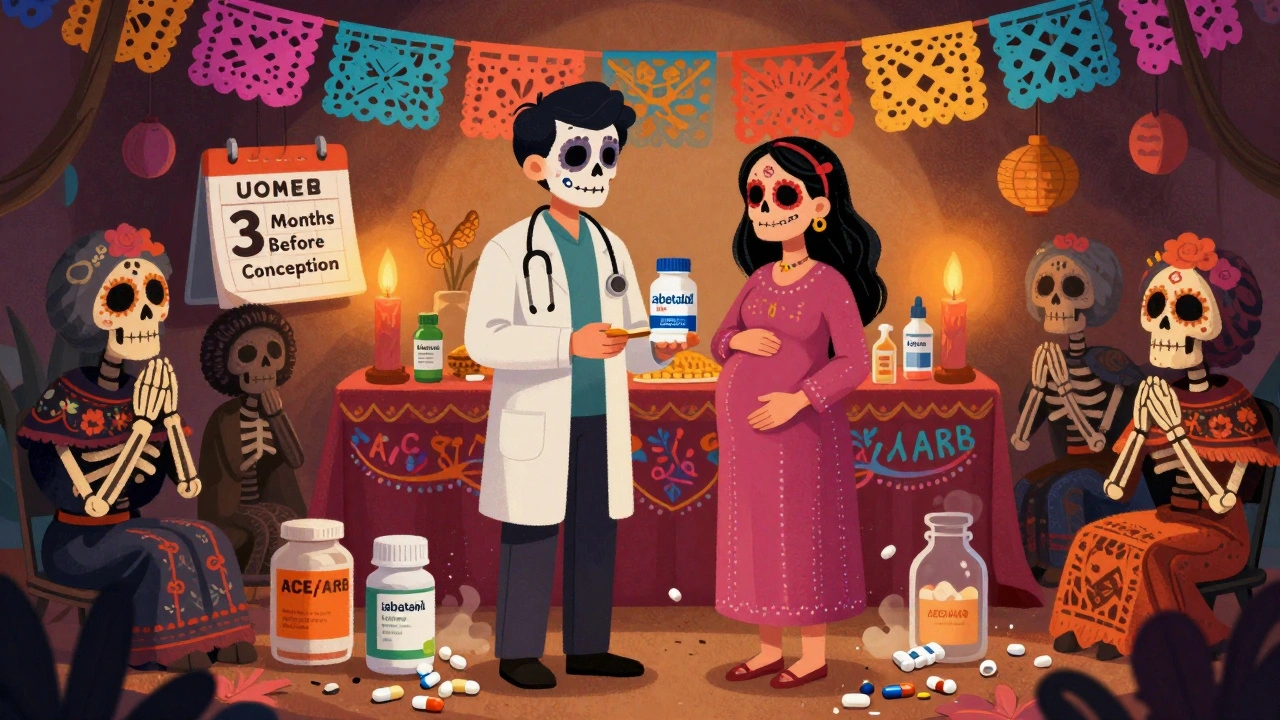
What Your Doctor Should Be Doing
You shouldn’t have to be the one to remember this risk. Your provider should be proactive. Every woman of childbearing age prescribed an ACE inhibitor or ARB should be asked:- Are you pregnant?
- Are you planning to become pregnant?
- Are you using reliable birth control?
What to Do If You’ve Already Been Exposed
If you took an ACE inhibitor or ARB during early pregnancy and didn’t know you were pregnant, here’s what to do:- Stop the medication immediately.
- Call your OB-GYN or maternal-fetal medicine specialist within 24 hours.
- Request a detailed anatomy ultrasound between 18 and 22 weeks to check for kidney abnormalities, low amniotic fluid, and growth issues.
- Ask about fetal echocardiography if your blood pressure has been high for a long time.
- Switch to a safe alternative like labetalol or methyldopa as soon as possible.
Ollie Newland
December 5, 2025 AT 04:15Just had a patient come in last week who was on losartan for 5 years, didn’t even know she was pregnant until week 8. Scared the hell out of her-rightfully so. We switched her to labetalol same day. Fetal echo came back clean, amniotic fluid’s normal now. Point is: it’s not a death sentence if caught early. But yeah, these meds need black box warnings on the bottle, not just in the pamphlet.
Michael Feldstein
December 7, 2025 AT 03:48Man, I wish my PCP had told me this when I was prescribed lisinopril for my hypertension back in 2020. I was on it for two years before I even thought about kids. Would’ve saved me a lot of anxiety. Seriously, why isn’t this standard counseling? Like, when you fill the script, shouldn’t the pharmacist say, ‘Hey, if you’re planning to get pregnant, this ain’t it.’?
Benjamin Sedler
December 8, 2025 AT 19:42Okay but what if you’re one of those people who just hates taking pills? Like, what if you’re like ‘nah, I’ll just drink pickle juice and do yoga’? Are you telling me that’s safer than an ARB? I mean, I’ve seen people on kombucha regimes cure their diabetes. Maybe we should just let nature take over and see what happens.
zac grant
December 9, 2025 AT 12:15Real talk: labetalol and methyldopa are the OGs of pregnancy-safe antihypertensives. No fluff, no mystery. Methyldopa’s been used since Nixon was president and still holds up. Nifedipine’s great for acute spikes-just watch for ankle edema. Bottom line: if you’re on an ACEi or ARB and thinking about kids, get off it now. Your future child’s renal development is worth the 3-month lead time.
Dematteo Lasonya
December 11, 2025 AT 11:53My OB switched me from ramipril to labetalol before I even missed a period. She said, ‘We don’t wait for surprises.’ That’s the kind of care you want. No panic, no guilt-just clear action. If your provider isn’t doing this proactively, find one who will.
Jake Deeds
December 12, 2025 AT 03:10It’s not just about the drugs-it’s about the system. Doctors treat women like walking time bombs. ‘Oh, you’re on a blood pressure med? Cool, hope you’re on birth control.’ No, I’m not. Why? Because I’m not a liability. I’m a person. And if you’re prescribing this stuff without asking, you’re part of the problem. This isn’t medical advice-it’s negligence dressed in white coats.
George Graham
December 12, 2025 AT 07:37I’m a dad of three. My wife was on methyldopa through all three pregnancies. No issues. No regrets. She felt better than she had in years. And yeah, she had to take pills every day-but so do I for my cholesterol. Parenting’s not about perfection. It’s about doing the best you can with the tools you’ve got. These alternatives? They’re not just safe-they’re proven.
Rachel Bonaparte
December 13, 2025 AT 06:38Let’s be real-this isn’t about medicine. It’s about control. Big Pharma doesn’t want you to know that a $2 generic pill from the 1970s works better than their billion-dollar ARBs. And don’t get me started on how the FDA’s ‘black box’ warning is buried in 30 pages of legalese. They want you scared but still buying. They know you won’t read the label. They count on it.
And who’s behind this? The same people who told us cigarettes were safe for pregnant women. The same people who said thalidomide was fine. History repeats. Always.
Don’t trust the system. Trust your gut. If your doctor didn’t bring this up unprompted, they’re not your ally. Find someone who will.
Rebecca Braatz
December 14, 2025 AT 01:47YOU CAN DO THIS. If you’re reading this and you’re on an ACEi or ARB, STOP PANICKING and START ACTING. Call your doctor TODAY. Switching meds isn’t a failure-it’s your superpower. You’re not just protecting your body-you’re giving your baby the best shot at life. And if your provider doesn’t get it? Find one who does. You’ve got this. We’ve all got your back.