
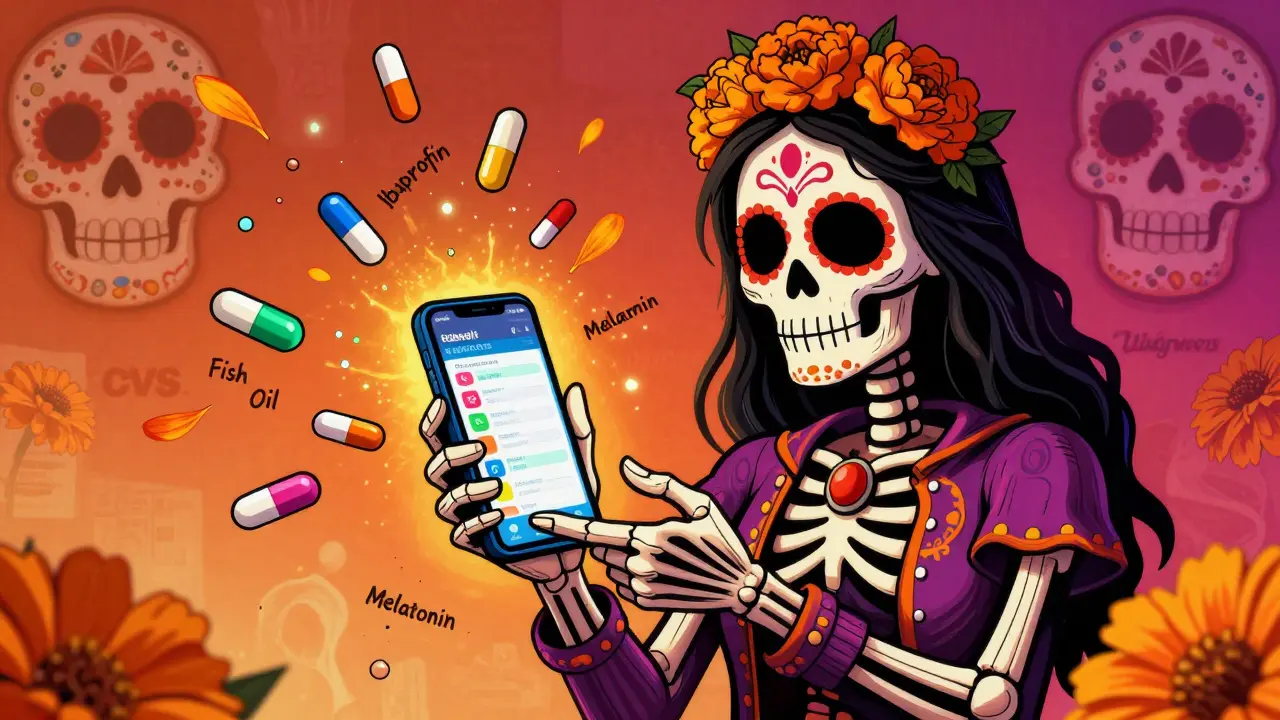
Imagine you’re rushed to the ER after a fall. You can’t remember all your meds. The doctors don’t have your full list. A pill you took last week isn’t in their system. A supplement you started three months ago? Not recorded. That’s not hypothetical-it happens every day. Personal health records are the simplest, most powerful tool most people ignore to stop this from happening to them.
Most people think their pharmacy has all their meds tracked. It doesn’t. Your local CVS doesn’t know what you bought at Walgreens. Your mail-order pharmacy doesn’t know about the over-the-counter painkillers you picked up at the gas station. Your doctor’s portal only shows prescriptions they wrote. And if you’ve switched pharmacies three times in the last year? Good luck piecing it together.
Why Your Pharmacy Can’t Keep Your Meds Straight
There are over 67,000 community pharmacies in the U.S. Each one uses different software. None of them automatically talk to each other. Even if they did, they only track what they dispense. If you paid cash for a medication, skipped insurance, or bought something online, it’s likely invisible to every system except your own memory.
That’s why 53% of patients have medication errors when admitted to the hospital-according to a 2017 study in the Journal of Hospital Medicine. These aren’t just typos. They’re missing blood pressure pills, double-dosed antidepressants, dangerous interactions between supplements and prescriptions. The Agency for Healthcare Research and Quality says half of all medication errors happen during care transitions. That means you’re most at risk when you’re most vulnerable.
PHRs fix this by giving you control. Not your doctor. Not your pharmacy. You. You collect everything-prescriptions, OTC drugs, vitamins, herbal tinctures, even the CBD gummies you take for sleep. And you keep it updated.
How PHRs Actually Work (And Which Ones Do It Best)
Not all personal health records are the same. Some are passive. Some are active. The difference? You.
Apple Health Records is the most accessible. If you have an iPhone, it automatically pulls in your prescription data from pharmacies that use the Surescripts network. That’s 92% of all U.S. prescriptions. It shows you what you’ve filled, when, and from which pharmacy. It even flags potential interactions. But here’s the catch: it only shows what’s been billed to insurance. Cash purchases? Not there. OTC meds? Not there. Supplements? You have to type them in manually.
Surescripts Medication History, used by hospitals and pharmacists, is far more complete. It pulls from pharmacy benefit managers, insurance claims, and direct pharmacy feeds. It matches patients with 99.2% accuracy using 12 data points-name, birthdate, address, even past phone numbers. But you can’t access it directly. Only providers can. That’s why it’s powerful behind the scenes but useless to you unless you’re in a clinic.
The Australian My Health Record system is the gold standard for scale. It’s national. 93% of Australians are enrolled. It includes data from 7,800+ pharmacies. But even there, only 57% of pharmacists regularly update dispensing records because it slows them down. So if you’re in Australia and you don’t remind your pharmacist to send your refill to the system? It’s missing.
For most Americans, the best option is Apple Health Records-because it’s already on your phone. But you must add what it doesn’t capture. That means manually entering every non-insurance purchase, every supplement, every OTC drug you take regularly.
The 3 Things Your PHR Should Always Include
Don’t just dump your prescriptions in. Build a complete picture. Here’s what you need:
- All prescriptions-even ones you stopped. Include the reason you stopped. Did you switch to a generic? Did you have side effects? That context matters to your doctor.
- Over-the-counter meds-ibuprofen, melatonin, antacids, allergy pills. A 2021 study found only 37% of PHRs capture these. But 61% of patients take at least one OTC daily. If you’re on blood thinners and you start taking ibuprofen every day? That’s a hospital trip waiting to happen.
- Supplements and herbs-fish oil, turmeric, magnesium, ginseng. These aren’t “just vitamins.” They interact with prescription drugs. St. John’s Wort can make your antidepressant useless. Grapefruit juice can turn your cholesterol med into a poison. Your doctor won’t ask unless you tell them. Your PHR is the place to tell them.
Don’t wait for a doctor’s visit. Update it after every pharmacy trip. Even if you didn’t get a new prescription. Even if you just picked up a refill. Add the date. Add the pharmacy. Add the dose. Make it a habit.
Why Your PHR Is Only as Good as Your Updates
Here’s the hard truth: 61% of patient-entered medication data contains errors, according to Duke University’s audit of 12,000 records. People forget doses. They mix up names. They write “aspirin” instead of “81 mg enteric-coated aspirin.”
That’s why the University of Florida College of Pharmacy recommends a 4-step system:
- Train yourself-spend 10 minutes once a week reviewing your list. Cross-check with your pill bottles.
- Update at the pharmacy-when you pick up a refill, open your phone and add it. Do it before you leave the parking lot.
- Use the pharmacy’s app-many, like CVS or Walgreens, let you view your full history. Use it to cross-check your PHR.
- Print it-carry a paper copy in your wallet. Not everyone has a smartphone. Not every ER has internet.
Pharmacists spend an average of 8.3 minutes per patient correcting wrong PHR entries. Don’t make them do that. Be accurate. Be consistent.
What Happens When You Actually Use It
People who keep their PHR updated don’t just avoid errors-they gain control.
At the University of Pittsburgh Medical Center, 82% of chronic disease patients said they felt more confident managing their meds. They caught dosage changes before their next appointment. They noticed when a new pill was added without their knowledge. They avoided duplicate prescriptions.
One patient in Dallas, 68, took 14 different medications. She started using Apple Health Records and manually added her fish oil, melatonin, and glucosamine. Three months later, her cardiologist noticed she was taking two different blood pressure pills that shouldn’t be combined. She hadn’t realized. She was nearly double-dosing. She stopped one. Her dizziness went away.
That’s not magic. That’s a PHR doing its job.
The Future: What’s Coming Next
The U.S. government is forcing change. The 21st Century Cures Act made it illegal for pharmacies and insurers to block data sharing. By July 2024, pharmacy benefit managers must share 45 days of your medication history with your PHR-if you allow it. That’s a 27% boost in completeness, according to the Congressional Budget Office.
Surescripts just launched Clinical Direct Messaging. Pharmacists can now send updates directly to your doctor’s inbox. Kroger Health reported a 33% drop in phone tag between pharmacies and prescribers. That means fewer delays. Fewer mistakes.
But the biggest shift? AI. Google Health’s prototype can predict medication errors with 92% accuracy by analyzing your PHR data. It spots patterns you miss-like taking two drugs that cause the same side effect, or skipping doses during holidays. It’s not here yet. But it’s coming.
Right now, the tool you need is already on your phone. You just have to use it.
Do personal health records automatically update from all my pharmacies?
No. Only pharmacies that use the Surescripts network and bill your insurance will auto-populate. Cash purchases, online orders, and OTC meds won’t show up unless you add them manually. Apple Health Records pulls from 92% of insured prescriptions, but you must enter the rest.
Can I add supplements and over-the-counter drugs to my PHR?
Yes, and you should. Supplements like fish oil, melatonin, and herbal remedies can interact with prescriptions. Most PHRs allow manual entry-use it. Write the exact name, dose, and frequency. Don’t just write “vitamin D.” Write “Vitamin D3 2000 IU daily.” Accuracy saves lives.
Why do my meds sometimes disappear from my PHR?
Some systems only keep records for 12-18 months. If you haven’t filled a prescription in over a year, it may be automatically removed. Also, if you switch pharmacies and your old one didn’t transmit data, it won’t appear. Always keep a backup list and update it after every refill.
Is my PHR secure? Can someone hack my meds list?
Yes, they’re secure. Certified PHRs like Apple Health Records use AES-256 encryption and follow HIPAA standards. Only you control who sees your data. You can block providers if needed. But your biggest risk isn’t hacking-it’s outdated info. An incorrect list is more dangerous than no list at all.
Should I use my doctor’s portal or a personal health record?
Use both. Your doctor’s portal shows only what they prescribe. Your PHR shows everything you take-prescriptions, OTC, supplements, even meds from other doctors. The PHR is your complete picture. The portal is just one piece. They work best together.
What if I don’t have an iPhone? Can I still use a PHR?
Yes. Google Health (on Android) and MyChart (through many hospitals) offer similar features. If your pharmacy uses MyChart, log in and check your medication list. If not, use a free app like Medisafe or MyTherapy to manually track everything. The goal isn’t the platform-it’s the habit.
Next Steps: What to Do Today
Don’t wait for the next doctor’s appointment. Don’t wait for a hospital visit. Do this now:
- Open your phone’s Health app (or download Google Health or MyChart).
- Check what’s already there. Does it match your pill bottles?
- Add every OTC drug and supplement you take-write the exact name and dose.
- Print the list. Put it in your wallet.
- Set a weekly reminder: “Check meds.”
That’s it. No apps to buy. No training required. Just you, your phone, and the simple act of keeping your own record. In a system where pharmacies don’t talk to each other, your PHR is the only thing that connects the dots. And that’s the difference between a medication error-and a safe, clear, controlled life.
Luke Crump
January 7, 2026 AT 13:24Let me get this straight-you’re telling me the solution to America’s broken healthcare system is... typing into your phone? Wow. I mean, sure, if you’re a tech bro who thinks a health app is a cure-all, but let’s be real: most people over 60 don’t know what an API is. And don’t get me started on the 30% of Americans who still use flip phones. This isn’t empowerment-it’s digital elitism dressed up as a life hack.
Aubrey Mallory
January 8, 2026 AT 09:25Actually, this is one of the most important things you’ll ever do for your health. I’ve seen too many elderly patients get hospitalized because their meds weren’t synced. One woman took four different blood thinners because three doctors didn’t know what the others prescribed. She didn’t even know. That’s not negligence-it’s systemic failure. And your phone? It’s the only thing standing between you and disaster. Do it. Now. Not tomorrow. Now.
Lois Li
January 9, 2026 AT 23:53I started using Apple Health Records after my dad had a bad reaction to a new painkiller he got from a different pharmacy. He didn’t even remember taking it. I spent two hours entering everything: his blood pressure med, the fish oil, the turmeric capsules, even the melatonin he swears isn’t a drug. It’s been six months and I check it every Sunday. I’ve caught two dosage mismatches. It’s not glamorous, but it’s saved us from ER trips. You don’t need to be tech-savvy-you just need to care enough to type.
christy lianto
January 10, 2026 AT 07:36My sister’s cardiologist found a dangerous interaction between her antidepressant and the St. John’s Wort she was taking for ‘mild anxiety.’ She didn’t think it counted because it was ‘natural.’ That’s the problem. We treat supplements like candy. They’re not. They’re medicine. And if you’re not tracking them in your PHR, you’re gambling with your body. Start today. Even if it’s just one pill. One. Entry. That’s how you start winning.
Annette Robinson
January 10, 2026 AT 09:47I printed my PHR and keep it in my purse. My mom’s 79 and doesn’t use a smartphone. She carries hers in a little plastic sleeve. When she went to the ER last year, the nurse asked if she was on anything. She pulled it out. They didn’t even have to call anyone. It was that simple. No apps. No login. Just paper. If you can’t trust your phone, trust a printed list. It’s not outdated-it’s backup.
Prakash Sharma
January 11, 2026 AT 01:42Why are we trusting Silicon Valley to manage our health? Apple doesn’t care if you live or die. They care about your data. Your meds are not a feature. They’re your life. This is surveillance capitalism with a stethoscope. The government should build a public, open-source, non-profit system-not let corporations profit from your pills. I’d rather die than let my medication history be sold to advertisers.
Donny Airlangga
January 12, 2026 AT 13:36My dad’s PHR had a typo: ‘Lisinopril 10mg’ became ‘Lisinopril 100mg.’ He didn’t notice. His BP crashed. He ended up in the ER. That’s why I double-check everything with his pill bottles every week. Accuracy isn’t optional. It’s survival. And yeah, it’s boring. But so is dying because you didn’t proofread your meds list.
Molly Silvernale
January 14, 2026 AT 10:40Let’s not romanticize the PHR-it’s not magic. It’s a tool. A flawed, fragile, human-dependent tool. Like a hammer. You can build a house with it-or smash your own foot. The system is broken, yes-but your PHR won’t fix Medicare. It won’t fix insurance. It won’t fix the fact that pharmacists are overworked and underpaid. But it can, maybe, save you. And that’s worth the 10 minutes. Maybe.
Joanna Brancewicz
January 15, 2026 AT 12:31MyChart + Apple Health + manual entry. Three layers. Always. OTCs: exact name + dose + frequency. Supplements: brand + mg. No abbreviations. No ‘vitamin.’ No ‘aspirin.’ Always ‘enteric-coated 81mg.’ If you’re not this precise, you’re doing more harm than good.
Evan Smith
January 15, 2026 AT 16:48So... you’re telling me the entire healthcare system is held together by someone remembering to type ‘fish oil 1000mg’ into their phone? And this is the big innovation? I mean... I guess it’s better than nothing. But man. We built rockets to the moon and now we’re asking grandma to take notes on her iPhone just so she doesn’t overdose on ibuprofen. We’re so, so broken.