
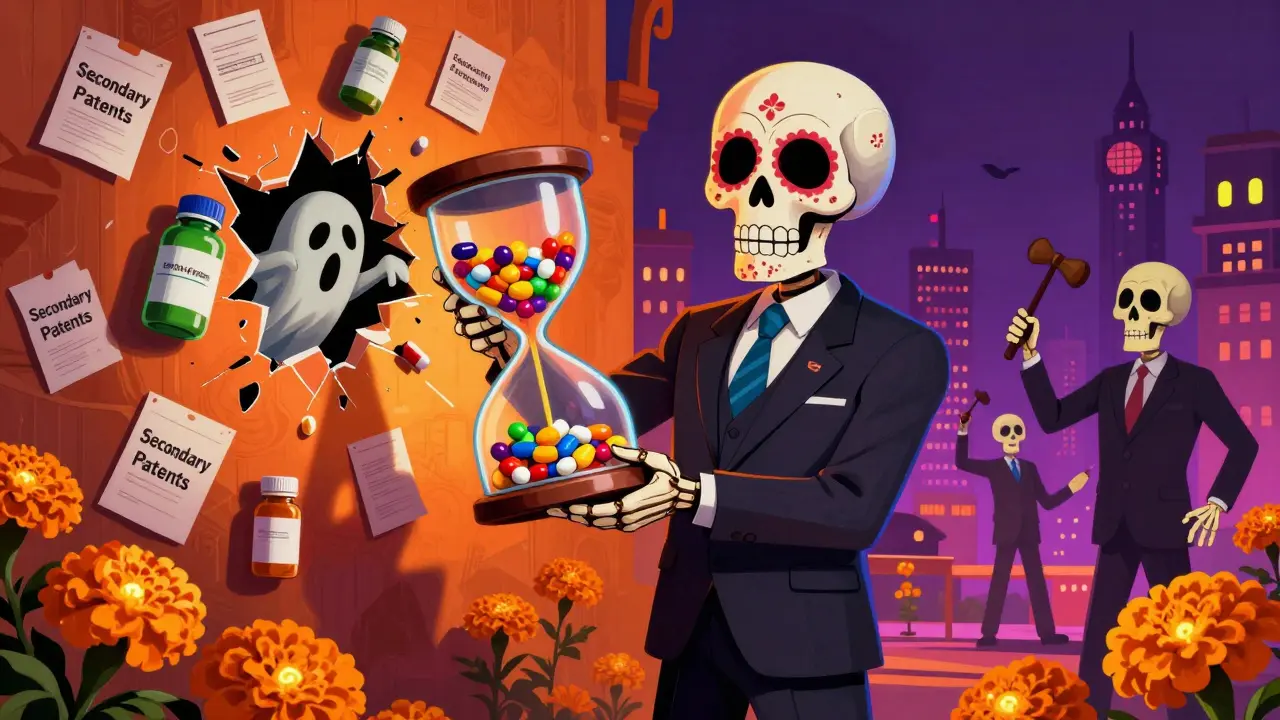
When a new brand-name drug hits the market, it comes with a patent that gives the company exclusive rights to sell it-usually for 20 years. But here’s the catch: by the time the FDA approves the drug and it reaches patients, much of that 20-year clock has already ticked away. That’s why pharmaceutical companies rely on patent litigation to stretch their monopoly far beyond what was originally intended. And the people who pay the price? Patients, pharmacies, and employers trying to afford life-saving medications.
How the system was supposed to work
In 1984, Congress passed the Hatch-Waxman Act to fix a broken system. Before then, generic drugs couldn’t get approved until after the brand-name drug’s patent expired. That meant years of waiting-and high prices-for patients. Hatch-Waxman changed that. It created a faster path for generics by letting companies file an Abbreviated New Drug Application (ANDA) without repeating all the expensive clinical trials. All they had to prove was that their version was bioequivalent to the brand drug. The law also gave generics a way to challenge weak or fake patents. If a generic company believed a patent was invalid or not being infringed, they could file what’s called a Paragraph IV certification. This was supposed to be a green light for competition. When they did, the brand-name company had just 45 days to sue. If they did, the FDA was legally forced to delay approval of the generic for up to 30 months. That’s the automatic stay. The idea? Protect real innovation, but let real competition in once the patent was truly expired. Simple. Fair. But that’s not how it played out.Why the 30-month stay isn’t the end of the story
You might think: once the 30 months are up, the generic launches. But that’s not what happens. In fact, the median time between the end of the 30-month stay and the actual launch of the generic drug is 3.2 years. That’s more than three full years of delay after the legal clock has technically run out. Why? Because patent litigation doesn’t end when the stay expires. Brand-name companies often file new lawsuits over different patents-sometimes dozens of them. These aren’t always the original compound patents. Many are for delivery methods, dosages, or packaging. And here’s the kicker: 72% of the patents used in these later lawsuits were filed after the FDA approved the original drug. These are called “secondary patents.” They’re not about the medicine itself-they’re about keeping generics out. The result? A generic drug can be approved by the FDA, but still sit on a shelf for years because the brand company keeps suing. In 2023, the FDA approved 90 first-time generic drugs. But many of them didn’t hit pharmacy shelves for years. Patients were stuck paying $1,200 a month for a drug that could’ve cost $30-if only the patent fights had ended sooner.Pay-for-delay: the secret deals behind the scenes
Sometimes, the brand company doesn’t even bother to fight in court. Instead, they pay the generic manufacturer to stay away. These are called “pay-for-delay” agreements. The brand company writes a check-sometimes hundreds of millions of dollars-to the generic maker, asking them not to launch. In exchange, the generic company agrees to delay entry for years. It sounds like a bribe. And the FTC agrees. Since 2010, the agency has challenged dozens of these deals, calling them anticompetitive. The numbers don’t lie. Only about 24% of patent cases ended with these kinds of settlements. But those 24% cost consumers billions. One study found that pay-for-delay deals alone added $3.5 billion in extra drug costs in a single year. And here’s the worst part: these deals are legal-at least for now. Courts have been split on whether they violate antitrust laws. But the FTC is pushing hard. In 2023, they challenged over 100 patents tied to big pharma companies like AbbVie and GlaxoSmithKline, many of which were linked to pay-for-delay schemes.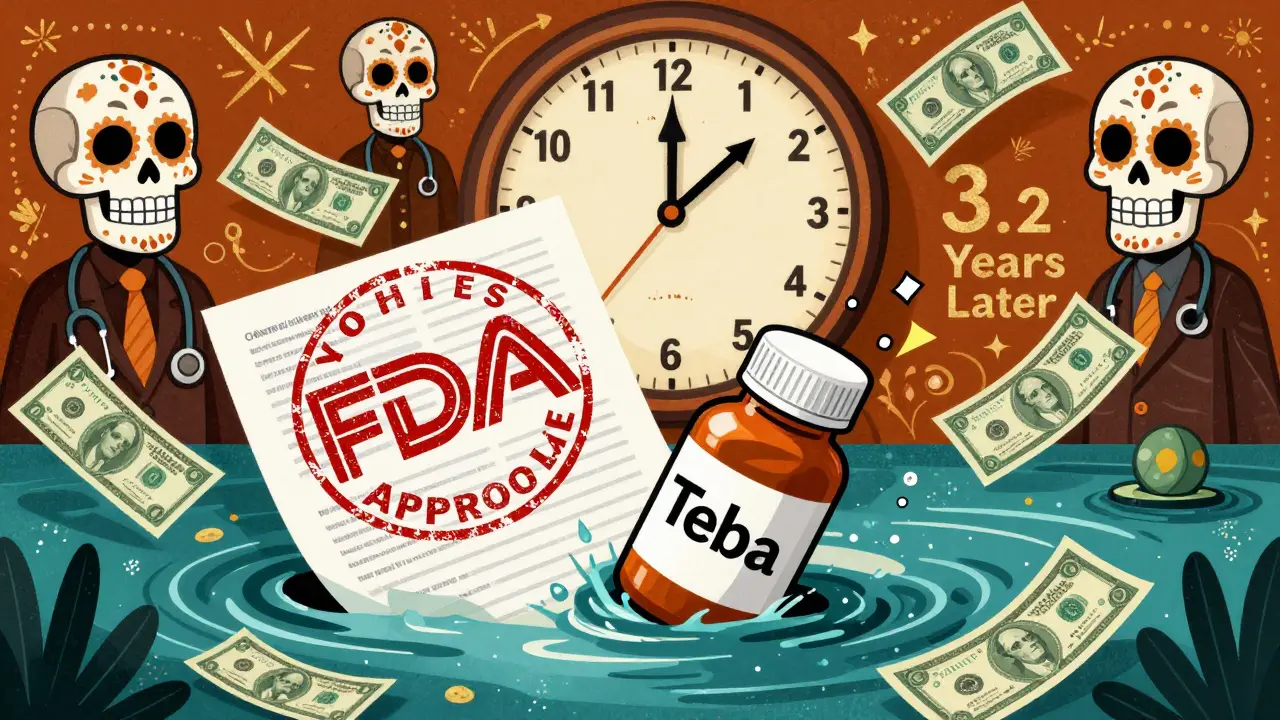
Who pays the price?
It’s not just patients. Employers, insurers, and government programs like Medicare and Medicaid are all on the hook. Take Humira, the top-selling drug in the U.S. for years. When its main patent expired, brand-name company AbbVie filed over 100 patents to block generics. By 2023, the delay cost large employers over $1.2 billion in extra spending. Teva, one of the biggest generic makers, lost $850 million in projected revenue because of prolonged litigation. Patients are suffering too. Doctors in Chicago and Atlanta report patients rationing insulin because the generic version was approved but blocked by litigation. One Reddit user shared that their patient had to wait two years after FDA approval to get the generic-because the brand company kept filing new lawsuits. Two years. For a drug that should’ve cost $50 a month instead of $1,200. And it’s not just small molecules. Biosimilars-generic versions of complex biologic drugs-are facing even longer delays. On average, biosimilar patent fights take 25% longer than regular generic cases. That means more delays, more costs, more pain.The cost of fighting back
Generic companies aren’t sitting still. But the cost of fighting patent lawsuits is staggering. Defending a single case through trial can cost $3 to $5 million. A full appeal? Over $10 million. That’s why only the biggest generic manufacturers can afford to play. The top five generic companies now control 45% of the market-not because they make better drugs, but because they have the legal teams to survive the marathon. Smaller companies? They often give up. They can’t afford to risk millions on a case they might lose. Some generics try to launch “at risk”-meaning they start selling before the court rules. It’s a gamble. If they win, they make millions. If they lose, they pay damages that could bankrupt them. Only a handful of companies dare to do it.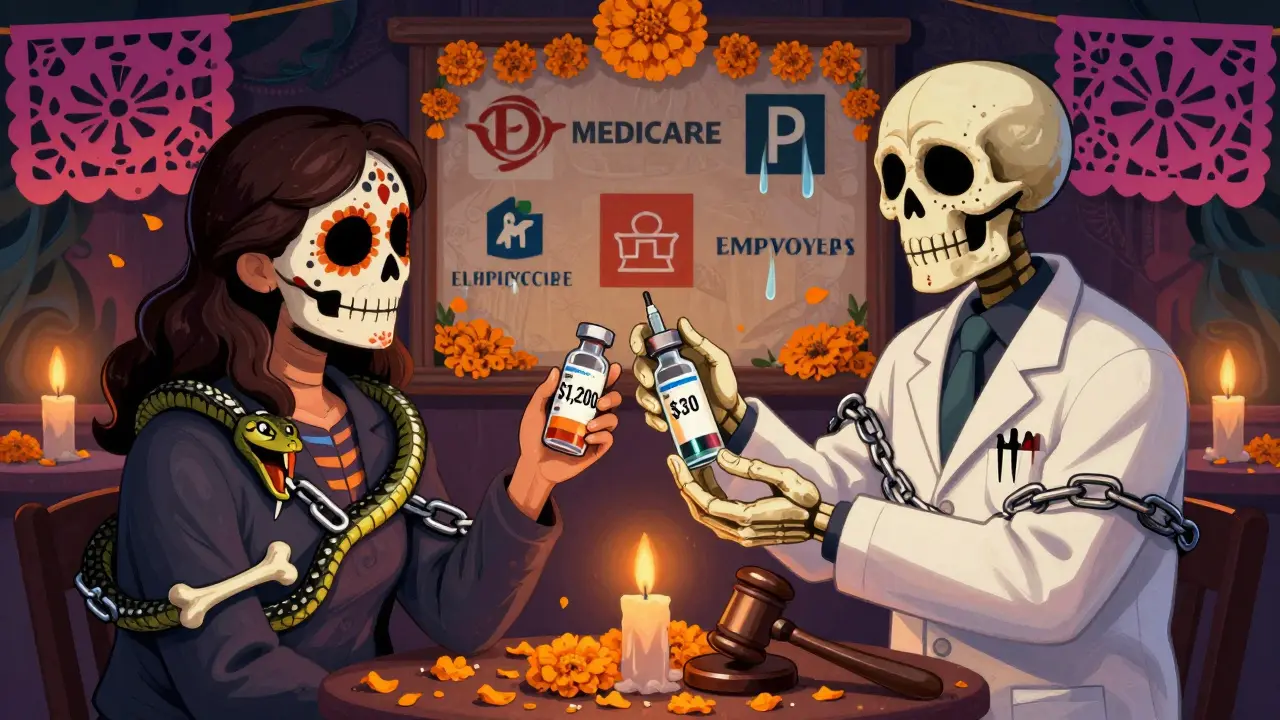
What’s being done-and what’s not
There have been attempts to fix this. The CREATES Act, passed in 2023, was meant to stop brand companies from blocking generic companies from getting samples of the drug to test. That was a tactic used to delay approval. But enforcement is weak. The FDA still lists about 15% of patents in its Orange Book incorrectly, leaving generics guessing what’s real and what’s fake. Congress is considering the Protecting Consumer Access to Generic Drugs Act. It would limit how many patents a company can list in the Orange Book and ban serial litigation-filing multiple lawsuits over the same drug to stretch out delays. The FTC is also stepping up. Chair Lina Khan said in early 2024 that they’ll keep targeting pay-for-delay deals and other anti-competitive patent tactics. But without new laws, they’re fighting with one hand tied behind their back.What’s next?
The numbers are clear: patent litigation is no longer about protecting innovation. It’s about protecting profits. The average delay for a generic drug is now 3.2 years after the 30-month stay ends. That’s nearly a decade of monopoly pricing for many drugs. Without reform, this system will keep costing consumers $15 to $20 billion every year. Patients will keep rationing insulin. Employers will keep paying more for health plans. And the same handful of companies will keep winning-not because their patents are strong, but because the rules let them drag out the fight. The fix isn’t complicated. Limit secondary patents. Ban pay-for-delay. End serial litigation. Let generics in when the FDA says they’re ready. The law was designed to do that. It’s time we made it work again.Why do generic drugs take so long to launch after FDA approval?
Even after the FDA approves a generic drug, brand-name companies often file additional patent lawsuits to delay its market entry. The 30-month automatic stay from the Hatch-Waxman Act is just the beginning. On average, generics launch 3.2 years after that stay ends because of new lawsuits over secondary patents, pay-for-delay deals, or procedural delays. The system is designed to allow competition, but in practice, it’s often used to block it.
What is a Paragraph IV certification?
A Paragraph IV certification is a legal statement a generic drug maker files with the FDA when they believe a brand-name drug’s patent is invalid or won’t be infringed. This triggers a 45-day window for the brand company to sue. If they do, the FDA must delay final approval of the generic for up to 30 months. It’s the legal tool that lets generics challenge patents before launch-but it’s also the trigger for the longest delays.
What are pay-for-delay agreements?
Pay-for-delay agreements happen when a brand-name drug company pays a generic manufacturer to delay launching its cheaper version. Instead of fighting in court, the brand pays the generic to stay out of the market. These deals cost consumers billions in higher drug prices and are considered anti-competitive by the FTC. While not illegal yet, they’re under increasing scrutiny and legal challenge.
How do secondary patents delay generics?
Secondary patents cover things like how a drug is delivered, its dosage form, or packaging-not the active ingredient itself. These are often filed years after the original drug is approved. Since the law allows companies to list every patent in the FDA’s Orange Book, brand-name companies use dozens of these to file repeated lawsuits. Even if each patent is weak, the legal process itself becomes a barrier. About 72% of patents used in litigation were filed after FDA approval.
Can a generic company launch before a lawsuit is settled?
Yes, but it’s risky. This is called a “launch at risk.” A generic company can start selling its product after receiving FDA approval-even while lawsuits are still ongoing. If they win the case, they keep the market. If they lose, they must pay damages, which can be massive. Only large, well-funded generic manufacturers with deep legal teams take this gamble. Most avoid it.
Jillian Angus
December 22, 2025 AT 17:27They just keep filing patents on packaging. Like, seriously? A pill bottle shouldn't be patentable.
Joe Jeter
December 24, 2025 AT 05:29Let me guess-you’re one of those people who thinks Big Pharma is evil but still takes their $5,000 cancer drugs. Wake up. Without patents, no innovation. No cures. Just cheap copies and zero progress.
John Pearce CP
December 25, 2025 AT 03:23The Hatch-Waxman Act was a noble experiment, but it was hijacked by corporate lawyers with more resources than sense. The system was designed to balance innovation and access-now it’s a legal minefield where the only winners are litigation firms. Secondary patents are not innovation; they’re litigation theater. And the FDA’s Orange Book is a joke-15% of listed patents are invalid or irrelevant, yet no one audits them. This isn’t capitalism. It’s rent-seeking dressed up as intellectual property.
When a company files over a hundred patents on a single drug, it’s not protecting an invention-it’s buying time. Time to extract monopoly rents. Time to pressure insurers. Time to make patients choose between insulin and groceries. The 30-month stay was never meant to be the beginning of a five-year delay. It was supposed to be a pause, not a permanent wall.
And pay-for-delay? That’s not a business strategy-it’s bribery with a subpoena. The FTC has the authority to challenge these, but they’re outgunned. Why? Because the legal costs of fighting a patent suit can bankrupt a small generic manufacturer. So they don’t fight. They fold. And the market stays rigged.
Meanwhile, biosimilars face even longer delays-25% longer-and the same tactics apply. The same companies. The same loopholes. The same patients rationing meds. This isn’t about innovation anymore. It’s about control. And until Congress caps the number of patents per drug, bans serial litigation, and makes pay-for-delay explicitly illegal, nothing will change. The law was never broken. It was weaponized.
EMMANUEL EMEKAOGBOR
December 26, 2025 AT 05:03In Nigeria, we rarely see these brand-name drugs at all. When we do, they’re priced beyond reach. The real tragedy is not the litigation-it’s that the system doesn’t even reach us. We don’t have the infrastructure to challenge patents, nor the regulatory capacity to fast-track generics. So we wait. And people die waiting. I don’t blame the companies for protecting their IP-I blame the global system that lets them profit from suffering while the rest of the world gets crumbs.
Maybe the solution isn’t just legal reform in the U.S.-it’s global equity. If a drug saves lives, it shouldn’t be a luxury reserved for those who can afford the legal battles.
Sidra Khan
December 26, 2025 AT 15:49Ugh I’m so tired of this. Everyone’s mad at Big Pharma but nobody wants to pay more taxes to fund public drug research. Just give me the generic already. I don’t care how many patents they filed. I just need my insulin to not cost a mortgage.
Lu Jelonek
December 28, 2025 AT 11:05As someone who worked in regulatory affairs for a mid-sized generic manufacturer, I can tell you the truth: the system is broken, but not because of malice. It’s because of complexity. The FDA doesn’t have the staff to verify every patent claim. The courts don’t have the time to rule quickly. And the generic companies? Most are undercapitalized. The ones that survive are the ones with legal departments bigger than some startups.
Launch at risk? It’s not a bold move-it’s a suicide mission. One bad ruling and you lose everything. I’ve seen companies fold after losing a $7M case. And the brand companies? They know this. That’s why they keep filing. Not because they’re confident in the patent. Because they’re confident in the cost.
The CREATES Act was a step. But without mandatory timelines for court rulings, without penalties for frivolous filings, and without public funding for generic litigation defense-it’s just a Band-Aid.
siddharth tiwari
December 29, 2025 AT 19:53you know what this is really about? the fda and big pharma are in cahoots. they let the patents slide so they can control the market. and the government? theyre getting kickbacks. i read somewhere that the patent office gets funding from pharma lobby money. thats why they approve all these dumb secondary patents. its a conspiracy. they dont want you healthy. they want you hooked on $1200 pills. and dont get me started on how the fda approves drugs in 6 months then takes 3 years to let generics in. its all planned. #pharmageddon
CHETAN MANDLECHA
December 31, 2025 AT 04:54Here in India, we’ve been making generics for decades. We don’t need 20-year monopolies. We need access. The U.S. system is not protecting innovation-it’s protecting profit margins. I’ve seen Indian companies produce the same insulin for $3 a vial. The cost of production hasn’t changed. The only thing that changed is the patent filings. And yet, Americans pay 40x more. It’s not a legal issue. It’s a moral one.
When the Hatch-Waxman Act was passed, it was supposed to be a bridge between innovation and access. Now it’s a moat. And the bridge is burning.
The solution? Limit patents to the active ingredient only. Ban pay-for-delay. Force transparency in the Orange Book. And let the FDA approve generics without waiting for a court to finish its coffee break.
Patients aren’t asking for free medicine. They’re asking for fair pricing. And if that means shortening monopoly windows to 10 years instead of 20, then so be it. Innovation should be rewarded-not extended indefinitely through legal loopholes.
And for the record: if you think generics are inferior, you’ve never seen the quality control in Indian and Chinese manufacturing facilities. They’re often better than the originals.