
When a brand-name drug hits the market, its patent gives the company a monopoly - often for 20 years. But that monopoly isn’t absolute. Behind the scenes, generic drug makers are quietly preparing to break it open. They don’t wait until the patent expires. They don’t wait for the drug to be sold. They challenge the patent before they even make a pill. This is the power of the Paragraph IV certification - a legal tool built into the Hatch-Waxman Act of 1984 that lets generics attack patents head-on, years before the brand-name drug loses protection.
What Exactly Is a Paragraph IV Certification?
A Paragraph IV certification is a formal statement filed by a generic drug company when it submits an Abbreviated New Drug Application (ANDA) to the FDA. It says, in plain terms: "We believe your patent is invalid, we’re not infringing it, or it can’t be enforced." This isn’t a threat. It’s a legal trigger. Under 35 U.S.C. § 271(e)(2), submitting this certification counts as an "artificial act of infringement." That means the brand-name company can sue the generic before a single pill is made or sold. It’s a legal fiction - but it works.
The system was designed to solve a real problem. Before Hatch-Waxman, generic companies had to wait until the patent expired to launch. That meant years of lost revenue. Brand companies, meanwhile, couldn’t sue until the generic actually hit the market - by which time, damage was done. Paragraph IV created a middle ground: litigation can start early, but only if the generic is bold enough to challenge the patent upfront.
How the Process Actually Works
The timeline is tight and unforgiving. Here’s how it plays out:
- A generic company files its ANDA with the FDA and includes a Paragraph IV certification against one or more patents listed in the FDA’s Orange Book - the official list of patents tied to brand-name drugs.
- Within 20 days, the generic must send a detailed notice letter to the brand-name company and the patent holder. This isn’t a formality. It must include the legal and factual basis for why the patent doesn’t apply.
- The brand company has 45 days to file a patent infringement lawsuit. If they do, the FDA automatically puts a 30-month stay on approving the generic drug.
- During that 30 months, the courts decide if the patent is valid. If the generic wins, the FDA can approve the drug. If the brand wins, the generic can’t enter until the patent expires.
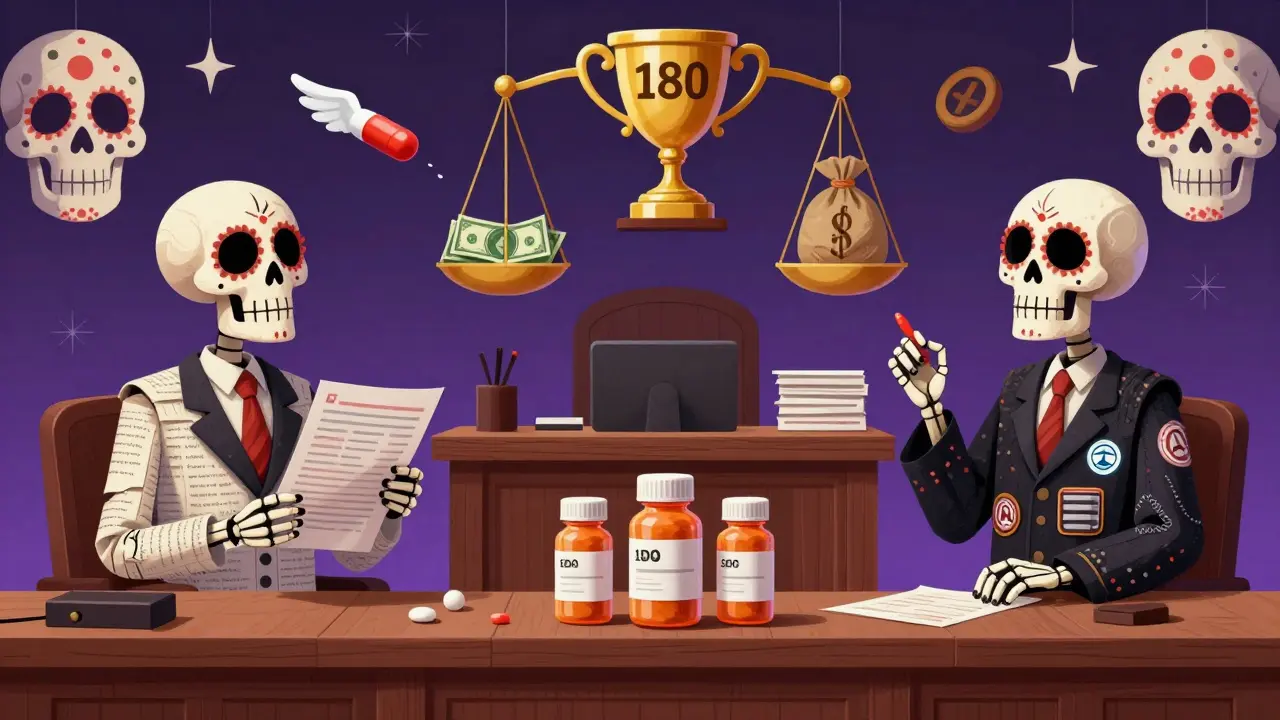
But here’s the twist: the 30-month clock isn’t fixed. If the court rules early, the stay ends. If the brand delays filing or the generic files amendments, the stay can stretch to 36 months or more. And if the generic wins, it gets a huge prize: 180 days of exclusive market access. No other generic can enter during that time. That’s why companies fight so hard - for a $1 billion drug, 180 days of exclusivity can mean $500 million in pure profit.
Why Do Brand Companies List So Many Patents?
It’s not just one patent anymore. In 2005, brand-name drugs had an average of 7.2 patents listed in the Orange Book. By 2024, that number jumped to 17.3. Why? Because every patent is a shield. If a generic challenges one, the brand can still hold onto the others. This tactic, called "patent thickening," is a deliberate strategy to delay generic entry.
Some of these patents are legitimate - covering new delivery methods, formulations, or uses. Others are borderline. A 2024 study found that 31% of Paragraph IV targets were drugs that had been slightly reformulated just before generics arrived - a practice known as "product hopping." For example, a drug might switch from a tablet to a capsule, get a new coating, or add a minor ingredient. The brand gets a new patent. The generic has to start the whole challenge process over.
And it works. In 92% of cases where a Paragraph IV certification is filed, the brand company sues. That’s not a coincidence. It’s a deterrent. The cost of litigation is brutal: generic companies spend an average of $12.3 million per challenge, and cases take nearly 29 months to resolve. Many smaller generics can’t afford to fight. Only the biggest players - Teva, Mylan, Sandoz, Hikma - have the resources to go all in.
The 180-Day Exclusivity Prize - And Its Pitfalls
The 180-day exclusivity period is the golden ticket. But it’s not always worth it.
Some generics win the race but lose the prize. Why? Settlements. In 78% of Paragraph IV cases, the brand and generic settle before trial. And in 68% of those settlements, the brand pays the generic to delay launch - a "pay-for-delay" deal. The FTC says these agreements cost consumers $192 billion a year in higher drug prices. In 2024 alone, the FTC filed 17 lawsuits against these kinds of deals, which averaged $187 million per agreement.
One former patent attorney on Reddit put it bluntly: "The 180-day exclusivity is worth fighting for - but settlements often force you to wait until 75% of that time has passed. You lose 60% of your potential profit."
And then there’s the "skinny label" loophole. If a drug is approved for three conditions, but only one is patented, the generic can file a Section viii carve-out and launch for the other two. That’s legal. And it’s used in about 37% of Paragraph IV filings. It’s a smart workaround - avoid the patent entirely, and enter the market faster.
Who’s Winning? The Numbers Don’t Lie
Since 2020, generic companies have been winning more often. Between 2003 and 2019, they succeeded in only 41% of Paragraph IV cases. From 2020 to 2025, that number jumped to 58%. Why? Two big reasons: Supreme Court rulings have narrowed what counts as a patentable invention, and the FDA has cracked down on vague or redundant patent listings.
Meanwhile, the market is exploding. In 2024, 1,247 Paragraph IV certifications were filed - up from just 187 in 2003. That’s a 10.2% annual growth rate. Generic drugs now make up 90% of all prescriptions in the U.S., and Paragraph IV challenges account for 43% of that market - $55.3 billion in sales in 2024 alone.
Brand companies are feeling the heat. AbbVie’s Humira faced 28 Paragraph IV challenges. Eli Lilly’s Trulicity got 24. Pfizer’s Eliquis had 21. Each one of those challenges cost millions in legal fees and delayed revenue. But the generics kept coming.
What’s Next? The Rules Are Changing
The FDA’s 2022 rule update forced generics to be more precise when amending their certifications after a court ruling. You can’t just tweak a patent claim and try again - you have to prove the change is real and tied to the original drug. This was meant to stop "litigation shopping," where companies file multiple challenges hoping one sticks.
Now, in 2026, the FDA is proposing a new rule: brand companies will have to justify every patent they list in the Orange Book. No more blanket filings. If a patent doesn’t clearly cover the drug’s active ingredient or method of use, it gets kicked out. Analysts predict this could reduce patent thickets by 30-40%.
The FTC is also doubling down. Their 2025 plan targets pay-for-delay deals with more lawsuits and stricter penalties. If they succeed, generic drugs could enter the market 4-6 months earlier on average. That’s billions more in savings for patients.
For now, the system remains messy, expensive, and high-stakes. But it’s working. Generic drugs save the U.S. healthcare system $2.2 trillion since 1984. And Paragraph IV is the main engine driving that savings. It’s not perfect. It’s not fair. But it’s the only tool generics have to break the patent lock.
What This Means for Patients
If you take a generic drug today, chances are it got here because someone challenged a patent. That challenge didn’t happen in a lab. It happened in a courtroom. It cost millions. It took years. And it was worth it.
Every time you pay less for a prescription, you’re benefiting from this system. The brand company spent years developing the drug. But the generic company spent years fighting to make it affordable. That’s the trade-off. And for patients, it’s the only one that matters.
What is a Paragraph IV certification?
A Paragraph IV certification is a legal statement filed by a generic drug company with the FDA, declaring that a patent listed for a brand-name drug is invalid, unenforceable, or will not be infringed by the generic product. This triggers a patent lawsuit before the generic drug is even made, allowing early market entry if the generic wins.
How does the 180-day exclusivity period work?
The first generic company to successfully challenge a patent through a Paragraph IV certification gets 180 days of exclusive market rights - no other generic can enter during that time. This incentive drives competition, but many companies delay launch through settlements, reducing the actual benefit.
Why do brand-name companies list so many patents?
Brand companies list multiple patents - averaging 17.3 per drug in 2024 - to create a "patent thicket." Each patent adds a legal barrier. Even if a generic beats one, others can still block entry. This delays competition and extends monopoly profits.
What is a "pay-for-delay" settlement?
A pay-for-delay settlement is when a brand-name drug company pays a generic company to delay launching its cheaper version. These deals, which averaged $187 million per agreement in 2024, are illegal under antitrust law, and the FTC has filed 17 lawsuits against them since 2023.
Can a generic drug enter the market without challenging a patent?
Yes. Generics can enter after a patent expires without filing a Paragraph IV certification. But those drugs don’t get the 180-day exclusivity, and they face immediate competition from other generics, which lowers profits. Challenging patents is a high-risk, high-reward strategy.
Ben Kono
January 11, 2026 AT 23:51So generics just sue before they even make the drug and the brand has to pay millions to defend a patent that might not even be valid
Rinky Tandon
January 12, 2026 AT 08:29This is why American pharma is a scam machine. Patent thickets are corporate extortion. They file 17 patents on a pill that’s just a sugar cube with a new color. The FDA is complicit. The FTC is asleep. And we pay $1,200 for insulin because some lawyer wrote a claim about a "capsule coating technique" that does nothing but delay generics. India makes this stuff for $2. We’re being robbed.
Windie Wilson
January 13, 2026 AT 02:02So let me get this straight - a company spends $2 billion developing a drug, then another company spends $12 million to legally bully them into giving up their monopoly… and we call this innovation? The system rewards lawyers, not labs. And somehow we’re supposed to cheer when the pill costs $3 instead of $300? I mean… I guess I’m not mad? Just confused.
Konika Choudhury
January 14, 2026 AT 00:16They dont even need to win the case just drag it out for 30 months and the brand runs out of money and the generic still gets exclusivity
Cassie Widders
January 14, 2026 AT 07:22I’ve taken generics for years. Never knew this was happening behind the scenes. Kinda wild that a courtroom battle decides if my blood pressure med is $5 or $500.
Daniel Pate
January 15, 2026 AT 13:28If you look at the philosophical underpinnings of patent law - it’s meant to incentivize innovation, not create permanent monopolies. But here we’ve turned it into a game of legal chess where the board is rigged. The real question isn’t whether generics should challenge - it’s why the system allows patents on trivial modifications. That’s not innovation. That’s exploitation dressed up as IP.
Amanda Eichstaedt
January 15, 2026 AT 16:11Imagine if every time you bought a new phone, the company patented the shape of the charging port, the color of the logo, and the sound it makes when you turn it on. Then sued anyone who tried to make a cheaper version. That’s what’s happening with drugs. We’re not saving money - we’re paying for legal theater. And the actors? Big Pharma and Big Law.
Craig Wright
January 15, 2026 AT 18:58The American system is a mess. In the UK, we have a national health service that negotiates prices directly. No lawsuits. No 180-day exclusivity. No pay-for-delay. Just fair pricing and timely access. Why does the US insist on turning healthcare into a courtroom battleground? It’s not efficiency - it’s profit maximization disguised as competition.
Darryl Perry
January 16, 2026 AT 07:05Pay-for-delay is illegal but still happens because the penalties are a slap on the wrist. The FTC sues after the fact but the damage is done. Patients lose. Taxpayers lose. The system is broken and nobody’s fixing it because the players are too rich.
Jose Mecanico
January 18, 2026 AT 00:52It’s interesting how the system forces generics to be aggressive just to survive. If you don’t file a Paragraph IV, you’re stuck in the low-margin, high-competition space. But if you do, you risk losing millions. So only the giants play. That’s not competition - it’s oligopoly with extra steps.