
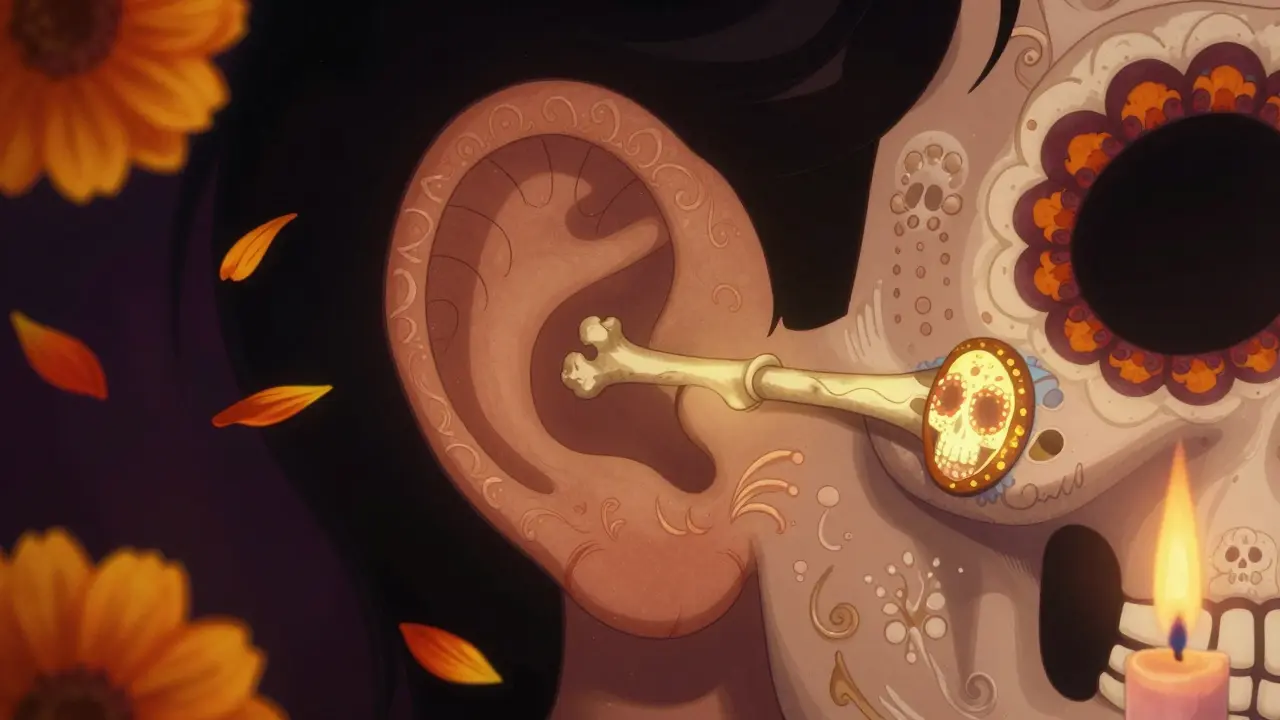
Imagine trying to hear your child say "I love you"-but the words sound muffled, like they’re speaking underwater. For many people with otosclerosis, this isn’t imagination. It’s reality. Otosclerosis is a condition where abnormal bone growth in the middle ear slowly locks up the stapes, one of the tiniest bones in your body, preventing sound from reaching the inner ear. It doesn’t happen overnight. It creeps in over years. And if you’re in your 30s or 40s and suddenly find yourself asking people to repeat themselves, especially when they speak softly or from another room, this might be why.
What Exactly Is Otosclerosis?
Otosclerosis isn’t a tumor. It’s not an infection. It’s a glitch in how bone rebuilds itself inside the ear. Normally, bone tissue in the middle ear is stable and strong. In otosclerosis, the bone around the stapes is a small, stirrup-shaped bone that’s only about 3.2mm long starts to grow irregularly. This new bone becomes spongy at first, then hardens. Eventually, it fuses to the oval window-the doorway between the middle ear and the inner ear. When that happens, the stapes can’t vibrate. And without vibration, sound doesn’t travel. That’s how you lose hearing-not because your ear is damaged, but because it’s literally stuck.
This condition is one of the most common causes of hearing loss in adults under 50. In the U.S., about 3 million people have it. It’s more common in women-70% of cases-and often shows up between ages 30 and 45. If your mom or grandma had trouble hearing, especially in their 30s or 40s, you’re more likely to develop it too. Around 60% of people with otosclerosis have a family history.
How Does It Affect Your Hearing?
Most people with otosclerosis lose hearing slowly. It starts with trouble hearing low-pitched sounds. You might notice you can’t hear whispers, or that men’s voices sound muffled. High-pitched sounds-like birds chirping or children’s voices-are often still clear. That’s different from age-related hearing loss, which usually hits high frequencies first.
An audiogram will show what’s going on. It typically reveals an air-bone gap of 20 to 40 decibels. That means sounds you can hear through the air (like someone talking) need to be much louder to be heard through bone conduction (like when you hum). This gap is the fingerprint of conductive hearing loss caused by otosclerosis.
For about 1 in 10 people, the disease spreads to the inner ear. This causes sensorineural hearing loss, which is harder to fix. That’s why early diagnosis matters. Left untreated, hearing can drop by 15 to 20 decibels over five years. That’s the difference between hearing a conversation clearly and needing to turn up the TV volume just to follow along.
How Is It Diagnosed?
Doctors don’t just guess. They look for three things:
- Pure-tone audiometry: This test shows the air-bone gap. If it’s 15 dB or more, otosclerosis is likely.
- Speech discrimination: People with otosclerosis usually understand speech well-often above 70% accuracy. If you understand words clearly but can’t hear them, that’s a clue.
- Temporal bone CT scan: This can show the early signs: small, dark spots (radiolucent foci) around the oval window, usually 0.5 to 2.0mm wide.
But here’s the problem: many people wait years before getting tested. Tampa General Hospital found that 22% of patients had their symptoms for an average of 18 months before being correctly diagnosed. That’s because otosclerosis is often mistaken for Eustachian tube dysfunction or just "getting older." If your hearing loss is steady-not sudden or fluctuating-it’s likely not an infection or fluid buildup. It could be otosclerosis.

How Is It Treated?
You have two real options: hearing aids or surgery.
Hearing Aids
For mild to moderate hearing loss, a hearing aid can help. It doesn’t fix the bone growth, but it amplifies sound so you can still hear. About 65% of people start with hearing aids. But if your hearing keeps getting worse, you’ll eventually need more.
Stapedectomy or Stapedotomy
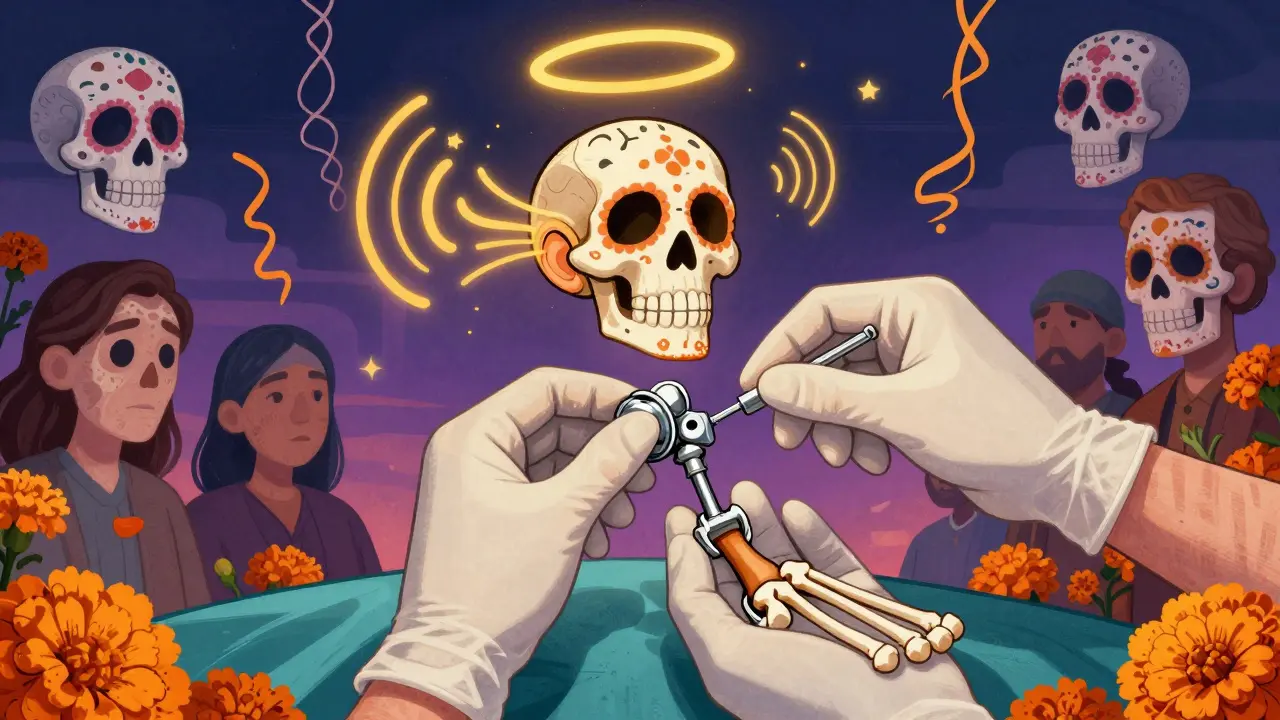
This is the gold standard. In a stapedotomy is a surgical procedure where a small hole is made in the stapes footplate and a prosthetic device is inserted to restore sound conduction, the surgeon removes part of the fixed stapes and replaces it with a tiny prosthesis-often made of titanium or platinum. The new device lets sound pass through again.
The success rate? 90-95%. According to the American Academy of Otolaryngology, 87% of patients achieve functional hearing (better than 30 dB) after surgery. That means most people can hear normal conversation without amplification.
A new device, the StapesSound™ is an FDA-approved prosthetic with a titanium-nitride coating designed to reduce postoperative adhesions, was approved in March 2024. Early results show a 94% success rate at 12 months-slightly better than older models.
But surgery isn’t risk-free. About 1% of patients end up with worse hearing-sometimes permanently. That’s why doctors spend time explaining the risks before the procedure. And if you’ve had surgery before and it didn’t work, revision surgery is harder. Success rates drop to 75%.
What About Medication?
There’s no cure, but there’s something that might slow it down. Sodium fluoride, a mineral used in toothpaste, has been studied for otosclerosis. A 2024 study in the Journal of Otology found that people taking sodium fluoride for two years had 37% less hearing loss than those who didn’t. It doesn’t reverse the damage-but it might stop it from getting worse. It’s not for everyone, but for people with early-stage disease who aren’t ready for surgery, it’s an option.
What Other Conditions Are Like Otosclerosis?
It’s easy to confuse otosclerosis with other hearing problems:
- Noise-induced hearing loss: Starts with high-frequency loss. You miss birds, alarms, or children’s voices. Otosclerosis hits low frequencies first.
- Meniere’s disease: Causes spinning dizziness, ringing, and fluctuating hearing. Otosclerosis doesn’t cause vertigo.
- Presbycusis (age-related loss): Begins after 65 and affects high pitches. Otosclerosis usually starts decades earlier.
- Congenital ossicular problems: These are present from birth. Otosclerosis develops later in life.
The key difference? Otosclerosis is progressive and specific to the stapes. It’s one of the few hearing problems that surgery can fix almost completely.
What’s the Long-Term Outlook?
Most people do well. After surgery, 92% of patients report significant improvement in daily life. One teacher in Tampa said she could finally hear students whispering in the back row. Another man said he heard his wife say "I love you" for the first time in years.
But there’s a concern. Fewer surgeons are doing stapedectomies now. Since 2018, the number of procedures has dropped 15%. Younger otologists are focusing on cochlear implants. That means if you need surgery, you might have to travel to find the right specialist. It’s worth it-this procedure works.
Looking ahead, genetic testing might change everything. Researchers have found 15 gene locations linked to otosclerosis. Within five years, doctors may be able to test high-risk people-like those with a family history-before they even lose hearing. That could mean early treatment before the bone hardens.
What Should You Do If You Suspect Otosclerosis?
If you’re under 50 and noticing:
- Difficulty hearing low voices or whispers
- Needing to turn up the TV or phone volume
- Tinnitus that gets worse over time
- A family history of hearing loss
Then see an audiologist. Get a pure-tone hearing test. Don’t wait. The earlier you catch it, the more options you have. And if you’re told it’s just "aging," ask for a second opinion. Otosclerosis isn’t rare. It’s just underdiagnosed.
Support is out there. The Hearing Loss Association of America has over 1,200 members in their otosclerosis group. You’re not alone. And with modern treatment, you don’t have to live with silence.
Can otosclerosis cause complete deafness?
No, otosclerosis rarely leads to total deafness. Even in advanced cases, hearing loss is usually conductive, meaning it can be corrected with surgery or hearing aids. In about 10-15% of cases, it spreads to the inner ear and causes sensorineural loss, which is harder to reverse-but even then, most people retain some usable hearing. Over 90% of treated patients experience significant improvement.
Is otosclerosis hereditary?
Yes, genetics play a major role. About 60% of people with otosclerosis have a family member with the condition. Researchers have identified 15 gene locations linked to it, with the RELN gene on chromosome 7q22 being the most significant. If a parent has otosclerosis, your risk is higher-especially if you’re female and in your 30s or 40s.
Why does otosclerosis affect women more than men?
The exact reason isn’t fully understood, but hormones likely play a role. Otosclerosis often worsens during pregnancy, suggesting estrogen may trigger or speed up bone remodeling. Studies show 70% of cases occur in women, and symptoms frequently appear or worsen during childbearing years-between ages 30 and 45.
Can hearing aids cure otosclerosis?
No, hearing aids don’t cure otosclerosis-they only compensate for it. They make sounds louder but don’t stop the bone from growing. For that, you need surgery or medication like sodium fluoride. Many people start with hearing aids, especially if their hearing loss is mild. But if it keeps getting worse, surgery is the only way to restore natural hearing.
How long does recovery take after stapedotomy?
Most people notice improved hearing within a few days to a week. Full recovery takes about 4 to 6 weeks. You’ll need to avoid heavy lifting, blowing your nose, and flying during that time. The risk of complications like dizziness or taste changes is low and usually temporary. Most patients return to normal activities within two weeks.
Are there non-surgical alternatives to stapedotomy?
Yes. For mild cases or people who aren’t good surgery candidates, hearing aids are the main alternative. Sodium fluoride, taken as a supplement, may slow progression in early-stage disease. But no other treatment can restore hearing like stapedotomy. Lifestyle changes, supplements, or ear drops don’t work. If your hearing is dropping steadily, surgery remains the most effective option.
Linda Franchock
February 18, 2026 AT 00:46Also, sodium fluoride? Like in toothpaste? I’m gonna start brushing my ears with Crest now. 🤣
Prateek Nalwaya
February 18, 2026 AT 22:51Oliver Calvert
February 18, 2026 AT 22:56PRITAM BIJAPUR
February 20, 2026 AT 18:04Sodium fluoride isn’t magic. But it’s a pause button. A chance to breathe before the storm. And surgery? It’s not just restoring hearing. It’s restoring dignity. I’ve seen it. People come back from surgery and cry-not from pain, but from the first time in years they hear their own laugh. That’s worth traveling for.
Haley DeWitt
February 22, 2026 AT 04:11Thank you for the CT scan details and the air-bone gap explanation-I’m booking an audiologist tomorrow!! 🙌🙏 I’m also gonna try the sodium fluoride thing because why not?? I’m already taking fluoride for my teeth so why not my ears??
John Haberstroh
February 22, 2026 AT 04:22Logan Hawker
February 24, 2026 AT 01:11James Lloyd
February 25, 2026 AT 09:10Digital Raju Yadav
February 27, 2026 AT 06:01Carrie Schluckbier
February 27, 2026 AT 11:39