
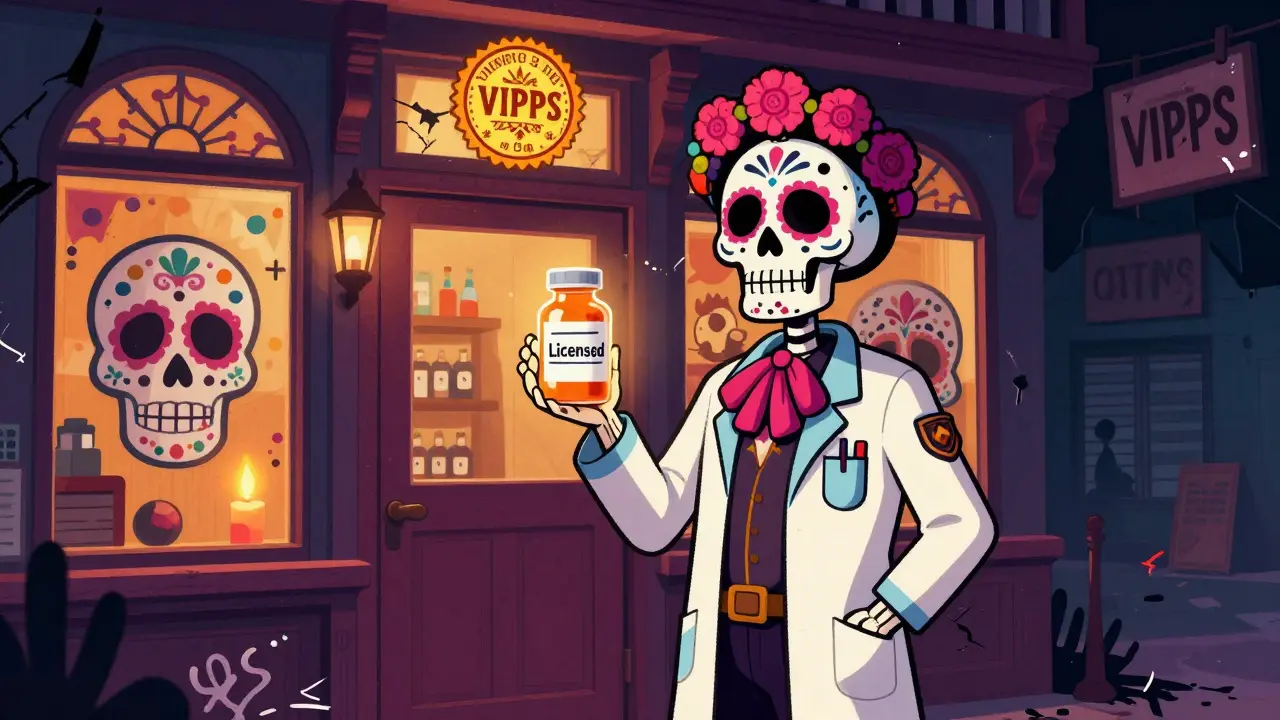
Every year, millions of Americans buy prescription drugs online. Some of them get the right medicine. Others get fake pills filled with rat poison, chalk, or worse. The FDA estimates that 1-3% of the $575 billion U.S. prescription drug market comes from unlicensed, illegitimate pharmacies. That’s billions of dollars in dangerous, fake drugs floating around - and it’s easier than ever to accidentally buy one.
How do you know if your pharmacy is real? It’s not enough to trust a slick website or a cheap price. Legitimate pharmacies don’t just look professional - they’re legally required to be licensed, inspected, and accountable. If you’re filling a prescription, picking up meds for a loved one, or ordering refills online, you need to know how to spot the real ones.
What Makes a Pharmacy Licensed?
A licensed pharmacy isn’t just a business with a sign out front. It’s a facility that has passed strict state-level reviews to prove it meets safety, staffing, and legal standards. Every pharmacy in the U.S. must be licensed by its state board of pharmacy. That means the building has been inspected, the pharmacists have passed exams, and the business has shown it can handle controlled substances safely.
The North American Pharmacist Licensure Examination (NAPLEX) is the main test pharmacists must pass. They need a minimum score of 75 out of 150. Most states also require a second exam on local pharmacy laws - like California’s CPJE. Without these, no one can legally dispense prescription drugs.
And it’s not just the pharmacist. The pharmacy itself must be registered, have proper storage for medications, keep accurate records, and have a licensed pharmacist physically present during business hours. In 45 states, you’re legally entitled to speak with a pharmacist before picking up your meds. If they’re not available, that’s a red flag.
How to Check If a Pharmacy Is Licensed
You don’t need a degree in pharmacy to verify a pharmacy. You just need five minutes and access to the internet. Here’s how:
- Go to your state’s board of pharmacy website. Every state has one. Search for “[Your State] board of pharmacy license verification.” For example, if you’re in Texas, go to the Texas State Board of Pharmacy site. You can search by pharmacy name, address, or license number. Results show if the license is active, expired, or under investigation.
- Look for the NABP Verified Internet Pharmacy Practice Sites (VIPPS) seal. This is the gold standard for online pharmacies. Only pharmacies that meet strict safety, privacy, and licensing rules get this seal. You can search for VIPPS-accredited pharmacies directly on the NABP website.
- Check for a physical address and phone number. Legitimate pharmacies list a real street address - not a P.O. box. Use Google Maps Street View to see if the building looks like a pharmacy. If it’s a residential house or a warehouse with no signage, walk away.
- Make sure they require a valid prescription. Any pharmacy that sells controlled substances like oxycodone, Adderall, or Viagra without a prescription is breaking the law. The Ryan Haight Act of 2008 made it illegal for online pharmacies to sell these drugs without a proper prescription from a licensed provider.
- Verify the pharmacist is available. Call the pharmacy. Ask to speak with a pharmacist. If they can’t put you through, or if the person who answers sounds like a call center agent with no medical training, it’s not legit.
Some states make this easy. Florida lets you check licenses for free online in seconds. California takes up to 30 days for written requests - but their online portal works instantly. In 28 states, you can verify a pharmacy’s status in under a minute. Don’t skip this step. A 2023 University of Florida study found 92% of consumers could verify a pharmacy’s legitimacy in five minutes or less - if they tried.
The NABP Verify Program: A National Safety Net
If you’re dealing with a pharmacy that ships across state lines - or you’re not sure which state to check - use the NABP Verify program. Launched in 2018, this system pulls real-time data from 50+ state pharmacy boards. You can search by pharmacy name, location, or license number and get a report showing active status, disciplinary actions, and expiration dates.
It’s not free. The subscription costs $125 per year for professionals. But for consumers, the search is free. You don’t need an account. Just go to the NABP website, click “Verify a Pharmacy,” and type in the name. The results show you exactly which state licensed them and whether they’re in good standing.
But here’s the catch: Not every pharmacy is in the NABP system. Some smaller, local pharmacies only register with their state. That’s why you still need to check your state’s site - even if you used NABP.
Red Flags That Mean Walk Away
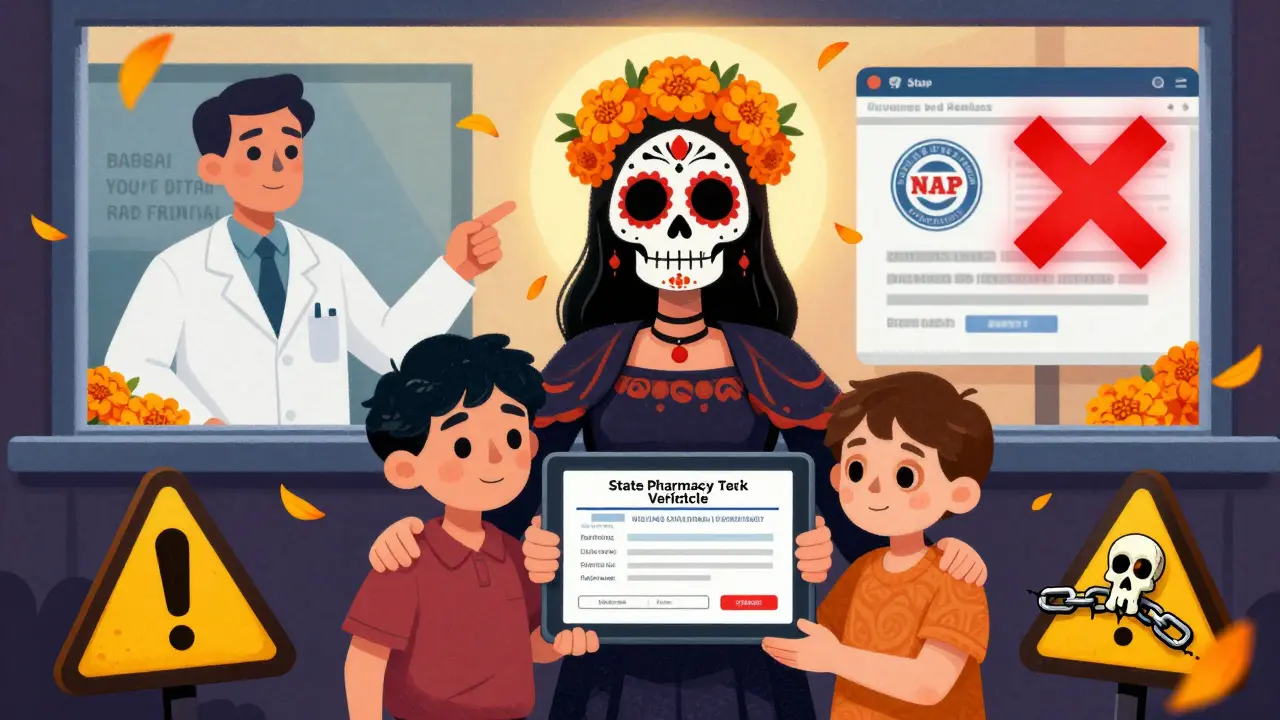
Here are the top warning signs you’re dealing with a fake pharmacy:
- They offer “no prescription needed” drugs - especially opioids, sedatives, or erectile dysfunction meds.
- The website has poor grammar, broken links, or uses “.pharmacy” or “.pharm” domains that look official but aren’t verified.
- They only accept cryptocurrency or wire transfers. Legit pharmacies take credit cards and insurance.
- The price is way too low. A 30-day supply of Lipitor that costs $12 at CVS but is listed for $2 online? That’s a trap.
- The pharmacy claims to be “FDA approved.” The FDA doesn’t approve pharmacies - only drugs and manufacturers. Pharmacies are licensed by states.
- You can’t find a physical address, or the address leads to a vacant lot or a residential home.
- The “pharmacist” on the phone can’t answer basic questions about your medication’s side effects or interactions.
In 2023, the FDA shut down over 1,200 illegal online pharmacies in Operation Safety Script. Many of them looked like real businesses. One even had a fake NABP seal. That’s why you need to verify through official channels - not just trust a logo.
What Happens If You Buy From a Fake Pharmacy?
Fake pills don’t just waste your money. They can kill you.
In 2022, the CDC reported that counterfeit fentanyl pills were responsible for over 70,000 overdose deaths in the U.S. Many of those pills were sold as oxycodone or Xanax by unlicensed online pharmacies. They looked identical to the real thing - but contained lethal doses of fentanyl.
Other fake drugs contain no active ingredient at all. Patients with diabetes, high blood pressure, or epilepsy who take these pills risk organ failure, seizures, or stroke.
And it’s not just physical harm. In 2023, a Better Business Bureau case documented a consumer who lost $850 to a fake pharmacy that stole their credit card info and personal health records. They never received the medication - and now their identity was compromised.
According to NABP enforcement data, unlicensed pharmacies are 4.7 times more likely to dispense the wrong medication and 8.2 times more likely to be involved in controlled substance diversion. That’s not a small risk. It’s a public health crisis.
What About Online Pharmacies?
Online pharmacies aren’t inherently bad. Many are excellent - especially for people in rural areas or with mobility issues. But the rise of digital pharmacies has made verification harder.
The FDA found that 1 in 4 online medication sellers operate without proper licensure. That’s why the Verified Pharmacy Program (VPP) was created in 2020. It lets multi-state pharmacies apply once for approval across multiple states. As of December 2023, 312 pharmacies were enrolled - covering over 1,800 locations.
But here’s the problem: Only 17 states require fingerprint background checks for pharmacists. Others use cheaper, less reliable online checks. That inconsistency means a pharmacist who’s clean in Texas might not pass in California - but they can still ship drugs across state lines.
California’s new 2024 rules require out-of-state pharmacies shipping to residents to provide an 800 number for direct pharmacist access. That’s a step forward. But most states still don’t have those rules.

Real Stories: When Verification Saved Lives
In March 2024, Maria Chen from San Diego used the California Board of Pharmacy website to check her pharmacy’s license. She noticed the pharmacist-in-charge had resigned two months earlier - and no one had been appointed yet. That’s a violation of state law. She switched pharmacies before picking up her blood pressure medication. Later, she learned the pharmacy had been placed on probation.
On Reddit’s r/pharmacy community, a February 2024 thread with 147 comments showed that 82% of users successfully verified their pharmacy using state websites. But 41% got confused by license numbers - like when California says, “Enter the number only, no prefix.” Those tiny details matter.
These aren’t rare cases. They’re happening every day. And they’re preventable.
What’s Changing in 2026?
The system is getting better - slowly. The NABP’s InterConnect system, launched in January 2024, now connects 43 states in real time. That means if a pharmacy loses its license in Texas, New York will know within minutes.
The FDA is spending $15 million to improve detection of fake online pharmacies by 2026. Major pharmacy benefit managers (PBMs) now require NABP Verify credentials for network participation - meaning if you use your insurance, your pharmacy has to be verified.
Dr. Carmen Catizone of NABP predicts that by 2027, we’ll see national licensure standards that cut verification complexity by 60%. But until then, the burden is on you.
Don’t wait for the system to fix itself. Check your pharmacy. Every time. Even if you’ve used it for years. Licenses expire. Pharmacists leave. Owners change. What was safe last year might not be safe today.
Final Checklist: Is Your Pharmacy Legit?
Before you pay for or pick up any prescription, run through this:
- ✅ Is the pharmacy licensed in your state? (Check your state board’s website)
- ✅ Does it have a VIPPS seal? (Verify on NABP.org)
- ✅ Is there a real street address? (Check Google Maps)
- ✅ Do they require a valid prescription?
- ✅ Can you speak with a pharmacist?
- ✅ Is the price reasonable? (Too cheap = too good to be true)
- ✅ Do they accept insurance or major credit cards?
If you can’t answer yes to all of these - walk away. Your life isn’t worth the risk.
How do I know if my online pharmacy is real?
Check if the pharmacy has the VIPPS seal from NABP and is licensed in your state. Go to your state’s board of pharmacy website and search by name or license number. If they sell prescription drugs without a valid prescription, they’re fake. Legit pharmacies also have a physical address you can verify on Google Maps.
Can I trust pharmacies that offer cheap medications?
No. If a medication is priced far below what you’d pay at CVS, Walgreens, or your local pharmacy, it’s likely counterfeit. Fake drugs often contain no active ingredient or dangerous substances like fentanyl. The FDA has seized thousands of these pills - many sold as painkillers or anxiety meds. Cheap doesn’t mean a deal. It means a risk.
Do all pharmacies have to be licensed?
Yes. Every pharmacy that dispenses prescription drugs in the U.S. must be licensed by its state board of pharmacy. This includes brick-and-mortar stores and online pharmacies. Unlicensed pharmacies are illegal, regardless of how professional they look. The NABP reports that 92% of U.S. pharmacies are currently licensed and active - but the remaining 8% can still cause serious harm.
What’s the difference between NABP and state licensing?
State licensing is the legal requirement - every pharmacy must have it. NABP Verify is a voluntary program that pulls together data from all state boards into one searchable system. It’s not a separate license, but it’s the easiest way to check multiple states at once. If a pharmacy is licensed in California and Texas, NABP Verify will show both. It’s a tool for convenience and safety - not a replacement for state verification.
What should I do if I suspect a pharmacy is fake?
Report it immediately. Contact your state board of pharmacy and file a complaint with the FDA’s MedWatch program. If you’ve already bought drugs from them, stop taking them and contact your doctor. Save any packaging, receipts, or emails - they help investigators. You can also report scams to the FTC at ReportFraud.ftc.gov. Your report could prevent someone else from being harmed.
Jennifer Phelps
January 11, 2026 AT 05:26Rinky Tandon
January 11, 2026 AT 17:57Sona Chandra
January 11, 2026 AT 20:03Cassie Widders
January 13, 2026 AT 19:19Lauren Warner
January 14, 2026 AT 08:28Darryl Perry
January 14, 2026 AT 13:24beth cordell
January 14, 2026 AT 15:43Craig Wright
January 14, 2026 AT 17:51Windie Wilson
January 15, 2026 AT 07:21Ben Kono
January 15, 2026 AT 10:06Lelia Battle
January 16, 2026 AT 17:03Konika Choudhury
January 18, 2026 AT 16:25