
Every year, over 1 million older adults in the U.S. get sent home from the hospital with the wrong medications-or the right ones, but the wrong doses. It’s not a rare mistake. In fact, 1 in 5 seniors experiences a medication error within three weeks of leaving the hospital. Many of these errors lead to falls, confusion, kidney damage, or even another hospital stay. The good news? Almost all of them are preventable.
Why Medication Errors Happen at Discharge
When you’re in the hospital, doctors and nurses track your meds closely. But when you leave, the system breaks down. Your discharge papers might list six pills, but at home, you’ve been taking eight-including that over-the-counter painkiller your cousin recommended and the herbal supplement you’ve used for years. Hospitals often don’t ask about those. And if your primary care doctor doesn’t get the updated list, they’re flying blind. The biggest problem? Medication reconciliation. That’s the fancy term for comparing what you were taking before you got sick, what you got in the hospital, and what you’re supposed to take when you go home. Most hospitals do this poorly. A 2020 study found that only 60-70% of discharge lists are accurate. High-performing programs? They hit 95%. The difference? A pharmacist on the team.The Five Steps to Safe Medication Transition
Getting home safely isn’t about luck. It’s about following a proven process. Here’s what works:- Verify - Get a complete list of every medication you were taking before admission. This includes vitamins, creams, inhalers, and even patches. Don’t assume the hospital knows. Bring your own pill bottles or a written list.
- Clarify - Ask: Why am I taking this? What does it do? Is this new, or did I take it before? If a doctor says to stop a blood pressure pill, make sure you understand why.
- Reconcile - Compare your pre-hospital list, your hospital list, and your discharge list. Any differences? Ask for an explanation. If something was added, removed, or changed, make sure it’s intentional.
- Communicate - The hospital must send your updated list to your primary care doctor, pharmacy, and home health nurse. Ask for a printed copy and confirm it was sent.
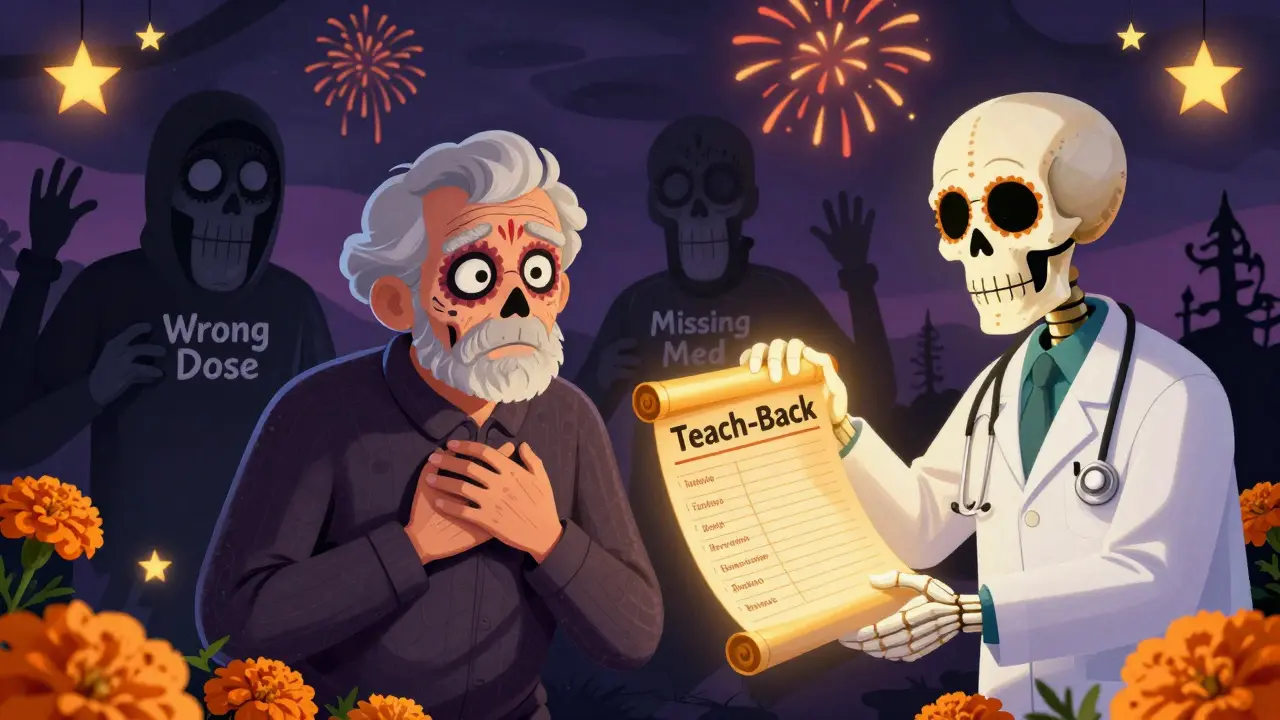
- Teach-Back - Don’t just nod along. Repeat back what you’re supposed to take, when, and why. Say: “So I take lisinopril 10 mg every morning for blood pressure, and I stopped the warfarin because my INR was too high.” If you can’t say it clearly, you don’t understand yet.
This isn’t optional. The American Geriatrics Society says it’s the standard for seniors. If your hospital doesn’t use Teach-Back, ask for it. It’s free, simple, and cuts errors in half.
Who Should Be Involved
You can’t do this alone. You need help-and the right people need to be in the room.Pharmacists are the unsung heroes of safe transitions. A 2018 study in JAMA Internal Medicine showed that when pharmacists lead discharge planning, medication discrepancies drop by 67%. They catch interactions, duplicate doses, and outdated prescriptions that doctors miss. If your hospital doesn’t have a pharmacist on the discharge team, ask why. And if they say they don’t have one, ask if they can connect you with a community pharmacist for a free review.
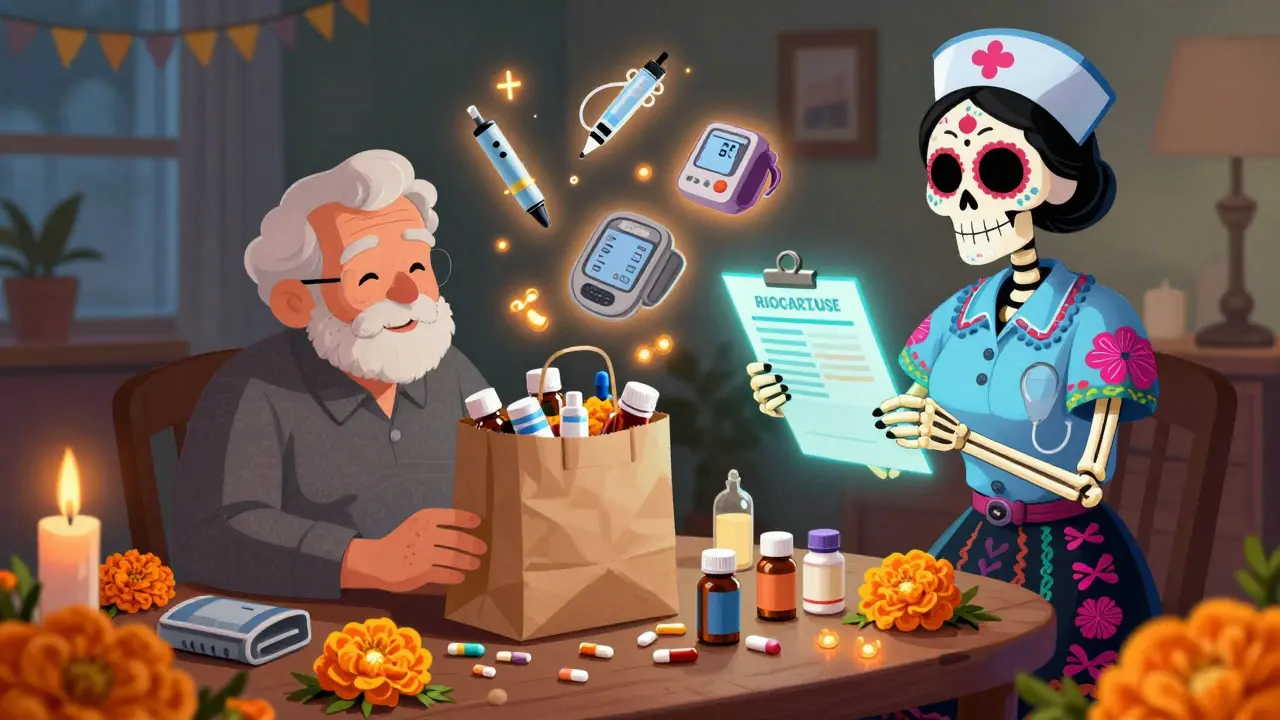
Home health nurses should visit within 24 hours of your return. They’re trained to do a “brown bag review”-ask you to bring all your meds in a bag, then compare them to the discharge list. If you’re on warfarin, they’ll check your INR within 72 hours. If you’re on insulin, they’ll review your blood sugar logs.
Your primary care doctor should get a copy of your discharge summary within 24 hours. If they don’t, call them yourself. Don’t wait. If you have a care coordinator or case manager, use them. They exist to bridge this gap.
High-Risk Medications to Watch
Some drugs are more dangerous than others during transitions. These are the ones that cause the most harm:- Anticoagulants - Warfarin, apixaban, rivaroxaban. Too much = bleeding. Too little = stroke. INR checks are non-negotiable.
- Insulin - Doses often change in the hospital. If you go home on a new regimen, you need daily glucose checks and a clear schedule.
- Opioids - Pain meds are often started or increased in the hospital. But seniors are more sensitive. Ask: Can I reduce this? Do I still need it?
- Diuretics - Water pills can cause dehydration or low potassium if not adjusted after hospitalization.
- Antiplatelets - Aspirin, clopidogrel. Stopping these suddenly can trigger heart attacks or strokes.
If you’re taking any of these, insist on a follow-up within 7 days. Don’t wait for your next scheduled appointment. Call your doctor’s office the day after you get home.
Technology Can Help-But Don’t Rely on It
There are apps now that show your meds with pictures and alarms. One 2023 study found they reduced errors by 41% in seniors. That’s huge. But apps don’t replace human checks.Electronic health records still don’t talk to each other. Only 35% of U.S. hospitals can automatically send your discharge list to your pharmacy or doctor. So even if your hospital uses Epic or Cerner, you still need to get a printed copy.
Use tech as a tool-not a safety net. Download a free app like MyTherapy or Medisafe. Enter your meds manually. Set alarms. Take screenshots of your discharge list and send them to a family member. But don’t assume the system did its job.
What to Do the Day You Get Home
Don’t wait. Start your safety plan the moment you walk in the door.- Do a brown bag review - Gather every pill, patch, inhaler, and liquid you brought home. Lay them out on the table.
- Compare to your discharge list - Does everything match? Are there extra pills? Missing ones? Wrong doses?
- Call your pharmacy - Ask them to verify your new prescriptions. Tell them: “I just got out of the hospital. Can you check if these match what I was taking before?”
- Call your doctor - Say: “I got home today. Can you confirm my medication list? I’m especially concerned about [list one high-risk med].”
- Ask for help - If you’re confused, ask a family member to sit with you. If you live alone, call a neighbor or community health worker. You don’t have to figure this out by yourself.
When to Call 911 or Go Back to the ER
Some signs mean you’re in danger:- Confusion, dizziness, or slurred speech after a new med
- Bleeding you can’t stop (nosebleeds, bruising, blood in stool)
- Severe drowsiness or trouble breathing
- Swelling in legs or sudden weight gain (could mean fluid overload from wrong diuretic dose)
- Missed a dose of insulin or blood thinner and feel unwell
If any of these happen, don’t wait. Go to the ER. Better safe than sorry.
What’s Changing in 2026
Medicare is now paying hospitals and clinics more if they keep patients out of the hospital after discharge. That means more resources are going into transition care. By 2025, all hospitals must use digital systems that share your medication list with your doctor and pharmacy automatically.But until then, you can’t wait for the system to fix itself. The tools are there: pharmacists, Teach-Back, brown bag reviews, follow-up calls. You just have to ask for them.
Seniors aren’t supposed to figure this out alone. The system was built to fail them. But you can beat it-with the right questions, the right people, and the right plan.
Joseph Snow
January 6, 2026 AT 00:00This whole post is a government-funded scare tactic. Hospitals don't make errors - they're being forced into paperwork nightmares by regulators who've never held a pill bottle. The real problem? Insurance companies won't pay pharmacists to do reconciliation. And now you're telling seniors to bring their entire medicine cabinet to discharge? That's not safety - that's performance theater.
melissa cucic
January 7, 2026 AT 07:05I appreciate the thoroughness of this guide - truly, it’s a lifeline for families navigating the chaos of post-hospital care. The five-step process is elegant in its simplicity, and I especially commend the emphasis on Teach-Back: it’s not just about compliance, it’s about dignity. When we assume understanding, we risk harm. When we invite articulation, we invite safety. I’ve seen this work - in my mother’s case, a single clarified dose of warfarin prevented a fall that could’ve ended her independence. Thank you for naming the invisible labor of care.
Angie Rehe
January 7, 2026 AT 07:29Let’s cut through the fluff: if your hospital doesn’t have a clinical pharmacist embedded in discharge, you’re being set up for failure. That’s not negligence - it’s systemic underfunding disguised as protocol. And ‘brown bag reviews’? That’s a Band-Aid on a hemorrhage. What we need is mandatory interoperability between EHRs, pharmacy benefit managers, and CMS. Until then, patients are the human firewalls for a broken infrastructure. Stop glorifying individual vigilance - fix the system.
Enrique González
January 7, 2026 AT 11:50You can do this. It’s not easy, but it’s possible. Start with one step - just one. Bring your pills to the pharmacy. Call your doctor the day you get home. You’re not alone. People are rooting for you. Small actions save lives.
Aaron Mercado
January 9, 2026 AT 11:50THIS IS WHY AMERICA IS DYING!!! People are dying because hospitals are run by robots and bureaucrats who think a checklist is care!! I saw my uncle die because they gave him a new blood thinner and didn’t tell him to stop the fish oil he’d been taking for 20 years!! And now they want us to trust an app?? HA!! The system is rigged!! They don’t want you to live - they want you to keep paying for prescriptions!! I’m not just angry - I’m FURIOUS!!
josh plum
January 10, 2026 AT 00:59Look, I get the good intentions, but let’s be real - if you’re old enough to need this many meds, you shouldn’t be living alone. This whole ‘you can beat the system’ vibe is just putting the burden on the frail. The real solution? More nursing homes. More oversight. More government funding. Not ‘ask your neighbor.’ That’s not a plan - that’s a prayer.
John Ross
January 11, 2026 AT 07:17As a former ICU nurse in Germany, I’ve seen this play out differently. In our system, discharge pharmacists are mandatory - not optional. We use digital reconciliation platforms synced to primary care and pharmacies. No brown bags. No ‘ask your cousin.’ Just clean handoffs. The U.S. isn’t broken - it’s under-resourced by design. You’re asking seniors to be compliance officers while the industry profits off the chaos. Shameful.
Clint Moser
January 11, 2026 AT 16:17Did you know the FDA and CDC are secretly tracking medication errors to push for mandatory RFID chips in pills? That’s why they’re pushing apps and ‘teach-back’ - to normalize surveillance. Your pill bottle is already being scanned. Your pharmacy data is sold to insurers. This isn’t safety - it’s data harvesting dressed as care. Don’t fall for it. Print your list. Burn the app. Trust no one.
Ashley Viñas
January 13, 2026 AT 06:28How refreshing to see someone actually acknowledge that medication reconciliation isn’t just paperwork - it’s a moral imperative. Most people treat this like a chore, but it’s the difference between autonomy and institutionalization. I’ve trained dozens of caregivers in Teach-Back, and the transformation is profound. When elders can articulate their own regimen, they regain control. That’s not just clinical - it’s human. Bravo for centering agency over anxiety.