
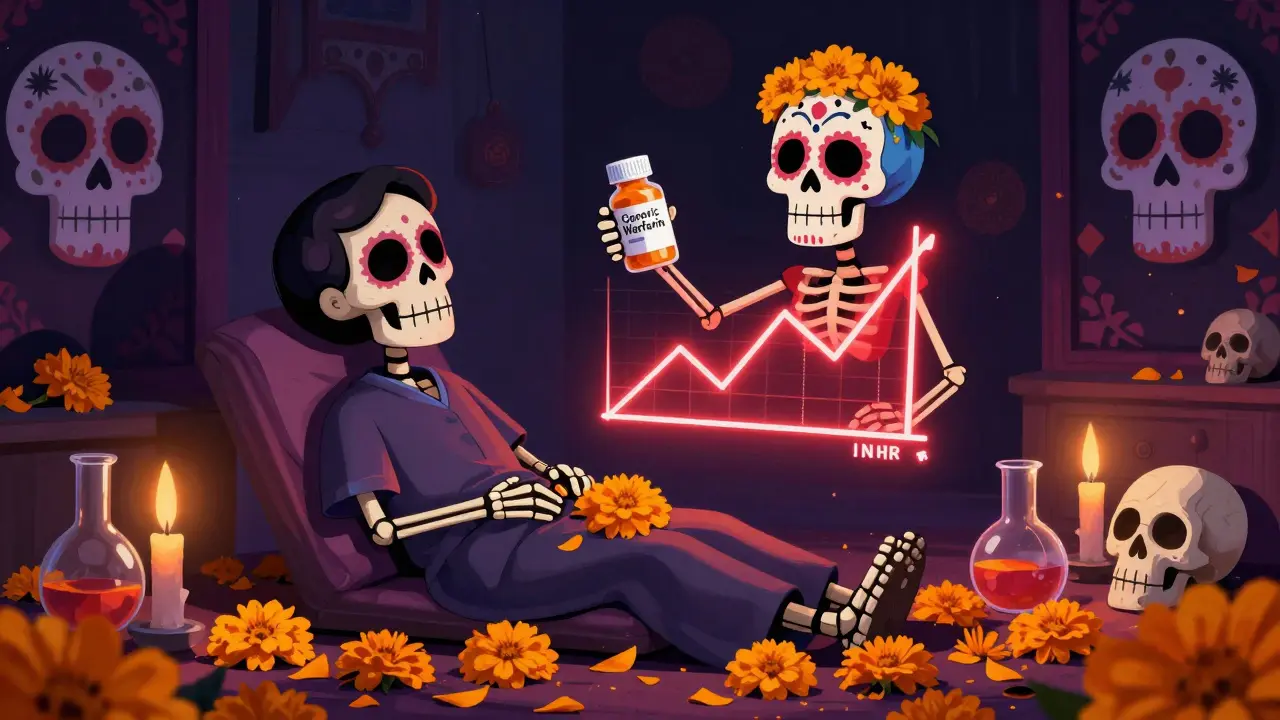
Switching from a brand-name drug to a generic version can save you hundreds of dollars a year. But what if the generic doesn’t work the same way? You might not feel different at first, but subtle changes in how your body handles the medication can show up weeks-or even months-later. For some people, that means breakthrough seizures, unstable blood pressure, or worsening depression. The FDA says generics are bioequivalent to brand drugs, but real-world data tells a more complicated story. Tracking effectiveness after a switch isn’t optional-it’s essential, especially for certain medications.
Know Which Drugs Are Riskiest After a Switch
Not all generic switches are created equal. The biggest red flags come from drugs with a narrow therapeutic index (NTI). These are medications where the difference between a helpful dose and a dangerous one is tiny. Even small changes in how the drug is absorbed can throw your body off balance.- Warfarin (blood thinner): A 2021 University of Michigan study found 27.6% of patients switched to generic warfarin needed a dose adjustment within 60 days. Brand users? Only 12.3%. That’s more than double the risk.
- Levothyroxine (thyroid hormone): A 2018 study showed 23.4% of patients switched to generic levothyroxine had thyroid hormone levels go out of range within six months. Brand users stayed stable at 8.2%.
- Digoxin (heart medication): A 2019 JAMA study found a 34.7% increase in hospitalizations for digoxin toxicity after switching to generic versions.
- Antiepileptic drugs (like phenytoin, carbamazepine): The American Academy of Neurology documented 14 cases of breakthrough seizures after generic switches-87% of those patients improved when switched back to brand.
For these drugs, a 5% change in absorption can mean the difference between control and crisis. If you’re on one of these, don’t assume the generic is just as safe. Track your numbers.
Use Lab Tests as Your Early Warning System
Your doctor isn’t guessing whether the generic is working. They’re looking at hard data. For NTI drugs, lab tests are your best friend.- Warfarin: Monitor INR levels weekly for the first month, then every two weeks for the next two months. A shift of more than 0.5 from your baseline is a red flag.
- Levothyroxine: Check TSH levels at 6 weeks and again at 12 weeks. Normal range is 0.4-4.0 mIU/L. If your TSH jumps above 5.0 or drops below 0.3, the generic may be the cause.
- Digoxin: Track serum digoxin levels. Therapeutic range is 0.5-2.0 ng/mL. Levels above 2.0 mean toxicity risk. A 2019 study showed 1 in 3 patients on generic digoxin crossed that line.
- Antiepileptic drugs: Blood levels of phenytoin or carbamazepine should stay within the therapeutic window. A drop of 15% or more after a switch is a signal to act.
Many EHR systems now flag these changes automatically. If your doctor doesn’t schedule follow-up labs within 30 days of a switch, ask why. Waiting three months is too late for NTI drugs.
Watch for Real-World Signs You Can Feel
Lab numbers matter, but so do your symptoms. If you notice something off, don’t brush it off as "just stress" or "getting older."- For epilepsy patients: Increased seizure frequency, even by one extra seizure per month.
- For depression or anxiety meds: New or worsening mood swings, panic attacks, or lack of motivation.
- For blood pressure meds: Dizziness, headaches, or spikes in readings you haven’t seen in months.
- For diabetes meds: Unexplained high blood sugar despite sticking to diet and insulin.
A 2016 FDA analysis found a 12.3% increase in emergency room visits for patients switched to generic antiepileptic drugs. That’s not random-it’s a pattern. If you’re using a medication for a chronic condition and suddenly feel worse, the switch could be why.
Patients on PatientsLikeMe reported that 64% of those who switched generics for epilepsy saw more seizures. On Reddit’s r/Pharmacy, 83% of pharmacists said patients quit generic meds because they felt they weren’t working. These aren’t anecdotes-they’re data points.
Track Discontinuation-It’s a Surprising Red Flag
Here’s something most people don’t know: stopping the medication entirely is one of the strongest signs it’s not working.A 2018 study of over a million patients found that a gap of 90 days or more in medication supply after a switch was a reliable predictor of problems. That’s not forgetting a pill-it’s quitting because the drug stopped working or caused side effects.
For NTI drugs, discontinuation rates after switching to generics were 18.7% higher than for those who stayed on brand or authorized generics. That’s not a small number. It means nearly 1 in 5 people stopped taking their meds because they felt something was wrong.
If you stop filling your prescription after a switch, don’t just assume you’re "fine now." Call your doctor. You might need to go back to the brand, or you might need a different generic from another manufacturer.
Ask About the Generic’s Manufacturer
Not all generics are made the same. The FDA approves generics from dozens of companies around the world. Some manufacturers have better quality control than others.Some patients report better results with one generic brand over another-even if both are labeled "generic" for the same drug. That’s because the inactive ingredients (fillers, dyes, coatings) can affect how quickly the drug dissolves in your gut. For NTI drugs, even a 5% difference in dissolution time can change how much gets into your bloodstream.
Ask your pharmacist: "Which company makes this generic?" Write it down. If you switch to a different generic later and feel worse, you’ll know it’s not just the generic version-it’s this specific brand.
Follow a Proven Monitoring Plan
There’s a simple, proven four-phase plan used by top health systems like Kaiser Permanente and Mayo Clinic.- Before the switch: Document your baseline. Get lab results, note your symptoms, and write down how you’ve been feeling for the past month.
- Days 1-7: Talk to your pharmacist. They should explain what to watch for and give you a checklist. Ask for a printed summary.
- Days 8-90: This is the critical window. For NTI drugs, get labs at 2 weeks, 4 weeks, and 8 weeks. For others, check in at 30 and 90 days. If you’re feeling off, don’t wait.
- Day 91+: If everything’s stable, you can return to normal monitoring. But if you had any red flags, keep checking every 30 days for at least 6 months.
Kaiser Permanente’s system reduced adverse events by 42% by requiring three touchpoints: an automated call at day 7, a nurse call at day 30, and a doctor visit at day 90. That’s not luxury care-that’s smart medicine.
Use Technology to Your Advantage
New tools are making tracking easier. Epic Systems, one of the largest EHR platforms, now has a built-in alert that triggers if your lab values shift more than 15% from baseline within 90 days of a switch. Your doctor might not know about it-but you can ask.Also, the FDA launched the "Generic Switch Sentinel Network" in 2023. It connects EHRs from 24 health systems to track real-time outcomes for 50 high-risk generics. This means data from real patients is being used to improve safety.
And soon, you’ll be able to use the FDA’s "Generic Drug Track" app (launching in 2024) to log symptoms, side effects, and medication changes directly. It’s not just for doctors-it’s for you.
When to Ask for the Brand Back
You have the right to ask for the brand-name drug-even if your insurance prefers the generic. You don’t need a "medical emergency" to justify it.Here’s what to say to your doctor:
- "I switched to the generic, and my [INR/TSH/seizure frequency] changed. I’d like to go back to the brand to see if it helps."
- "I’ve been feeling worse since the switch. Can we test if this generic is the cause?"
- "I’ve tried two different generics and neither worked. Can we try the brand again?"
Many insurers will cover the brand if you document three things: 1) the switch happened, 2) you had a measurable change in lab values or symptoms, and 3) you tried the generic first. This isn’t rare-it’s standard practice in neurology, cardiology, and endocrinology.
Why This Matters More Than Ever
In 2022, 90% of all prescriptions filled in the U.S. were generics. That’s over 4 billion prescriptions. But only 18% of healthcare organizations have formal tracking systems for effectiveness after a switch.The FDA is changing that. Starting January 1, 2024, every new generic drug with a narrow therapeutic index must undergo post-market effectiveness studies. That’s new. That’s a big deal.
And with Medicare Part D now requiring medication therapy management for all beneficiaries, pharmacists are being paid to monitor these switches. You’re not being paranoid-you’re being smart.
Generic drugs save money. But they shouldn’t cost you your health. Tracking effectiveness isn’t extra work-it’s part of your treatment plan. If you’re on a high-risk medication, don’t wait for something to go wrong. Start tracking now.
Janette Martens
December 28, 2025 AT 17:45Marie-Pierre Gonzalez
December 29, 2025 AT 01:48Louis Paré
December 30, 2025 AT 07:34Hakim Bachiri
December 31, 2025 AT 07:22Celia McTighe
January 1, 2026 AT 15:27Ryan Touhill
January 2, 2026 AT 16:36ANA MARIE VALENZUELA
January 4, 2026 AT 06:34Bradly Draper
January 5, 2026 AT 12:22Samantha Hobbs
January 6, 2026 AT 22:33Nicole Beasley
January 7, 2026 AT 05:22sonam gupta
January 9, 2026 AT 00:33Julius Hader
January 9, 2026 AT 12:52Vu L
January 10, 2026 AT 10:03James Hilton
January 10, 2026 AT 12:49Mimi Bos
January 10, 2026 AT 22:06