
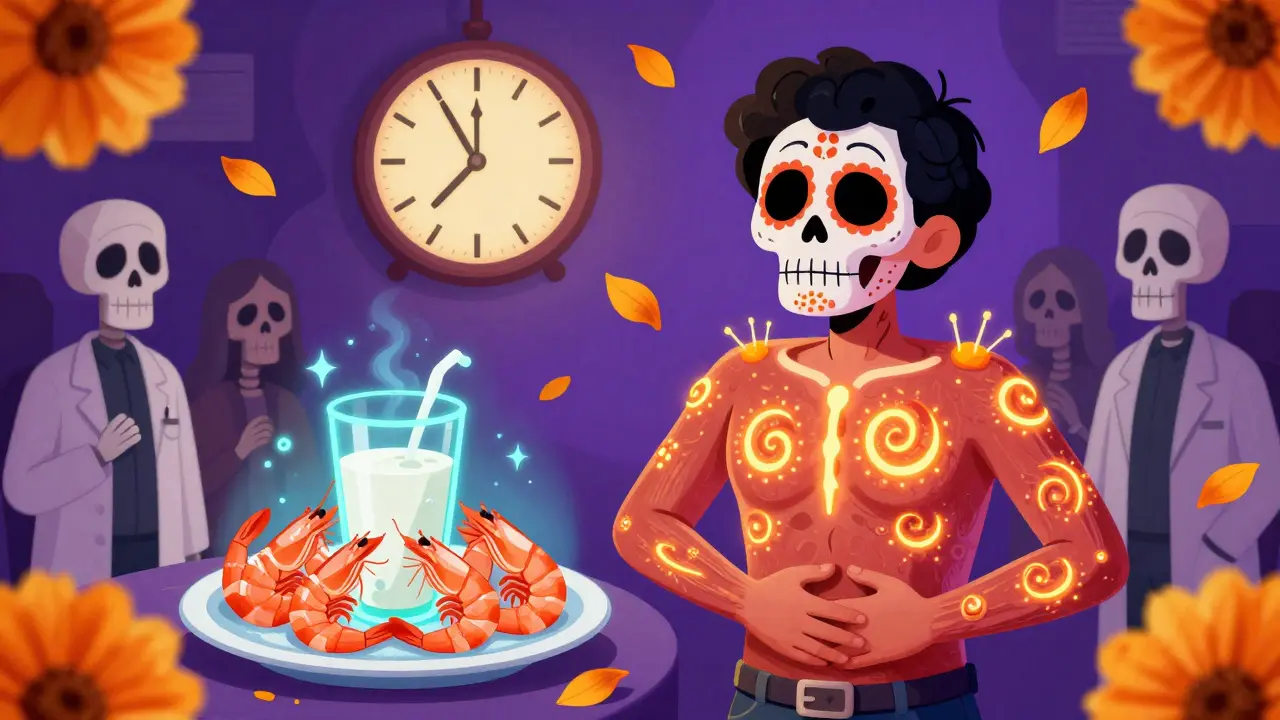
It’s easy to assume that if you break out in hives after eating shrimp or taking an antibiotic, it’s an allergy. But not all reactions are created equal. Food allergies and medication allergies may look similar on the surface - itching, swelling, rashes, even trouble breathing - but they’re different in how they happen, when they show up, and how they’re confirmed. Getting this wrong can lead to unnecessary restrictions, dangerous misdiagnoses, or worse, missing a real threat that could kill you.
How Your Body Reacts: Two Different Systems
Food allergies and medication allergies both involve your immune system overreacting, but they use different pathways. About 90% of serious food reactions are IgE-mediated. That means your body produces a specific antibody called immunoglobulin E that triggers a rapid, predictable response. When you eat peanut, shellfish, or milk and your immune system sees it as an invader, it releases histamine and other chemicals - fast. Symptoms hit within minutes, often under 20 minutes. You’ll likely feel itchy lips, a swollen throat, vomiting, or hives. The pattern is consistent: same food, same reaction, every time.
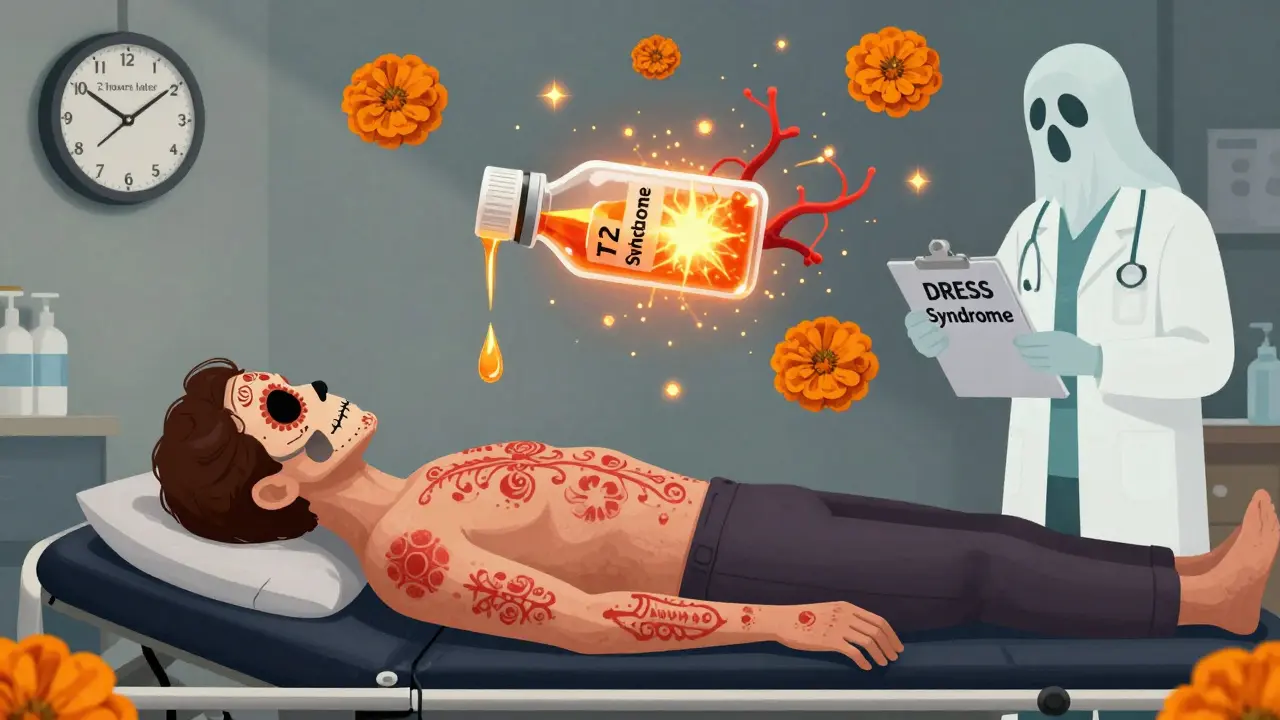
Medication allergies are messier. While about 80% of immediate drug reactions are also IgE-mediated (think hives or anaphylaxis right after a penicillin shot), the other 20% are T-cell driven. These are delayed. You might take amoxicillin on Monday, feel fine, and then on Thursday, your whole body breaks out in a red, itchy rash. Or you could develop fever, swollen lymph nodes, and liver issues two weeks later - a sign of DRESS syndrome. These reactions don’t follow a simple trigger-response loop. They’re harder to predict and often mistaken for side effects or viral rashes.
Timing Is Everything
If you’re trying to figure out whether it’s food or meds, look at the clock. Food allergy symptoms almost always appear within two hours - and usually within 30 minutes. A 2022 Johns Hopkins study found that 80% of food allergies show up before age 5, and once triggered, they’re repeatable. Eat the food, get the reaction. Skip it, stay safe.
Medication reactions? They can hit anytime. Immediate reactions happen within an hour - think anaphylaxis after an IV antibiotic. But delayed reactions? They can show up 48 to 72 hours later, or even weeks. A rash after taking sulfa drugs? It might be a true allergy. But a rash after amoxicillin during a cold? That’s often just a viral rash, not an allergy. In fact, up to 90% of people who say they’re allergic to penicillin turn out not to be when tested.
What Symptoms Point to What?
Food allergies tend to hit the mouth, gut, and skin first. Oral allergy syndrome - tingling or swelling in the lips and throat - happens in 70% of cases. Vomiting is common in kids, diarrhea in adults. Hives show up in 89% of reactions. The gut involvement is a big clue: if you’re getting stomach cramps along with skin symptoms, it’s more likely food.
Medication allergies often start with a skin rash - but not always the same kind. Hives can occur, but more often you’ll see a flat, red, spotty rash that spreads slowly. Fever, swollen glands, and joint pain are red flags for drug reactions, especially with antibiotics. Respiratory symptoms like wheezing happen in both, but in drug allergies, they’re more likely to come with systemic signs like fever or low blood pressure. If you feel sick all over - not just itchy skin - it’s more likely a medication.
How Doctors Confirm It
For food allergies, the gold standard is the oral food challenge. You eat tiny, increasing amounts of the suspected food under medical supervision. If you react, it’s confirmed. Skin prick tests are 90% accurate for IgE-mediated allergies. Component-resolved diagnostics (CRD) can even tell you if you’re allergic to peanut protein (Ara h 2) or just cross-reacting with birch pollen (Ara h 8). That’s huge - one means you can’t eat peanuts, the other might just mean you get itchy when you eat apples.
Medication testing is trickier. For penicillin, skin testing followed by an oral challenge is 99% accurate at ruling out allergy. But for drugs like ibuprofen, sulfa, or chemo agents? There’s no reliable skin test. Doctors rely on detailed history and sometimes drug provocation tests - giving you the drug again in a controlled setting. Blood tests like lymphocyte transformation tests help, but they’re not perfect. Many reactions are diagnosed by elimination: stop the drug, see if the rash clears, then re-challenge if needed.
Why It Matters - Real Consequences
Mislabeling yourself as allergic to penicillin? You’re 30% more likely to get a more expensive, broader-spectrum antibiotic. You’re also 25% more likely to get a Clostridium difficile infection - a nasty gut bug that can kill. A 2022 JAMA study found that 15-20% of people avoiding penicillin based on self-reported allergies had no true allergy. That’s thousands of unnecessary risks every year.
On the flip side, if you think your child’s vomiting after milk is just “indigestion” and don’t test for allergy, you might miss the signs of anaphylaxis. In the U.S., 150-200 people die each year from food-induced anaphylaxis - often because epinephrine wasn’t given fast enough. FARE’s 2022 survey found that 37% of food allergy patients were initially told it was just intolerance.
What You Can Do
Keep a detailed log. For food: write down what you ate, how it was prepared, when symptoms started, and how long they lasted. For medication: note the exact drug name, dose, time taken, and symptom onset. Did the rash appear after the first pill or the third? Was it right after the shot or three days later? Precision matters.
Don’t assume. If you think you’re allergic to penicillin because you got a rash as a kid, get tested. Most people outgrow food allergies - especially milk and egg - by age 5. But drug allergies? They rarely go away. That’s why proper testing is critical.
Ask for a referral to an allergist. General practitioners often don’t have the time or tools to sort this out. An allergist can run the right tests, interpret the history, and help you avoid unnecessary restrictions.
What to Watch Out For
False positives are common. Up to 90% of people who say they’re allergic to penicillin aren’t. Many rashes from viral infections (like mononucleosis or COVID) get mislabeled as drug allergies. Even pill fillers - like lactose - can cause reactions that mimic drug allergies.
Food intolerances aren’t allergies. Lactose intolerance causes bloating and diarrhea - no hives, no swelling, no anaphylaxis. IBS can mimic food allergy symptoms. But if you have a reaction that includes breathing trouble or swelling, it’s not intolerance. It’s allergy.
Don’t ignore delayed rashes. A rash that shows up a week after starting a new antibiotic isn’t “just a side effect.” It could be DRESS or Stevens-Johnson syndrome - both life-threatening. Get it checked.
Final Takeaway
Food allergies are fast, repeatable, and often start in childhood. Medication allergies are slower, more variable, and can develop at any age. The key isn’t just the symptom - it’s the timing, the pattern, and the context. One mistake can cost you your health. One correct diagnosis can save you from dangerous drugs, unnecessary fear, or even death.
If you’ve ever been told you have an allergy - whether to food or medicine - and you’re unsure, get it checked. Don’t live with a label you might not need. And don’t ignore a reaction because you think it’s “just a side effect.” Your immune system is trying to tell you something.
Amrit N
February 19, 2026 AT 06:40Thanks for the clarity!
Courtney Hain
February 20, 2026 AT 07:35Robert Shiu
February 20, 2026 AT 19:49Greg Scott
February 21, 2026 AT 13:07Thanks for the real talk. This post saved me from overreacting.
Scott Dunne
February 22, 2026 AT 00:25Caleb Sciannella
February 23, 2026 AT 10:28Ashley Paashuis
February 24, 2026 AT 04:22Oana Iordachescu
February 25, 2026 AT 16:40Davis teo
February 26, 2026 AT 11:31Michaela Jorstad
February 28, 2026 AT 04:13Chris Beeley
February 28, 2026 AT 16:19Arshdeep Singh
March 1, 2026 AT 09:39