
Medications save lives-but they also carry hidden dangers
Every year in the U.S., over 1.3 million people end up in the emergency room because of bad reactions to their medicines. Another 350,000 get hospitalized. These aren’t rare accidents. They’re preventable. And a growing body of research shows that simple, everyday lifestyle changes can cut those risks dramatically-sometimes even reducing how many pills you need to take.
It’s not about ditching your meds. It’s about working with them smarter. If you’re on blood pressure medicine, diabetes pills, cholesterol drugs, or multiple prescriptions, you’re not alone. About one in four adults in the U.S. takes five or more medications. That’s called polypharmacy. And it triples your chance of a dangerous drug interaction or side effect.
Move more-your heart will thank you
Brisk walking for just 30 minutes, three times a week, can lower your blood pressure as much as a single pill. That’s not a guess. It’s from clinical data from JenCare Medical Centers and confirmed by the American Heart Association. When you walk regularly, your heart gets stronger. It doesn’t have to work as hard to pump blood. That means less strain on your arteries-and lower pressure.
For people with high blood pressure, this kind of movement can reduce systolic pressure (the top number) by up to 11 points. That’s the same drop you’d see with a common antihypertensive like lisinopril. And it doesn’t require a gym. You don’t need fancy gear. Just lace up your shoes and get out the door.
Strength training twice a week adds even more benefit. It improves insulin sensitivity, helps control weight, and reduces inflammation-all things that make your meds work better. The Michigan State University College of Pharmacy recommends 150 minutes of moderate aerobic activity plus two days of resistance training each week. Start slow. Even 10 minutes a day builds momentum.
What you eat can replace a pill-or at least cut its dose
For people with Type 2 diabetes, losing just 5-7% of body weight through diet and movement can cut medication needs by up to 60% in early stages. That’s not theoretical. It’s from real studies presented at the UC Davis Wellness Academy in 2024. One patient reduced their metformin dose by half after six months of eating more vegetables, cutting added sugar, and walking daily.
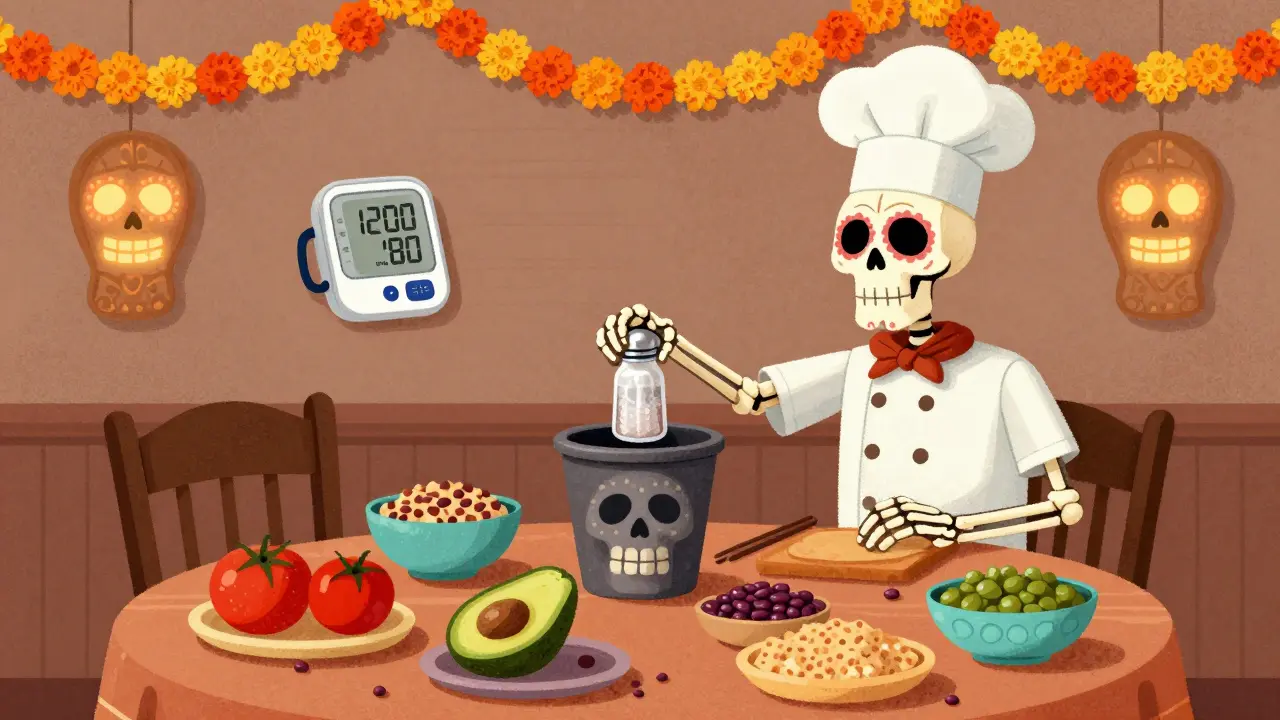
For high blood pressure, the DASH diet-rich in fruits, vegetables, whole grains, and low-fat dairy-can lower blood pressure by 11/5 mm Hg. That’s comparable to a single medication. The secret? Less sodium. Most people eat over 3,500 mg a day. The goal is 1,500 mg. Cutting salt doesn’t mean bland food. It means swapping processed snacks for nuts, choosing fresh chicken over deli meat, and cooking at home more often.
And don’t overlook the power of fiber. Soluble fiber from oats, beans, and apples helps lower LDL cholesterol naturally. That means statins may not need to work as hard. One 2023 meta-analysis found that people who combined dietary fiber with statins had better cholesterol control than those on statins alone.
Sleep isn’t optional-it’s medicine
If you’re sleeping less than seven hours a night, you’re putting yourself at higher risk for high blood pressure, insulin resistance, and weight gain. That’s not a coincidence. Your body uses sleep to repair blood vessels, regulate hormones, and reset your metabolism.
Chronic sleep deprivation increases cortisol levels. That hormone raises blood sugar and blood pressure. It also makes you hungrier, especially for carbs and sugar. That’s a double hit if you’re managing diabetes or heart disease.
Fixing sleep doesn’t mean buying expensive gadgets. It means sticking to a bedtime, turning off screens an hour before sleep, keeping your room cool and dark, and avoiding caffeine after 2 p.m. One study showed that just improving sleep quality reduced the need for sleep aids and blood pressure meds in 40% of participants over six months.
Watch out for food-drug traps
Not all healthy foods are safe with every medication. Grapefruit, for example, interferes with 85% of statins. One grapefruit can make your cholesterol drug too strong-raising your risk of muscle damage. If you’re on simvastatin or atorvastatin, skip grapefruit entirely.
Leafy greens like spinach and kale are full of vitamin K. That’s great for bones-but it can make blood thinners like warfarin less effective. You don’t have to quit them. Just keep your intake consistent. Eat the same amount every day so your doctor can adjust your dose properly.
Dairy can block absorption of some antibiotics like tetracycline and ciprofloxacin. Take those pills two hours before or after milk, yogurt, or cheese. Always ask your pharmacist about food interactions. They’re trained to catch these details. Don’t assume your doctor knows every possible combo.
Stress and alcohol: quiet killers
Chronic stress raises your heart rate and blood pressure. It also triggers inflammation, which worsens conditions like arthritis, diabetes, and heart disease. Yoga, meditation, or even deep breathing for 10 minutes a day can lower cortisol and improve heart health. A 2023 VA study found that people with Type 2 diabetes who practiced mindfulness daily had better blood sugar control than those who didn’t.
Alcohol is another hidden risk. It can spike blood pressure, interfere with diabetes meds, and damage your liver when mixed with acetaminophen or statins. The guidelines are clear: no more than two drinks a day for men, one for women. But if you’re on multiple meds, even one drink might be too much. Talk to your doctor. Some people need to quit entirely.
It takes time-but the payoff is huge
Lifestyle changes don’t work overnight. Blood pressure might drop in weeks. Blood sugar can improve in a month. But full effects often take 3-6 months. That’s why most people give up too soon.
One Reddit user, ‘HypertensionWarrior,’ shared how they brought their blood pressure from 150/95 down to 125/80 in six months by walking daily and cutting salt. Their doctor took them off one pill. Another user, ‘DiabetesJourney,’ said the hardest part wasn’t the diet-it was feeling isolated. Social support matters. Join a walking group. Cook with a friend. Use an app that tracks your progress.
The American Heart Association found that 68% of people with chronic conditions reported better quality of life after adding lifestyle changes to their meds. Only 32% struggled to stick with it. The difference? They started small. One change at a time. Not all at once.
Never stop meds without your doctor
This isn’t a DIY project. Stopping a blood pressure pill suddenly can cause a dangerous spike. Skipping insulin can lead to diabetic ketoacidosis. Lifestyle changes should complement your meds-not replace them.
Always talk to your doctor before making any changes. Bring your food journal, your step count, your sleep log. Show them what you’re doing. They’ll help you adjust doses safely. Many clinics now offer lifestyle medicine programs. Ask if yours does.
The American College of Lifestyle Medicine has over 12,000 certified practitioners. Medicare Advantage plans now cover some of these programs. You’re not alone in this. There’s support out there.
What’s next? Start with one thing
You don’t need to overhaul your life tomorrow. Pick one thing:
- Swap one processed snack for fruit or nuts today.
- Take a 10-minute walk after dinner.
- Write down your bedtime and stick to it for three nights.
- Call your pharmacist and ask: "Are there any foods I should avoid with my meds?"
Small steps add up. In six months, you might be taking fewer pills, feeling more energy, and avoiding a hospital visit. That’s not magic. That’s medicine-backed by science, not just a pill bottle.
Can lifestyle changes really reduce the number of medications I need?
Yes. Studies show that for conditions like high blood pressure, Type 2 diabetes, and high cholesterol, consistent lifestyle changes can reduce medication needs by 25-60%. For example, losing 5-7% of body weight and walking 150 minutes a week can cut diabetes meds by up to 40% in people already on them. These changes don’t replace meds overnight, but over time, your doctor may be able to lower your dose or stop one.
How long does it take for lifestyle changes to affect my meds?
It usually takes 3-6 months to see measurable effects. Blood pressure can drop in 2-4 weeks with diet and exercise. Blood sugar improvements often show up in 4-8 weeks. But full benefits-like reduced dosage or stopping a pill-take longer. Patience and consistency matter more than speed.
Is it safe to stop taking my meds if I feel better after changing my lifestyle?
No. Never stop or change your meds without talking to your doctor. Feeling better doesn’t mean your condition is gone. Stopping blood pressure or diabetes meds suddenly can cause dangerous spikes in pressure or blood sugar. Lifestyle changes work best when they’re paired with your prescriptions-not instead of them.
What foods should I avoid if I’m on blood pressure or cholesterol meds?
Grapefruit and grapefruit juice can dangerously increase levels of many statins and some blood pressure meds. High-sodium foods like canned soup, deli meats, and frozen meals can make blood pressure meds less effective. Vitamin K-rich foods like spinach and kale can interfere with warfarin, so keep your intake steady. Always ask your pharmacist about your specific meds-interactions vary by drug.
Can I rely on apps or wearables to track my progress?
Yes. Studies show that people who use apps to track diet, steps, or sleep are 47% more likely to stick with lifestyle changes than those who don’t. Fitbits, Apple Health, MyFitnessPal, and even free Google Sheets templates can help you spot patterns. But don’t let tech replace your doctor. Use the data to guide conversations with them-not replace them.
Medications are powerful tools. But your daily habits are the foundation. When you move, eat well, sleep enough, and manage stress, you’re not just avoiding side effects-you’re healing your body from the inside out. And that’s the safest medicine of all.