
Every year, millions of unused pills, patches, and liquids sit in medicine cabinets across the U.S.-not because they’re needed, but because people don’t know how to get rid of them safely. Flushing them down the toilet or tossing them in the trash might seem easy, but it’s dangerous. These drugs can end up in water supplies, be found by kids or pets, or fall into the hands of someone who shouldn’t have them. That’s why take-back events exist. They’re free, safe, and designed to keep medications out of the wrong hands and out of the environment.
Why Proper Preparation Matters
The DEA launched the first National Prescription Drug Take-Back Day in 2010 after a survey found that 70% of people who misused prescription painkillers got them from family or friends. Most of those drugs came from home medicine cabinets. Today, over 16,500 authorized collection sites-like pharmacies, hospitals, and police stations-accept unused medications. In 2024 alone, Stericycle incinerated nearly 30,000 tons of pharmaceutical waste through these programs. That’s not just trash being burned-it’s preventing addiction, overdose, and pollution.But here’s the problem: only 15% of unused medications are properly disposed of. Why? Because people get confused. Some think they need to remove the pills from the bottle. Others mix everything into a bag. Some forget to hide their name. And when they show up at a collection site, they’re turned away. That’s not just frustrating-it’s dangerous. If you don’t prepare your meds right, they won’t be accepted. And if they’re not taken back, they stay in your home.
Step 1: Remove All Personal Information
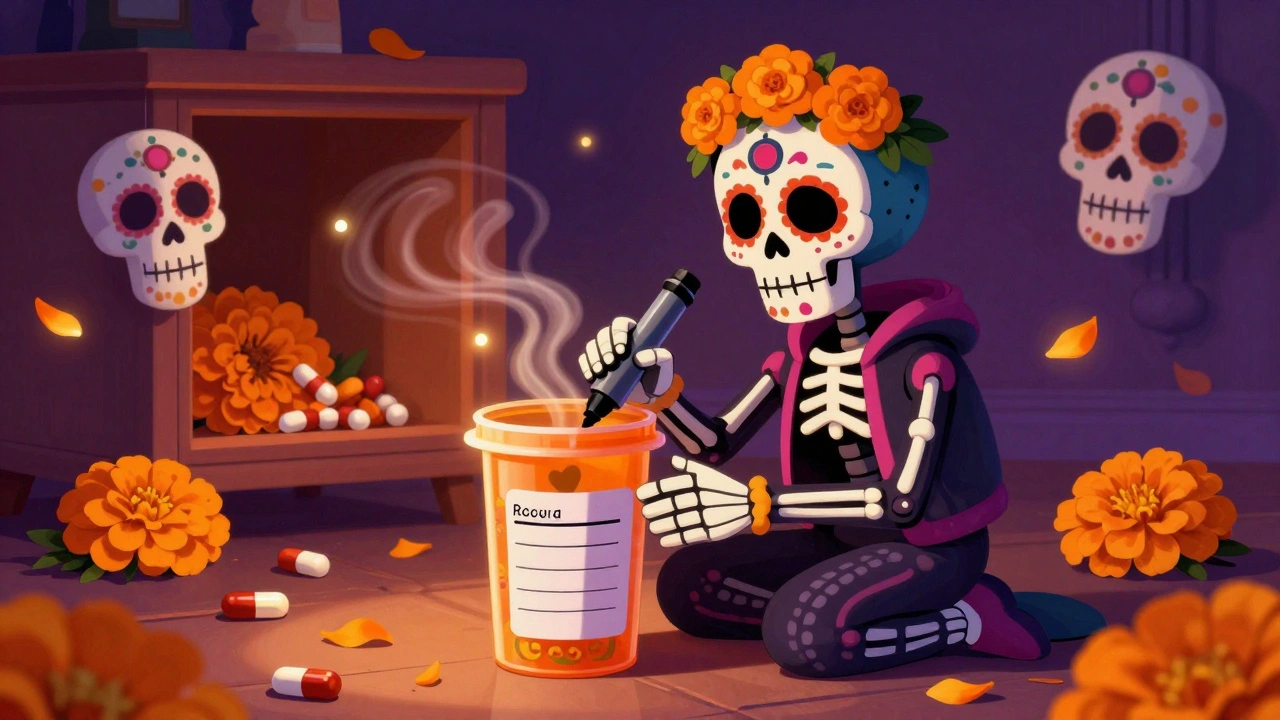
This is the most important step-and the one most people mess up. Your name, address, prescription number, and pharmacy details on the bottle are private. Leaving them visible breaks HIPAA rules and makes it easier for someone to steal your identity or misuse your meds.Use a permanent marker to black out everything on the label. Don’t just scribble over it-cover it completely. If the ink smudges, go over it again. If the label is faded or hard to read, peel it off and write your info on a piece of paper, then tape it to the bottle before covering it. Some people use a white-out pen or cover the label with tape before writing over it. Whatever works, as long as no one can read your name or prescription details.
Don’t rely on just removing the label. The barcode and pharmacy stamp can still be scanned or copied. Cover it all. This step alone will prevent 41% of rejections at collection sites, according to Stericycle’s 2023 data.
Step 2: Keep Medications in Their Original Containers
Most collection sites-92% of them-require medications to stay in their original bottles or packaging. Why? Because it helps staff identify what the drug is. A random pill in a ziplock could be anything: a painkiller, a blood thinner, a sedative. Knowing what it is ensures it’s destroyed properly and safely.If you still have the bottle, keep it. Even if it’s empty or half-empty, just put the pills back in. For patches, leave them on the foil backing. For liquids, keep them in the original bottle with the cap tightly sealed. If you lost the bottle, you can use a small sealed container like a plastic bottle or a zip-lock bag-but only if the site allows it. Always check first.
Some places, like Walgreens kiosks, are more flexible. But hospitals, police stations, and many pharmacies still require original containers. To be safe, assume you need them unless you know otherwise.
Step 3: Don’t Mix Medications
It’s tempting to dump all your old pills into one bag-antibiotics, vitamins, painkillers, your dog’s flea medication. But don’t. Most collection sites ask you to keep each medication separate. Why? Because mixing can cause chemical reactions, make identification harder, and slow down the disposal process.If you have multiple pills, put each type in its own container. If you’re using zip-lock bags, label each one with a sticky note: “Lisinopril 10mg,” “Ibuprofen 200mg,” “Insulin pen.” Staff will thank you. The Military Health System strictly forbids mixing-even in their own programs. And while civilian sites are sometimes more relaxed, it’s still the safest way.
Step 4: Know What You Can’t Bring
Not everything goes in the take-back bin. Here’s what’s always rejected:- Asthma inhalers and other aerosols (they’re pressurized and can explode)
- Hydrogen peroxide
- Iodine-based medications (like Betadine)
- Thermometers (especially mercury ones)
- Illicit drugs (like marijuana or cocaine)
- Needles and sharps (these go in special sharps containers)
For sharps like insulin pens or syringes, most hospitals accept them-but only 32% of retail pharmacies do. Call ahead. For insulin pens, remove the needle first and dispose of it in a sharps container. Put the pen itself in a sealed plastic bag. For transdermal patches (like fentanyl or nicotine patches), fold them in half with the sticky side in, so no one touches the drug residue. This is required at 100% of collection sites.
Step 5: Check Your Local Rules
Rules vary by state and even by pharmacy. California demands original containers with all info covered. Washington allows sealed bags for non-liquid meds. Walgreens doesn’t care about the container as long as your name is gone. The VA has stricter rules than civilian sites.Don’t guess. Use the DEA’s online Take-Back Locator (you can search by zip code) to find the nearest site. Click on the location and read their specific instructions. If there’s no info online, call them. Ask: “Do you require original containers? Can I use zip-lock bags? Do you accept patches or insulin pens?”
One Reddit user, u/MedSafety2023, got turned away at a Walgreens because their liquid antibiotic wasn’t in the original pharmacy bottle-even though they’d removed their name. The staff didn’t know the policy. That’s why calling ahead saves time and stress.
What About Expired Vitamins and Supplements?
Yes, you can bring them. Vitamins, herbal supplements, and OTC meds like Tylenol or allergy pills are all accepted. Even pet medications are welcome. The DEA allows all prescription and non-prescription drugs at 100% of authorized sites. Don’t throw them out with the trash. Don’t flush them. Bring them in.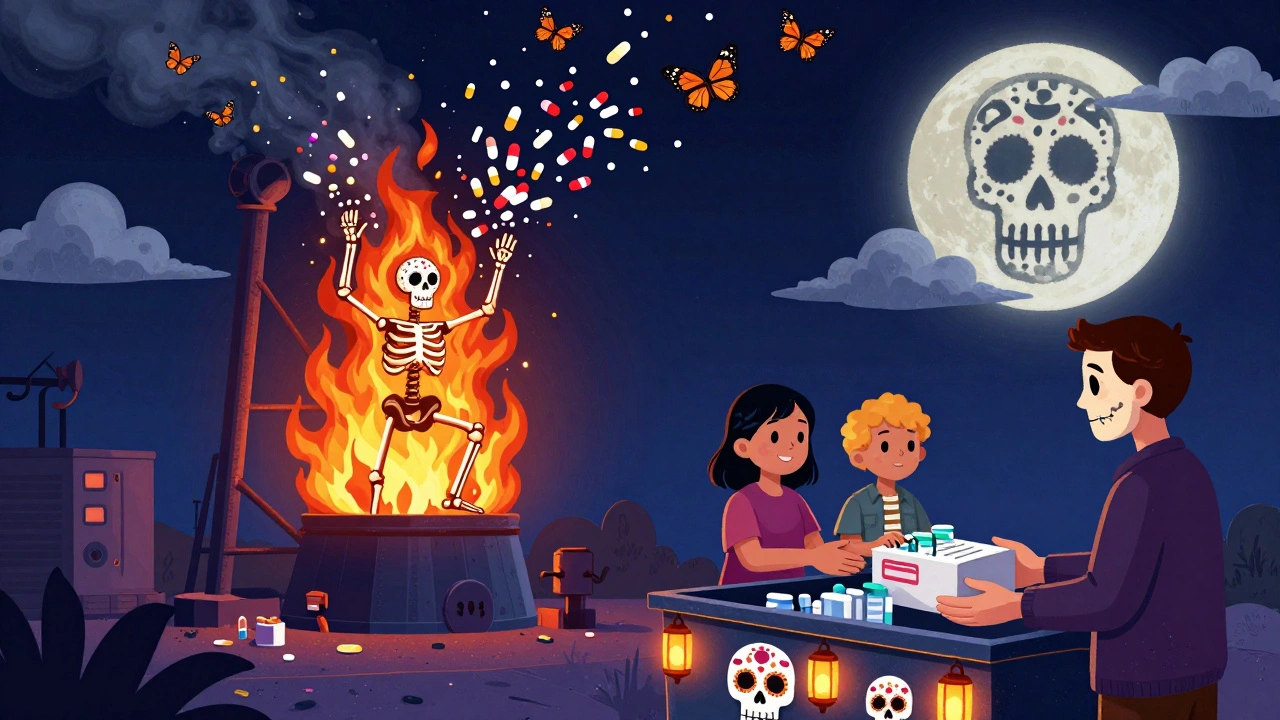
What Happens After You Drop Them Off?
Once you hand over your meds, they’re locked in a secure bin. They’re picked up by licensed waste handlers and taken to a high-temperature incinerator. Nothing is buried, recycled, or dumped. Everything is destroyed completely. In 2024, over 29,800 tons of pharmaceutical waste were incinerated by Stericycle alone. That’s the equivalent of 1,500 full-size school buses full of old pills.This process prevents drugs from leaching into groundwater. The USGS found pharmaceuticals in 80% of U.S. streams. That’s not just “a little bit”-it’s widespread. And it’s not just fish. These chemicals can affect human health over time. Proper disposal isn’t just about safety-it’s about protecting the water you drink.
Common Mistakes and How to Avoid Them
- Mistake: Only covering part of the label. Solution: Cover every word, number, and barcode. Use a thick marker.
- Mistake: Putting liquids in a zip-lock bag without a sealed container. Solution: Keep liquids in their original bottle. If it’s broken, use a small plastic bottle with a tight cap.
- Mistake: Assuming all sites are the same. Solution: Always check the site’s rules before you go.
- Mistake: Waiting until the next take-back day. Solution: There are permanent collection sites in 71% of U.S. counties. You don’t have to wait.
One of the biggest barriers? Confusion. A 2023 Johns Hopkins study found 43% of people didn’t know how to prepare meds for disposal. That’s why 28% didn’t even try. Don’t be one of them. Just follow these five steps.
Final Checklist Before You Go
- ☑ All personal info blacked out with permanent marker
- ☑ Medications in original containers (or sealed bag if allowed)
- ☑ No mixing of different drugs
- ☑ No aerosols, inhalers, or sharps (unless you know the site accepts them)
- ☑ Patches folded sticky-side in
- ☑ You’ve called or checked the site’s website for special rules
It takes less than five minutes. And it’s one of the safest things you can do for your family, your community, and the environment.
Can I put all my old pills in one bag for take-back?
No. Most collection sites require each medication to be kept separate. Mixing pills makes it harder for staff to identify them, which delays disposal and increases the risk of errors. Put each type in its own container-original bottle or sealed zip-lock bag-and label them if needed.
What if I lost the original bottle for my medication?
You can still dispose of it. Place the pills in a small sealed container like a plastic bottle or a zip-lock bag. Make sure your name and prescription info are completely covered with a permanent marker. Some sites accept this, but not all-call ahead to confirm. If you’re unsure, bring the medication anyway; staff may still accept it if privacy is protected.
Can I dispose of pet medications the same way?
Yes. Pet medications-whether pills, liquids, or patches-are accepted at all DEA-authorized take-back sites. Remove personal information from the label, keep them in their original container if possible, and follow the same rules as human medications. Don’t flush them or throw them in the trash.
Are inhalers or asthma pumps allowed at take-back events?
No. Inhalers and aerosol cans are pressurized and can explode during transport or incineration. They’re not accepted at any take-back site. Check with your local pharmacy or hazardous waste facility for safe disposal options. Some pharmacies offer special bins for inhalers.
Do I need to wait for a take-back day, or can I drop off anytime?
You don’t need to wait. Since January 2024, the DEA’s "Every Day is Take Back Day" initiative means over 16,500 permanent collection sites accept medications year-round. Pharmacies like Walgreens, CVS, and many hospitals have drop-off bins inside. Just use the DEA’s online locator to find the nearest one.
Mona Schmidt
December 10, 2025 AT 09:36So glad someone finally laid this out clearly. I used to just toss old pills in the trash until my neighbor told me her kid found a bottle of oxycodone in the dumpster. Scary stuff. Blacking out labels is non-negotiable - I use a Sharpie and then go over it three times. No excuses.
Sarah Gray
December 11, 2025 AT 20:42How is it still a problem in 2024? People can’t follow five basic steps? I mean, really. If you can’t be bothered to cover your name on a pill bottle, you shouldn’t be allowed to own medication. This isn’t rocket science.
Andrea DeWinter
December 13, 2025 AT 16:48Just want to add - if you lost the bottle but still have the prescription sticker, tape it to the outside of the ziplock and black it out. Staff at my local pharmacy said they’ve accepted that before. And yes, vitamins count too. I drop off my expired fish oil and gummy multivitamins every spring. No judgment, just responsibility
precious amzy
December 14, 2025 AT 18:23One cannot help but observe the profound epistemological dissonance inherent in the modern pharmaceutical ecosystem. We are told to dispose of substances that were once prescribed as solutions to suffering, yet we are simultaneously complicit in a system that manufactures said suffering. The incineration of 30,000 tons of pills is not disposal - it is the ritual sacrifice of capitalist healthcare’s excesses. What does it mean to ‘safely’ destroy what was never meant to be consumed in the first place?
Katherine Chan
December 15, 2025 AT 18:46YES YES YES this is so important. I used to think it was fine to flush stuff until I saw that video of the fish with pills in their gills. Now I keep a shoebox in my closet for old meds and I take it to Walgreens every time I’m there. It takes five minutes and feels so good to do the right thing. You’re not just cleaning your cabinet - you’re protecting kids and the planet. Win win
Tim Tinh
December 16, 2025 AT 20:49man i just threw my grandmas old blood pressure pills in the trash last month 😅 i had no idea you had to cover the label like that. im gonna go back and get the rest of her stash this weekend. thanks for the heads up. also - dog meds count? cool. my lab’s heartworm pill bottle is gonna be the first thing i drop off
Iris Carmen
December 18, 2025 AT 13:11so like… if i just write ‘do not use’ on the bottle with a sharpie is that enough??
Katherine Rodgers
December 20, 2025 AT 09:54Oh wow, so the solution to the opioid crisis is… make sure your label is covered? Brilliant. Next you’ll tell us to wear seatbelts to fix climate change. Meanwhile, 90% of these drugs are prescribed by doctors who don’t even know what they’re prescribing. But hey, at least your name’s blacked out.
Lola Bchoudi
December 22, 2025 AT 09:33Per DEA guidelines, the integrity of the chain of custody for pharmaceutical waste requires non-mixed, containerized, and de-identified submissions. Deviating from original packaging introduces contamination risk and compromises downstream deactivation protocols. Always validate site-specific SOPs via the DEA Take-Back Locator before transport. Compliance is non-negotiable.
Morgan Tait
December 22, 2025 AT 09:40Have you ever wondered why the government lets you drop off pills but won’t let you keep them? They’re tracking you. Every bottle you drop off gets logged. Your name, your prescription history - it’s all in a database. Next thing you know, you’ll be flagged for ‘medication overuse’ and lose your insurance. I only drop off stuff I don’t need… and I always bring a fake label.
Darcie Streeter-Oxland
December 22, 2025 AT 23:13It is, of course, entirely unsurprising that the general populace remains woefully underinformed regarding the correct protocols for pharmaceutical disposal. One can only presume that such negligence stems from a systemic failure in public health literacy, compounded by the absence of mandatory educational curricula in primary care settings. One is left to wonder whether this constitutes a dereliction of civic duty.
Taya Rtichsheva
December 23, 2025 AT 22:01lol i blacked out my name but left the barcode. they still took it. guess they dont scan it? 🤷♀️
Christian Landry
December 24, 2025 AT 03:38just dropped off my whole cabinet last week 🙌 thanks for the checklist - i used the sticky notes for each med and it made it so easy. also brought my cat’s thyroid pills. they were like ‘wait you can do that?’ and i was like ‘yes mom’ 😂
Katie Harrison
December 25, 2025 AT 07:08Thank you for this. I appreciate the clarity. I’ve been preparing meds for drop-off for years, and I’ve seen too many people get turned away because they didn’t follow the rules. Please - don’t assume. Call. Confirm. It’s a small act of respect - for your community, for the environment, and for the people who work at these sites. They deserve better than confusion.