
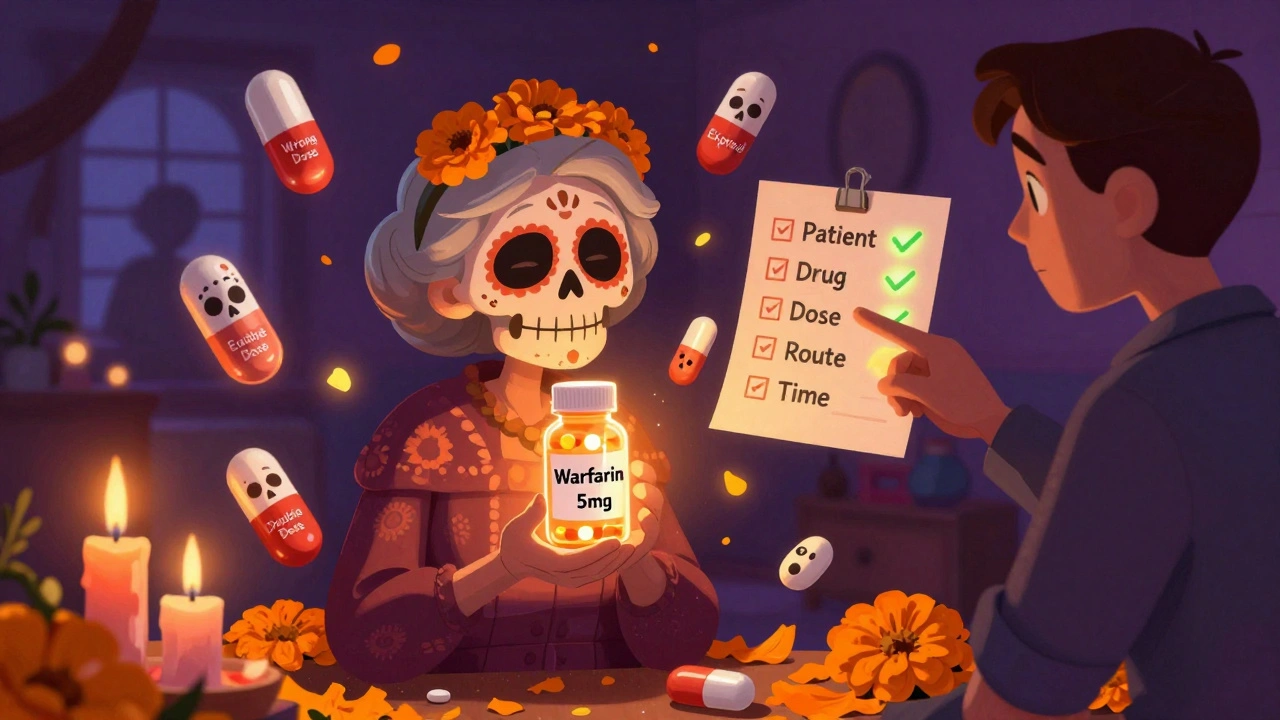
Every year, over 250,000 medication errors happen in U.S. nursing homes - and most go unreported. For seniors taking five, ten, or even fifteen different pills, a single mistake can mean a fall, a hospital stay, or worse. These aren’t just accidents. They’re preventable. And families, caregivers, and even the elderly themselves can play a key role in catching them before harm happens.
What Counts as a Medication Mistake in Seniors?
A medication error isn’t just giving the wrong pill. It’s anything that leads to harm or the risk of harm because of how a drug is prescribed, dispensed, or taken. In older adults, these mistakes show up in predictable ways:- Wrong dose: Giving too much or too little - like 10 mg instead of 5 mg of a blood thinner.
- Wrong time: Administering medication hours late or too close to another drug, causing dangerous interactions.
- Wrong drug: Handing someone acetaminophen when they’re already on a cold medicine that contains it - doubling the dose without anyone noticing.
- Wrong route: Swallowing a patch meant to be applied to the skin, or injecting a pill meant to be taken orally.
- Expired or discontinued meds: Still giving a drug the doctor stopped six months ago because the chart wasn’t updated.
- Missed monitoring: Not checking blood pressure, kidney function, or INR levels after starting a new drug like warfarin.
The most dangerous errors? Those involving anticoagulants, diabetes drugs, and sedatives. The American Geriatrics Society’s Beers Criteria® lists 34 medications that are risky for seniors - including benzodiazepines, certain anticholinergics, and long-acting sulfonylureas. Yet, nearly 44% of Medicare beneficiaries are still prescribed at least one of these.
How to Spot a Medication Error - The Five Rights Checklist
You don’t need to be a nurse to catch mistakes. Use the Five Rights every time a pill is given:- Right patient: Is this the correct person? Double-check the name band or ID number.
- Right drug: Does the pill match the label? Compare it to the prescription list you have.
- Right dose: Is this the amount the doctor ordered? A 5 mg tablet isn’t the same as a 10 mg tablet.
- Right route: Is it supposed to be swallowed, placed under the tongue, or applied to the skin?
- Right time: Is this when it’s supposed to be given? Some meds need to be taken on an empty stomach; others must be spaced 12 hours apart.
Studies show that using this checklist reduces errors by 63%. If anything feels off - the pill looks different, the timing seems rushed, the staff won’t show you the label - pause. Ask. Write it down.
Why Errors Keep Happening - The Real Causes
It’s not just “careless staff.” The system is broken in ways most people don’t see:- Polypharmacy: Seniors on eight or more medications have a 58% chance of experiencing an error - up from 13% with just two to four drugs.
- Poor communication: A doctor changes a dose but forgets to tell the pharmacy. The pharmacy updates the label but the nurse’s electronic record doesn’t sync.
- Staff shortages: Nursing homes average just 2.1 nurses per 100 residents. When staff are overwhelmed, checks get skipped.
- Low health literacy: Over 76% of medication errors in seniors with limited health literacy could be prevented by using the “teach-back” method - asking the patient to explain how to take the drug in their own words.
- Outdated records: Paper charts, handwritten orders, and mismatched electronic systems are still common in nursing homes - even though CMS required eMAR systems by the end of 2025.
And when mistakes happen, many facilities blame the patient: “She was confused,” “He didn’t tell us he took it already.” That’s not accountability - it’s cover-up.
How to Report a Medication Error - Step by Step
If you suspect a mistake, act fast. Here’s how:- Stop the error: If the medication hasn’t been taken yet, don’t let it go. Say, “I need to confirm this with the nurse manager.”
- Document everything: Write down the date, time, name of the drug, dose, who gave it, and what you observed. Take a photo of the pill bottle if allowed.
- Notify the prescribing doctor: Call immediately if it’s a life-threatening error (like an overdose of insulin or blood thinner). Ask them to confirm the correct dosage.
- File a formal report: Use the facility’s Medication Error Reporting Form. If they don’t have one, ask for a written incident report. Don’t accept a verbal explanation.
- Escalate if needed: If the facility refuses to report or blames the resident, contact your state’s Long-Term Care Ombudsman Program at 1-800-677-1116. They’re independent advocates with legal authority to investigate.
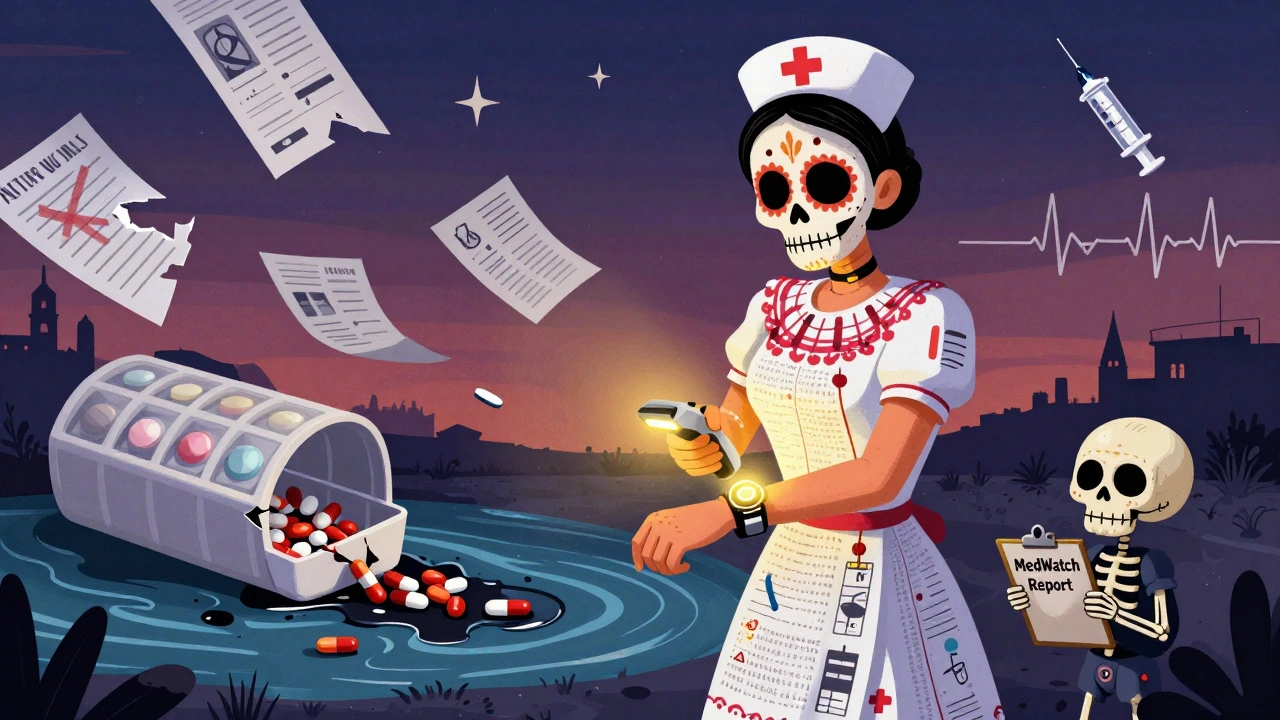
- Report to federal agencies: For serious injuries or deaths, file a report with the FDA’s MedWatch program. You don’t need to be a professional - families can report directly.
Timing matters. In California, facilities must report serious errors within 24 hours. In New York, it’s 48 hours. In Texas, 72 hours. Delaying gives them time to alter records.
What Happens After You Report?
Many families fear retaliation. But data shows something surprising: when families report errors properly, 68% of facilities resolve the issue within 72 hours - especially when the ombudsman gets involved.Facilities that use confidential reporting systems like MEDMARX - which focuses on fixing systems, not punishing staff - are 83% more likely to fix the root cause. That means better training, updated tech, or clearer protocols. The goal isn’t to get someone fired. It’s to make sure the same mistake doesn’t happen to someone else.
Still, only 48% of nursing homes use any formal reporting system at all. That’s why your report matters. It’s not just about your loved one - it’s about protecting everyone.
Tools and Tech That Are Actually Helping
Change is coming - slowly. Here’s what’s working:- Barcode medication administration (BCMA): Nurses scan the patient’s wristband and the pill before giving it. This cuts administration errors by 86%.
- Computerized Prescribing (CPOE): Doctors enter orders digitally. This reduces prescribing errors by 48%.
- Clinical Decision Support (CDSS): Software flags dangerous combinations - like giving an elderly person both an NSAID and a blood thinner - and suggests safer alternatives.
- AI monitoring tools: New systems like MedAware analyze prescriptions in real time and predict dangerous patterns with 94% accuracy.
But here’s the catch: only 55% of nursing homes use barcode systems. Hospitals? Almost all of them. That gap is deadly. If your loved one is in a nursing home without these tools, ask: “When will we get them?” and “What’s the plan to reduce errors?”
What You Can Do Today
You don’t have to wait for the system to fix itself. Start now:- Keep a living medication list: Update it every time a doctor changes something. Include the reason for each drug, the dose, and the time it’s taken. Share it with every provider.
- Ask for medication reconciliation: At every hospital discharge or clinic visit, demand a full review of all meds. This can prevent 67% of adverse events in seniors on five or more drugs.
- Use a pill organizer: But don’t rely on it alone. Check the pills inside weekly. Pharmacies sometimes misfill them.
- Visit unannounced: Show up during medication times. Watch how it’s given. Ask the nurse to explain why each drug is being taken.
- Know your rights: You have the legal right to review your loved one’s medical records, including medication logs. Request them in writing.
Final Thought: Your Voice Saves Lives
Medication errors in seniors aren’t rare. They’re systemic. And they’re hidden - until someone speaks up. Families who report errors don’t just protect their loved ones. They force facilities to change. They push for better tech. They make the system safer for everyone.Don’t wait for someone else to act. If something feels wrong - it probably is. Document it. Report it. Follow up. You’re not being difficult. You’re being the last line of defense.
What should I do if a nursing home refuses to report a medication error?
If the facility refuses to document the error, immediately contact your state’s Long-Term Care Ombudsman Program at 1-800-677-1116. They have legal authority to investigate and can demand records. Also file a report with the FDA’s MedWatch program for serious adverse events. Never accept a verbal excuse like “it was a one-time mistake.”
Can I report a medication error even if my loved one wasn’t harmed?
Yes. In fact, you should. Most serious errors start as near-misses. Reporting a near-miss - like catching a double dose before it was given - helps facilities fix systems before someone gets hurt. The CDC and AHRQ both encourage reporting all errors, regardless of outcome.
Which medications are most dangerous for seniors?
According to the American Geriatrics Society’s 2023 Beers Criteria®, high-risk drugs include benzodiazepines (like diazepam), anticholinergics (like diphenhydramine), long-acting sulfonylureas (like glyburide), and NSAIDs (like ibuprofen) in those with kidney issues. Anticoagulants like warfarin and direct oral anticoagulants (DOACs) are also high-risk due to narrow therapeutic windows.
How can I tell if my loved one is on too many medications?
If your loved one is taking five or more medications regularly, they’re in the high-risk zone for errors. Ask their doctor for a “medication review” - not just a refill. Look for drugs that treat side effects of other drugs, like laxatives for constipation caused by painkillers. This is called a prescribing cascade - and it’s a major red flag.
Is it safe to use a pill organizer for elderly medications?
Pill organizers can help, but they’re not foolproof. Pharmacies sometimes misfill them, and some medications shouldn’t be moved (like sublingual tablets or capsules that degrade in air). Always check the original bottle against the organizer weekly. Use them as a reminder tool, not a replacement for proper medication management.
What’s the difference between MEDMARX and the FDA’s MedWatch?
MEDMARX is a confidential, voluntary system used by healthcare facilities to analyze internal error trends and improve safety processes. MedWatch is a public reporting system run by the FDA for serious adverse events, including those involving medications, that result in death, hospitalization, or serious injury. Families can report directly to MedWatch - and it’s the only way to trigger federal oversight.
Next Steps: What to Do Right Now
- If you’re a family member: Pull out your loved one’s medication list. Count the pills. Cross-check each one with the doctor’s latest instructions. Call the pharmacy and ask if any meds were changed recently.
- If you’re a caregiver: Start using the Five Rights checklist every single time you give medication. Don’t assume - verify. Document everything.
- If you’re in a facility: Ask for access to the facility’s medication error reporting system. If none exists, request training on the AHRQ Common Formats. Push for barcode scanning and eMAR systems.
Medication safety isn’t about perfection. It’s about vigilance. One checklist. One question. One report. That’s all it takes to stop a tragedy before it happens.
Angela R. Cartes
December 8, 2025 AT 20:33Andrea Beilstein
December 9, 2025 AT 16:06Medication errors aren’t just clinical failures they’re moral failures
The system doesn’t care until someone dies and even then it’s just a footnote in a report
Courtney Black
December 10, 2025 AT 06:43iswarya bala
December 11, 2025 AT 11:23Anna Roh
December 13, 2025 AT 08:03Lola Bchoudi
December 13, 2025 AT 23:48Morgan Tait
December 14, 2025 AT 10:58Sarah Gray
December 15, 2025 AT 13:23Andrea DeWinter
December 16, 2025 AT 13:08Most families don’t know they can demand medication reconciliation at discharge
Or that they have the right to see the eMAR logs
Or that the ombudsman can subpoena records
So please - share this. Even if you think it’s obvious. It’s not. Not to most people