
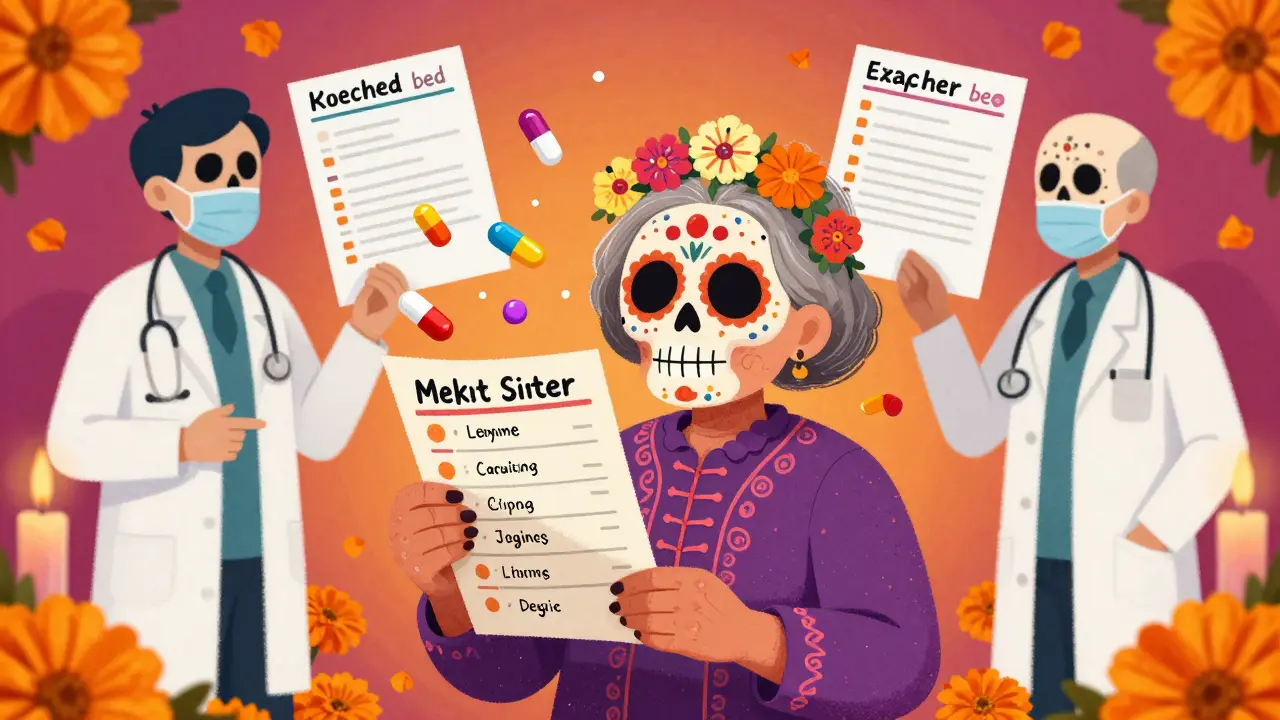
Every year, thousands of older adults end up in the emergency room because they’re taking two pills that do the same thing. One was prescribed by their cardiologist. Another by their primary care doctor. Neither knew the other had written a prescription. And neither asked the patient what else they were taking. This isn’t rare. It’s common. And it’s dangerous.
If you or a loved one sees multiple specialists - for heart disease, diabetes, arthritis, or high blood pressure - you’re at risk. Each doctor treats one condition. But they don’t always see the full picture. That’s how duplicate medications happen. And that’s how side effects, falls, confusion, and even internal bleeding start.
What Is Therapeutic Duplication?
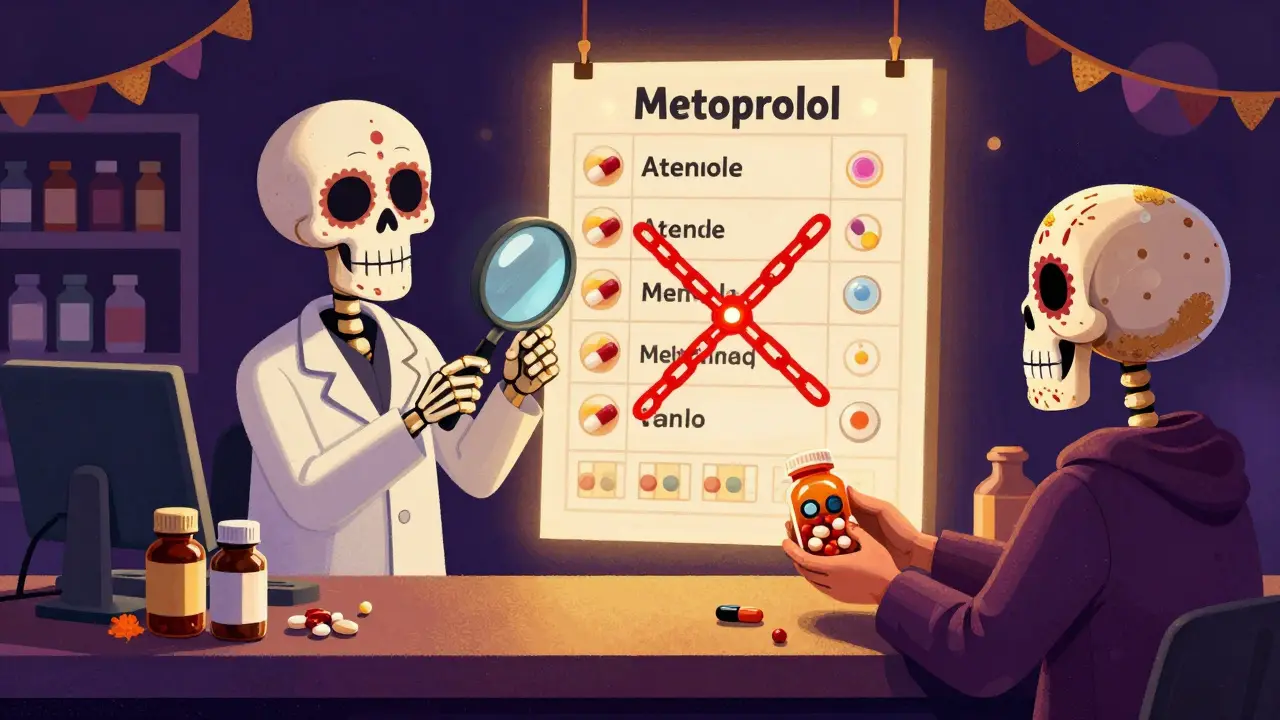
Therapeutic duplication means you’re taking two or more drugs that work the same way in your body. For example: one doctor prescribes metoprolol for high blood pressure. Another prescribes atenolol - also a beta-blocker. Both slow your heart rate and lower blood pressure. Together? They can drop your blood pressure too low. You might feel dizzy, faint, or fall. That’s not just inconvenient. It’s life-threatening.
It’s not just prescription drugs. Over-the-counter painkillers like ibuprofen and naproxen can duplicate each other. So can supplements like fish oil and aspirin - both thin the blood. Even herbal products like St. John’s wort can interfere with antidepressants or blood pressure meds. The problem grows worse as you add more medications. Studies show that people taking five or more drugs have a much higher chance of dangerous interactions. And seniors? They’re the most vulnerable.
Why Specialists Don’t Know What Others Prescribed
Specialists focus on one part of your health. A cardiologist looks at your heart. An endocrinologist checks your blood sugar. A rheumatologist treats your joints. They’re not trained to review your entire medication list. Even if they have access to your records, many systems don’t show all medications clearly. Some don’t list over-the-counter drugs or supplements at all.
Worse, doctors often override computer alerts. If your pharmacy’s system flags a possible duplicate, the doctor might click “ignore” because they’re rushed, think the patient is fine, or don’t realize the risk. One study found that in 17% of duplicate alerts, there was a real risk of harm - but many were still ignored.
And when you switch pharmacies? The problem gets worse. If you use one pharmacy for your heart meds and another for your arthritis pills, neither has the full picture. Pharmacists can’t help if they don’t see everything.
Your Medication List: The Most Important Tool You Have
The single most effective way to stop duplicate medications? Keep a real, updated list - and bring it to every appointment.
Don’t just say, “I take my blood pressure pill.” Write it down. Include:
- Brand and generic names (e.g., metoprolol or Lopressor)
- Dosage (e.g., 25 mg once daily)
- Time of day (e.g., morning with breakfast)
- Why you take it (e.g., “for high blood pressure”)
- Over-the-counter drugs (e.g., ibuprofen, calcium supplements)
- Vitamins and herbs (e.g., vitamin D, fish oil, garlic pills)
Don’t rely on memory. Bring your pill bottles. Take a photo of each label. Or use a free app like MyTherapy or Medisafe to scan barcodes and store your list digitally. When you see a new specialist, hand them your list before they even start talking.
Studies show patients who bring a written list reduce medication errors by up to 50%. Pharmacists who reviewed these lists caught duplicates 32% of the time - and made changes to prevent harm.
Use One Pharmacy - Always
Using multiple pharmacies is like splitting your medical record in half. One pharmacy knows your heart meds. Another knows your diabetes pills. But neither sees the full picture. That’s how duplicates slip through.
Stick with one pharmacy - even if it’s farther away or less convenient. That pharmacy’s computer system will flag duplicates across all your prescriptions. They’ll also know if you’re taking something like ibuprofen with a blood thinner. Pharmacists are trained to spot these problems. But they can’t help if they don’t have all the data.
If you’re already using multiple pharmacies, switch. Call your primary care doctor and ask them to help you transfer your prescriptions. Most insurance plans let you change your pharmacy at any time. It’s worth the effort.
Ask the Right Questions at Every Visit
Don’t wait for your doctor to explain. Ask these three questions every time you get a new prescription:
- “Why am I taking this?” - If you can’t explain the reason in your own words, you might be on a drug you don’t need.
- “Is this replacing something else I’m already taking?” - Sometimes a specialist adds a new drug instead of switching an old one.
- “Can we go over my whole list? I’m worried I’m taking too much.” - Most doctors will agree. They just need you to bring up the topic.
Use the teach-back method. After your doctor explains a medication, say: “So if I understand right, I take this for my blood pressure, once a day, and it might make me dizzy. Is that correct?” If you can say it back accurately, you’re less likely to make a mistake later.
Work With Your Pharmacist
Pharmacists are your hidden safety net. They see every prescription you fill. They know which drugs overlap. They can spot a duplicate before you even leave the counter.
Don’t just pick up your pills and leave. Ask: “Can you check if any of these might be doing the same thing?” Many pharmacists will do this for free. Some even offer free 15-minute medication reviews.
If you’re on more than five medications, ask for a comprehensive review. Some pharmacies partner with your doctor’s office to do this. Kaiser Permanente’s program cut duplicate prescriptions by 37% just by having pharmacists sit down with patients and their doctors. You can ask your pharmacy if they offer something similar.
What to Do If You Already Have a Duplicate
If you suspect you’re taking two drugs that do the same thing - stop taking one. But don’t guess which one. Call your primary care doctor immediately. They’re the best person to decide what to keep and what to stop.
Never stop a medication on your own - especially blood pressure, heart, or diabetes drugs. But don’t keep taking both either. Call your doctor. Say: “I think I might be taking two medicines for the same thing. Can we review my list?”
Many times, one drug can be safely stopped. Or switched to a different class. For example, if you’re on two different blood pressure pills, your doctor might replace one with a diuretic or a calcium channel blocker - something that works differently.
Technology Can Help - But Only If You Use It
Some hospitals and clinics now use AI tools that scan your records and flag duplicates automatically. Mayo Clinic’s system improved detection by 143%. But these tools only work if your records are complete.
So don’t wait for technology to fix this. Do your part. Update your list. Bring it. Ask questions. Use one pharmacy. Talk to your pharmacist.
The system isn’t perfect. Doctors are busy. Pharmacies are understaffed. But you’re the only one who knows exactly what’s in your medicine cabinet. That’s your power. Use it.
Real Example: What Happened When a Patient Spoke Up
A 72-year-old woman in Dallas saw her cardiologist for irregular heartbeat. He prescribed metoprolol. A month later, she went to her primary care doctor for a routine check-up. She didn’t mention the new pill. Her doctor, unaware, renewed her old metoprolol prescription from three years ago.
She started feeling dizzy and nearly fell getting out of the shower. She called her pharmacist. The pharmacist checked her list - and found two identical prescriptions. The pharmacist called both doctors. Within 24 hours, one prescription was canceled. Her dizziness went away.
She didn’t know she had a duplicate. She didn’t know how to ask. But once she did - the system worked.
You can be that person. You just need to speak up.
Alex Curran
December 20, 2025 AT 05:47I used to think my grandpa was just being paranoid about his meds until he nearly passed out from two different beta-blockers
Now I make him print his list every time he sees a doc
Even the pharmacist looks at me like I'm a genius for doing it
Simple as hell but 90% of people don't bother
Dikshita Mehta
December 20, 2025 AT 11:46My mother was on three different painkillers at once because each specialist thought they were treating a different issue
Turns out they were all NSAIDs and she had internal bleeding
She didn't know until the ER doctor pointed it out
This post saved her life and I'm sharing it with everyone I know
pascal pantel
December 21, 2025 AT 16:28Let's be real - this is a systemic failure of healthcare interoperability
Pharmacies don't talk to EHRs, EHRs don't talk to each other, and clinicians are incentivized to prescribe, not de-prescribe
Throwing a list at a doctor doesn't fix the architecture
It's like asking a janitor to fix the sewer line because you dropped a sock in it
The real solution is interoperable APIs with real-time CDS integration - not sticky notes
Mark Able
December 23, 2025 AT 13:32Bro I switched to one pharmacy last year and it saved me from getting duped on my blood thinner
My old pharmacy didn't even know I was on warfarin until I showed them the bottle
Now they flag every new script automatically
Why isn't this mandatory everywhere
William Storrs
December 24, 2025 AT 23:48You got this
It's scary to speak up but you're not being annoying - you're being smart
Every time you bring that list, you're protecting your future self
And if your doctor rolls their eyes? Find a new one
You deserve care that respects your life, not just your diagnosis
Nina Stacey
December 26, 2025 AT 06:36I used to forget half my meds until I started taking pictures of every bottle and putting them in a folder on my phone
Now I just show the doctor my phone when I walk in
My sister laughed at me at first but now she does it too
My aunt had a stroke last year because she was taking two blood thinners and no one knew
Don't wait until it's too late
Just do it now
Kevin Motta Top
December 28, 2025 AT 03:18One pharmacy. One list. Three questions.
That's the whole system.
It's not complicated.
It's just inconvenient.
And that's why it works.
Chris porto
December 28, 2025 AT 17:57We treat medicine like it's a checklist instead of a conversation
Doctors are trained to fix things, not to listen
Patients are trained to obey, not to question
Maybe the real problem isn't the duplicate pills
But the silence between them