
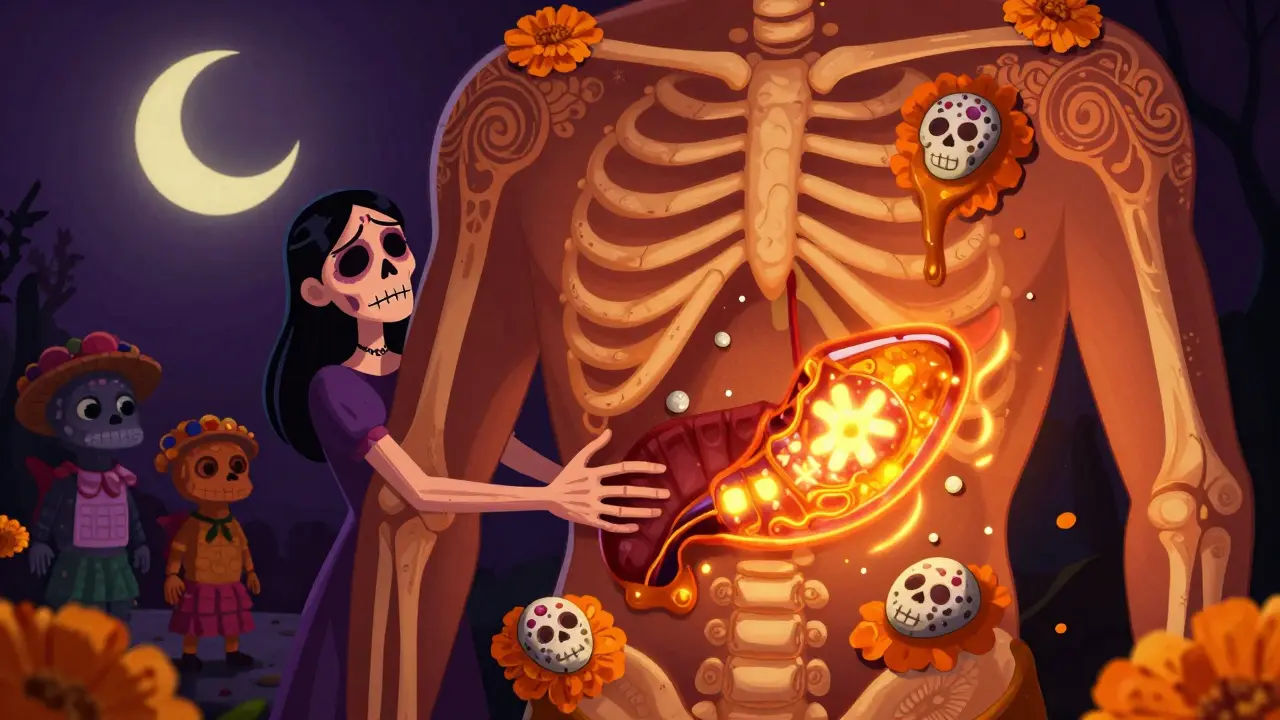
GLP-1 Gallbladder Risk Assessment Tool
Personal Risk Assessment
This tool helps you understand your risk of gallbladder complications while taking GLP-1 agonists. Based on your responses, you'll receive a personalized risk assessment and warning signs to watch for.
Your Risk Assessment
Watch for these warning signs
More than 45 million people in the U.S. filled a prescription for a GLP-1 agonist in 2023. These drugs - like Ozempic, Wegovy, and Saxenda - are changing how we treat diabetes and obesity. But behind the weight loss success stories, a quiet but serious risk is growing: gallbladder disease. And the earliest warning sign? Abdominal pain. Not just any pain. Specific, unmistakable pain that demands attention.
Why GLP-1 Agonists Trigger Gallbladder Problems
GLP-1 agonists work by mimicking a hormone your body makes after eating. They slow digestion, reduce appetite, and help your pancreas release insulin. But there’s a side effect no one talks about until it’s too late: they stop your gallbladder from working right. Your gallbladder stores bile - the fluid your liver makes to digest fat. When you eat, especially fatty food, your gallbladder squeezes and releases bile into your intestines. GLP-1 agonists interfere with that signal. They blunt the release of cholecystokinin, the hormone that tells your gallbladder to contract. Without that squeeze, bile sits still. Stagnant bile turns into sludge. Sludge turns into stones. And stones can block the ducts, causing infection, inflammation, and severe pain. This isn’t theoretical. A 2022 meta-analysis of 76 clinical trials involving over 56,000 people found a 37% higher risk of gallbladder or biliary disease with GLP-1 agonists. The risk jumps even higher for weight loss doses. For example, semaglutide at 2.4 mg (Wegovy) carries nearly twice the risk as the 1 mg dose used for diabetes (Ozempic). Liraglutide (Saxenda) shows the strongest link to abdominal pain among all GLP-1 drugs.Who’s Most at Risk?
Not everyone on these drugs gets gallstones. But some people are far more vulnerable:- Women over 40 - hormonal factors make them more prone to gallstones even without medication
- People with obesity (BMI over 30) - fat tissue increases bile cholesterol, fueling stone formation
- Those losing weight fast - more than 1.5 kg (3.3 lbs) per week dramatically increases risk
- Anyone with a history of gallstones or gallbladder disease - even if they had their gallbladder removed years ago
The Red Flags: What Abdominal Pain Looks Like
Most people think “stomach pain” means indigestion or gas. But gallbladder pain is different. It’s not vague. It’s sharp. It’s specific. And it doesn’t go away with antacids. Here’s what to watch for:- Right upper quadrant pain - the area just under your ribs on the right side. This is the #1 red flag. In one study, 89% of patients with cholecystitis had pain exactly here.
- Pain that lasts more than 30 minutes - if it’s just a quick cramp, it’s probably not gallbladder. If it’s constant, throbbing, or worsening for over half an hour, get checked.
- Pain that radiates to your right shoulder - this is a classic sign. The nerve that runs from your gallbladder also connects to your shoulder. When your gallbladder is inflamed, your brain misreads the signal.
- Pain after eating fatty foods - tacos, cheeseburgers, fried chicken, even a spoonful of butter. These trigger bile release. If your gallbladder can’t empty, the pressure builds - and you feel it.
- Nausea or vomiting with the pain - this isn’t just “feeling sick.” It’s a direct response to bile duct blockage. Studies show this combo raises your likelihood of cholecystitis by nearly 4 times.
When Does It Happen?
Timing matters. Most cases don’t show up on day one. They creep in.- Peak risk window: 3 to 9 months - that’s when most people report their first symptoms. This is the window where weight loss is fastest and gallbladder motility is most suppressed.
- 93% of cases occur within the first year - after that, risk drops, but doesn’t disappear.
- Median time to symptoms: 180 days - about six months. If you’ve been on the drug for that long and start having pain, don’t wait.
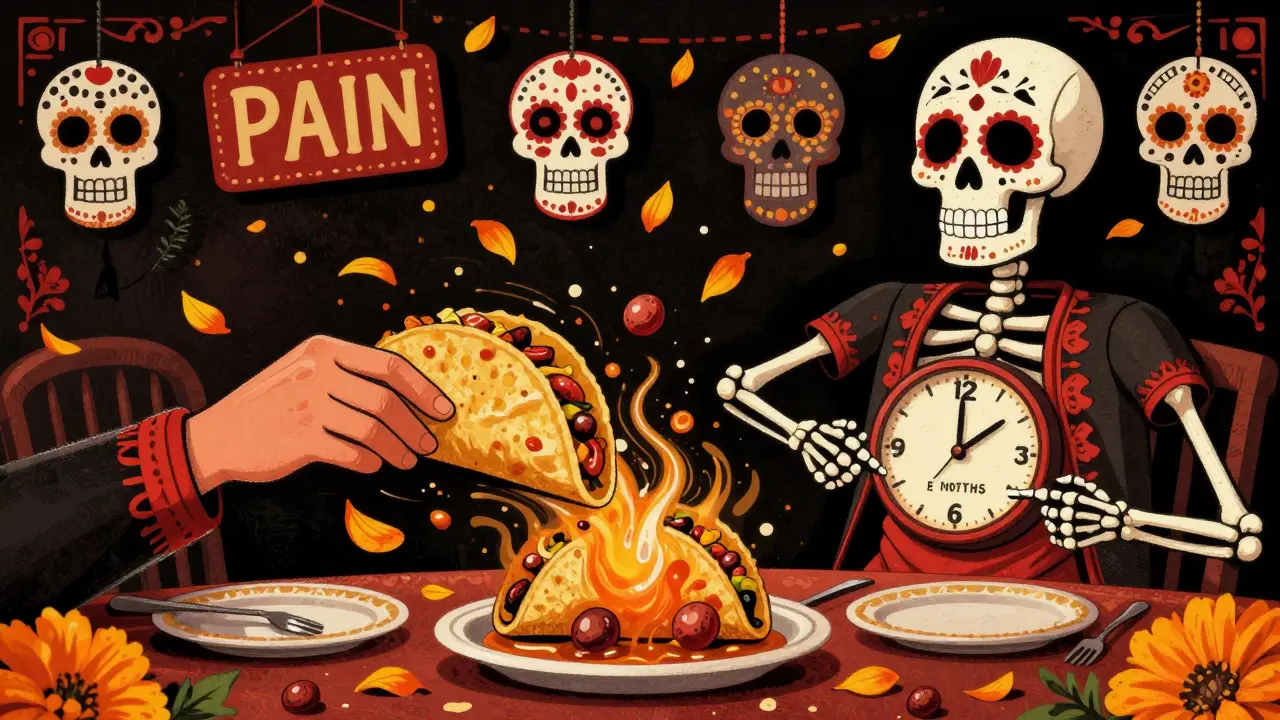
What Happens If You Ignore It?
Gallbladder disease doesn’t get better on its own. It gets worse.- Acute cholecystitis - inflammation from a blocked duct. Pain becomes constant. Fever. Chills. You can’t eat. This is an emergency.
- Choledocholithiasis - stones move into the main bile duct. This can cause jaundice (yellow skin), dark urine, and life-threatening infections like cholangitis.
- Cholecystectomy - surgery to remove the gallbladder. In the 2022 FDA case series, 75% of patients with GLP-1-related cholecystitis needed this surgery. That’s not rare. That’s the norm.
What Should You Do?
If you’re on a GLP-1 agonist, here’s your action plan:- Get a baseline ultrasound - if you’re a woman over 40, have obesity, or a history of gallstones, ask your doctor for an abdominal ultrasound before starting the drug. It’s quick, painless, and cheap.
- Know your red flags - memorize the signs: right upper pain, shoulder radiation, fatty food trigger, lasting over 30 minutes.
- Don’t wait for “worse” pain - if you feel one of these signs, call your doctor that day. Don’t wait for the next appointment. Don’t try home remedies. Don’t assume it’s “just indigestion.”
- Stop the drug if you have symptoms - the American Association of Clinical Endocrinology recommends discontinuing GLP-1 agonists if gallbladder disease is suspected. Continuing can turn a treatable issue into a surgical emergency.
- Ask about UDCA - researchers are testing ursodeoxycholic acid (UDCA), a bile acid that can dissolve stones and prevent new ones. While not standard yet, some doctors prescribe it off-label for high-risk patients.
What About People Who’ve Had Their Gallbladder Removed?
Good news: if you’ve had a cholecystectomy, your risk of gallstone complications from GLP-1 agonists is extremely low. Your gallbladder is gone - so there’s no organ to get inflamed or blocked. But there’s one caveat: residual stones. Sometimes, tiny stones can remain in the bile ducts after surgery. In rare cases, GLP-1 agonists can cause these to move and block the duct. It’s uncommon - but not impossible. If you’ve had your gallbladder removed and start having pain, still get it checked. Just don’t assume you’re immune.
How This Compares to Other Weight Loss Drugs
You might be wondering: are other weight loss drugs safer?- Orlistat (Xenical) - causes oily stools and gas, but has a much lower gallbladder risk. It works by blocking fat absorption, not by slowing gallbladder emptying.
- Phentermine-topiramate (Qsymia) - no significant gallbladder risk found in FDA data. It works on appetite centers in the brain, not digestion.
- GLP-1 agonists - highest risk among current options, especially at weight loss doses.
The Bigger Picture
The FDA received over 1,800 gallbladder-related reports for GLP-1 drugs in 2023 - more than triple the number from 2021. Meanwhile, prescriptions for Wegovy alone jumped from 1.2 million to 6.8 million in just two years. That’s a lot of people on these drugs - and a lot of potential cases slipping through the cracks. Gastroenterologists are seeing the shift. In 2023, nearly 13% of new cholecystectomy patients had been on a GLP-1 agonist for at least three months. That’s up from just 3% in 2021. This isn’t a bug. It’s a feature - of how these drugs work. And until more doctors and patients understand that, the number of ER visits and surgeries will keep climbing.Final Thoughts
GLP-1 agonists are powerful tools. But power comes with responsibility. If you’re taking one, you’re not just managing your weight or diabetes - you’re managing a hidden risk. The pain you feel might not be your stomach. It might be your gallbladder screaming for help. Don’t wait for a crisis. Know the signs. Act fast. Talk to your doctor. Your future self will thank you.Can GLP-1 agonists cause gallstones even if I’ve never had them before?
Yes. GLP-1 agonists slow gallbladder emptying, which causes bile to stagnate and form stones - even in people with no prior history. The risk is highest in people with obesity, women over 40, and those losing weight rapidly. Studies show about 1 in 100 people on weight loss doses develop gallstones.
How soon after starting a GLP-1 drug should I be worried about gallbladder pain?
Most cases occur between 3 and 9 months after starting the drug, with peak risk around 6 months. But symptoms can appear as early as 4 weeks or as late as a year. If you’re on the drug for more than 3 months and feel new, persistent right upper abdominal pain - especially after eating fat - get evaluated.
Should I stop taking my GLP-1 agonist if I have abdominal pain?
If you have red flag symptoms - right upper pain lasting more than 30 minutes, shoulder radiation, nausea, or pain after fatty meals - stop the drug and contact your doctor immediately. Continuing may worsen inflammation and lead to surgery. Your doctor will likely order an ultrasound and decide whether to pause or discontinue the medication.
Is there a way to prevent gallstones while on GLP-1 agonists?
There’s no guaranteed prevention, but you can lower your risk. Avoid rapid weight loss - aim for no more than 1 kg (2.2 lbs) per week. Eat smaller, low-fat meals to reduce gallbladder stress. Some doctors prescribe ursodeoxycholic acid (UDCA) off-label to dissolve bile and prevent stones. Ask your doctor if this is right for you.
Do all GLP-1 agonists carry the same gallbladder risk?
No. Liraglutide (Saxenda) has the highest relative risk, followed by semaglutide (Ozempic, Wegovy). Exenatide carries a lower risk. Weight loss doses (like 2.4 mg semaglutide) have significantly higher risk than diabetes doses (0.5-1 mg). The higher the dose and the more weight lost, the greater the gallbladder stress.
If I’ve had my gallbladder removed, am I safe from GLP-1 related complications?
You’re much safer - without a gallbladder, you can’t develop gallstones or cholecystitis. But rare cases of bile duct stones from residual fragments can still occur. If you’ve had your gallbladder removed and experience new abdominal pain, jaundice, or fever, still get it checked - it’s unlikely, but not impossible.
Marlon Mentolaroc
January 22, 2026 AT 12:45Just got my first Ozempic prescription last month and I'm already paranoid about every little stomach rumble. I ate a taco last night and spent 45 minutes wondering if I was about to need surgery. Thanks for the heads-up - this is the kind of info you wish your doctor actually mentioned before handing you the script.
Gina Beard
January 23, 2026 AT 08:25Medicine is progress with collateral damage.
siva lingam
January 23, 2026 AT 19:09So the drug that makes you lose weight also makes your gallbladder hate you? Groundbreaking. Next up: insulin causes feet to fall off. Surprise surprise.
Phil Maxwell
January 25, 2026 AT 01:54I've been on Wegovy for 5 months and last week I had that right-side pain after pizza. Thought it was just bloating. Ended up getting an ultrasound - turned out to be sludge, no stones yet. Doctor put me on UDCA and told me to cut back on fat. I'm still losing weight, just slower. Worth it.
Shelby Marcel
January 26, 2026 AT 05:07wait so if u have no gallbladder ur fine? i had mine out in 2018 and im on semaglutide now… should i still worry bout the pain? or is it just gonna be regular digestion weirdness?
blackbelt security
January 27, 2026 AT 15:59Knowledge is power. This post saved me from a trip to the ER. I'm not stopping my meds - I'm just being smarter. Baseline ultrasound scheduled for next week. If you're on these drugs and haven't gotten checked, do it. Your future self will high-five you.
Patrick Gornik
January 27, 2026 AT 23:05The pharmaceutical-industrial complex has weaponized metabolic biology to sell us a fantasy of effortless transformation - while offloading the iatrogenic consequences onto the patient’s liver, gallbladder, and psyche. We’ve turned bodily autonomy into a subscription model: lose weight, gain cholecystitis, pay for the surgery, repeat. The real drug isn’t semaglutide - it’s neoliberalism dressed in white coats.
Tommy Sandri
January 28, 2026 AT 23:06Thank you for presenting a comprehensive and clinically grounded overview. The data presented aligns with recent publications in the Journal of Hepatobiliary Pancreatic Sciences. It is imperative that prescribing clinicians integrate gallbladder risk assessment into the informed consent process for GLP-1 agonist therapy.
Luke Davidson
January 29, 2026 AT 12:10I'm so glad someone finally talked about this. I was scared to say anything because everyone online is just celebrating the weight loss like it's magic. But I had a nightmare week - right side pain, nausea, shoulder ache after a burrito. I stopped the drug, got checked, and they found sludge. I'm not mad - I'm just glad I didn't wait until I was screaming in the ER. You're not weak for needing help. You're smart for listening to your body.
Sushrita Chakraborty
January 30, 2026 AT 06:50Shanta Blank
January 31, 2026 AT 12:19So let me get this straight - Big Pharma invented a drug that makes you look hot but turns your gallbladder into a ticking time bomb? And now we’re supposed to be grateful? I lost 40 lbs on Saxenda, sure - but I also lost my gallbladder, my appetite for tacos, and my trust in doctors who say 'it's just indigestion.' This isn't health. This is a scam with a side of cholecystectomy.
Chloe Hadland
February 2, 2026 AT 05:22I'm on Ozempic for diabetes and I never even thought about my gallbladder. I'm gonna call my doc tomorrow and ask for an ultrasound. I don't wanna wait until I'm in pain. Thank you for sharing this - it's scary but also kind of empowering to know what to look for.
Amelia Williams
February 3, 2026 AT 03:43My mom’s on Wegovy and she’s been complaining about bloating for weeks. I showed her this post - she’s scheduling her ultrasound this week. I wish I’d known this sooner. You’re doing important work. Keep talking about the stuff they don’t want you to know.
Sharon Biggins
February 3, 2026 AT 12:53Just wanted to say - if you're reading this and you're scared, you're not alone. I was terrified when I got my first pain. But I called my doctor, got help, and I'm still on the drug - just slower, safer. You don't have to choose between health and weight loss. You can have both. Just listen to your body. You got this.
Kevin Waters
February 5, 2026 AT 07:34For anyone asking about UDCA - yes, it's off-label, but it's used in practice for high-risk patients. Dose is usually 10–15 mg/kg/day. Studies show it reduces sludge progression by 60% in GLP-1 users. Ask your GI doc if it’s an option. Also - eat smaller meals. Fat overload + slow gallbladder = bad combo. Small, frequent, low-fat meals are your new best friend.