
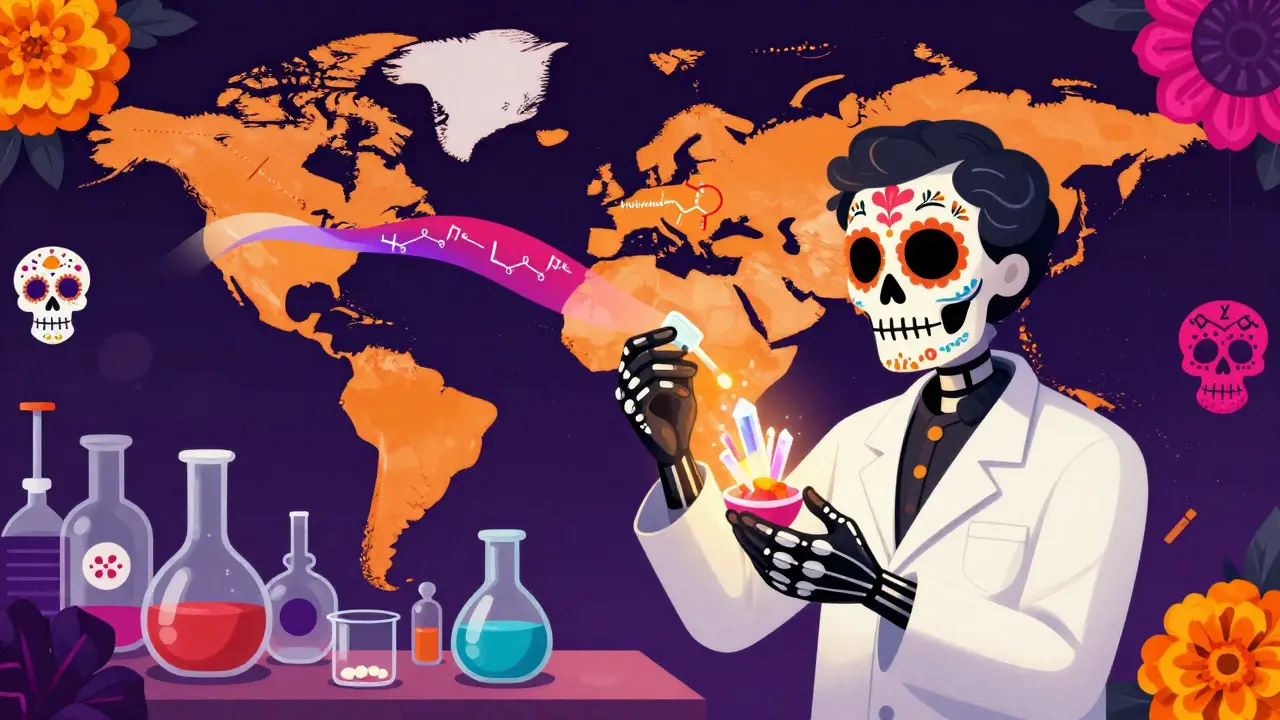
Ever wonder why some medications are incredibly cheap while others cost a fortune, even though they do the exact same thing? The answer isn't just about patents; it's about the invisible, complex web known as the generic drug supply chain. This system is a high-stakes relay race where raw chemicals from across the globe are transformed into pills and delivered to your local drugstore. But unlike a standard retail chain, this process is governed by strict federal laws and a confusing mix of middlemen that can change the price of your medicine before it even hits the shelf.
The Starting Line: Raw Materials and Global Sourcing
The journey begins long before a pill is pressed. Every generic medication relies on an Active Pharmaceutical Ingredient (or API), which is the specific chemical compound responsible for the drug's healing effect. If you're taking a generic blood pressure medication, the API is the actual molecule that lowers your blood pressure; everything else in the pill is just filler.
Here is the catch: most of these ingredients aren't made in the US. In fact, about 88% of API manufacturing happens overseas, primarily in China and India. This globalized approach keeps costs down but creates a fragile link. When a factory in Asia shuts down or a geopolitical rift occurs, it can lead to immediate shortages in American pharmacies. This reliance is why regulators like the FDA have ramped up inspections of foreign facilities, jumping from around 240 in 2010 to over 600 by 2022.
From Lab to Factory: The Approval Process
Once a manufacturer has the raw ingredients, they can't just start selling. To legally produce a generic version of a brand-name drug, they must file an Abbreviated New Drug Application (or ANDA) with the FDA. Unlike the original brand-name company, the generic maker doesn't have to repeat all the expensive clinical trials. They only need to prove "therapeutic equivalence"-essentially showing that their version works the same way in the body as the original.
Once approved, the factory follows Good Manufacturing Practices (GMP) to ensure every batch is pure and potent. This is where the "race to the bottom" begins. Generic drug makers face intense price competition, and because they capture only about 36% of the total expenditure on the drugs they make (compared to 76% for brand names), the margins are razor-thin. This pressure can sometimes lead to quality challenges or companies exiting the market entirely if the price drops too low.
The Middlemen: Wholesalers and Distribution
Manufacturers rarely sell directly to your neighborhood pharmacy. Instead, they sell in bulk to wholesale distributors. These giants buy massive quantities of drugs and handle the logistics of getting them to thousands of different locations.
The financial dance here is complicated. Wholesalers often negotiate "prompt payment discounts" with manufacturers to lower their costs. Then, they sell those drugs to pharmacies at a discount off the Wholesale Acquisition Cost (WAC). For those in hospitals or doctor's offices, the process changes slightly; they often use Group Purchasing Organizations (GPOs) to negotiate better bulk rates, creating a separate lane of distribution away from the retail pharmacies we see on every street corner.
| Feature | Generic Supply Chain | Brand Name Supply Chain |
|---|---|---|
| Manufacturer Revenue | Approx. 36% of spend | Approx. 76% of spend |
| Reimbursement Method | MAC (Ceiling price) | Percentage of list price |
| PBM Rebates | Rarely used | Common and high-leverage |
| Approval Path | ANDA (Equivalence) | Full New Drug Application (NDA) |
The Shadow Controllers: PBMs and Pricing
If the wholesalers are the muscles, Pharmacy Benefit Managers (or PBMs) are the brain. PBMs are the intermediaries that manage prescription drug programs for insurers and employers. Three companies-CVS Caremark, OptumRX, and Express Scripts-control roughly 80% of this market.
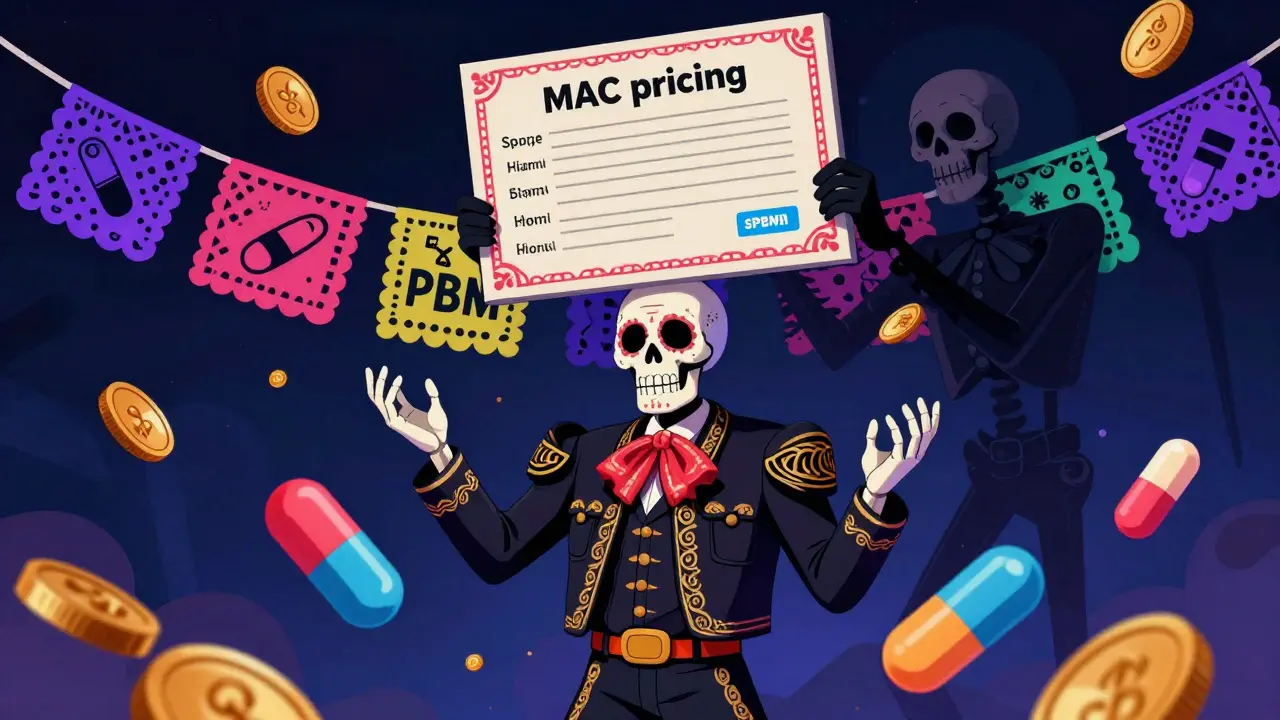
PBMs decide which drugs are on the "formulary" (the list of covered meds) and how much the pharmacy gets paid to dispense them. For generics, they use a system called Maximum Allowable Cost (or MAC). Instead of paying the pharmacy based on what the pharmacy paid for the drug, the PBM sets a hard ceiling-a maximum price they will pay for a specific dose of a drug.
This creates a massive headache for independent pharmacists. Imagine buying a gallon of milk for $4.00 but your customer's insurance only pays you $3.50 to provide it. That is "MAC pricing below acquisition cost," a financial pressure that 68% of independent pharmacy owners have cited as a major struggle. It forces pharmacies to hunt for the cheapest possible wholesaler to avoid losing money on every prescription filled.
The Final Step: Dispensation and Patient Access
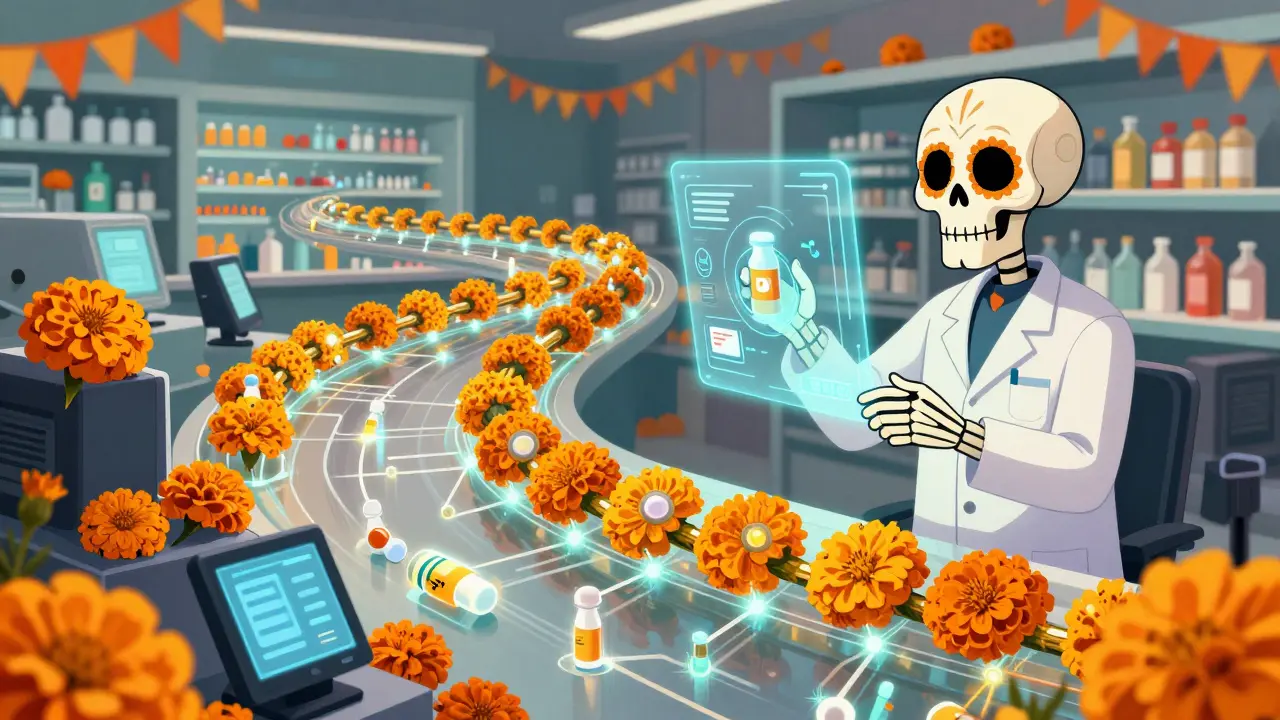
The relay race ends when the pharmacist checks the prescription, pulls the medication from the shelf, and hands it to you. While this seems simple, the pharmacist is managing a balancing act. They need enough stock to prevent shortages but can't afford to overstock expensive items that might sit on the shelf. To combat this, many pharmacies are now using real-world data (RWD) and AI-driven forecasting to predict when a drug might go out of stock due to a factory issue in India or China.
Currently, generics account for about 90% of all prescriptions filled in the US, but they only make up 23% of total drug spending. This shows that the generic supply chain is incredibly efficient at providing access, even if the internal financial struggle between manufacturers, PBMs, and pharmacists is intense.
Modernizing the Chain: AI and Blockchain
The industry is trying to fix the holes in the system. Because the chain is so long and global, it's easy for errors to occur or for counterfeit drugs to slip in. Some companies are experimenting with Blockchain to create an unchangeable record of a drug's journey from the API plant to the pharmacy. Others are using AI to diversify where they source their raw materials, trying to move some manufacturing back to the US to avoid the risks of relying solely on overseas partners.
Why are generic drugs so much cheaper than brand-name drugs?
Generic manufacturers don't have to pay for the initial research, development, and clinical trials that the original brand company funded. They only need to prove that the drug is chemically and therapeutically equivalent through an ANDA application, which significantly lowers the cost of bringing the drug to market.
What is an API in the context of medication?
API stands for Active Pharmaceutical Ingredient. It is the actual chemical component of a drug that produces the intended health effect. The rest of the pill consists of inactive ingredients (excipients) that help with stability, taste, and delivery.
What role do PBMs play in the supply chain?
Pharmacy Benefit Managers (PBMs) act as middlemen between insurance companies, pharmacies, and manufacturers. They negotiate rebates, decide which drugs are covered on a plan's formulary, and determine the reimbursement rates that pharmacies receive when they dispense a medication.
What is MAC pricing and why does it affect pharmacies?
Maximum Allowable Cost (MAC) is a reimbursement ceiling set by PBMs for generic drugs. If the cost for a pharmacy to buy the drug (acquisition cost) rises above the MAC limit, the pharmacy may lose money on that specific prescription, which puts significant financial strain on independent pharmacies.
Where are most generic drug ingredients made?
The vast majority-approximately 88%-of Active Pharmaceutical Ingredients (APIs) used in the US are manufactured outside the country, with China and India being the primary global hubs for these chemicals.
Ajinkya Joshi
April 21, 2026 AT 17:00Oh wow, a revolutionary discovery that PBMs are basically legalized cartels taking cuts from everyone. Groundbreaking stuff here 🙄