
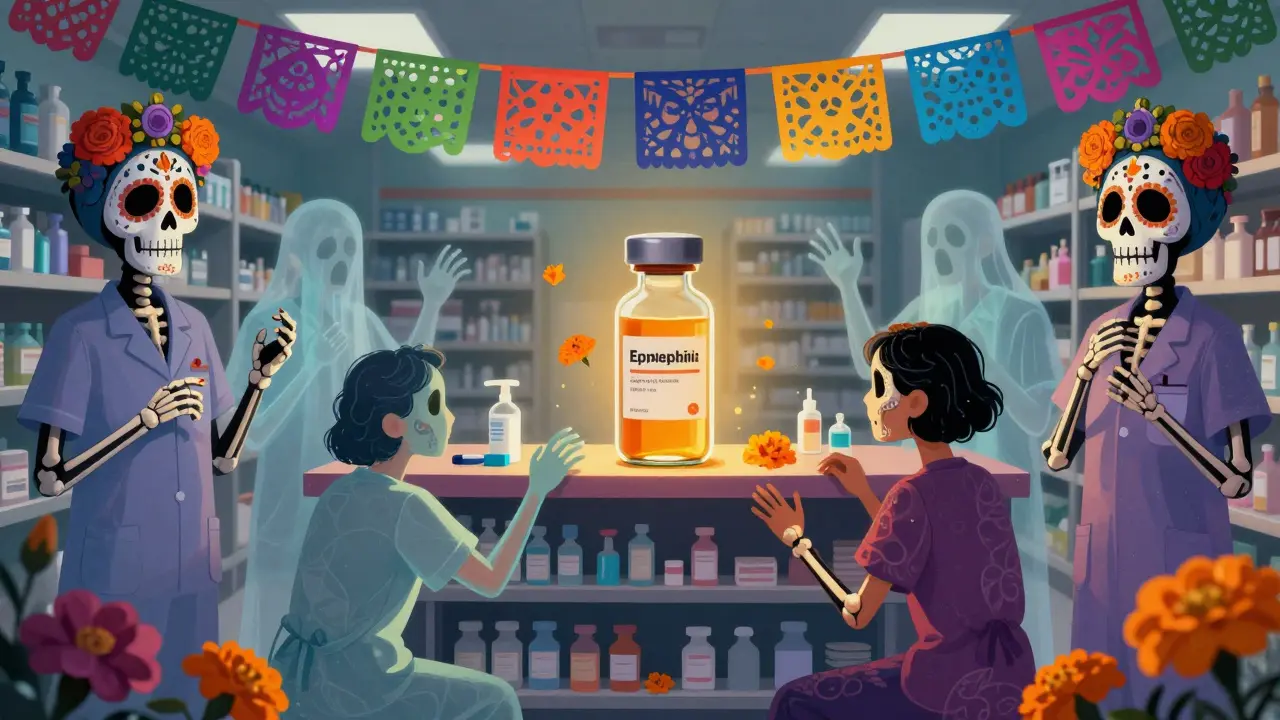
It’s 2025, and you’re standing in a hospital pharmacy in Dallas. The nurse asks for generic epinephrine - the life-saving shot for allergic reactions. The shelf is empty. Not because it’s out of stock. But because no one’s making it anymore.
This isn’t an anomaly. It’s the new normal.
For years, we’ve been told that more generic drug makers means lower prices and better access. And for the most part, that’s true. Nine out of every ten prescriptions in the U.S. are filled with generics. They saved the healthcare system $313 billion in 2023 alone. But behind those numbers is a broken system - one where too much competition in some areas, and too little in others, is causing dangerous drug shortages.
Why Some Generics Vanish While Others Flood the Market
Not all generic drugs are created equal. Some, like amoxicillin or metformin, have dozens of manufacturers. Prices for these drugs have dropped so low that some companies barely make a penny per pill. That’s great for insurers and patients - until one factory shuts down, and suddenly, there’s no backup.
On the other end of the spectrum, you’ve got complex drugs like sterile injectables - things like insulin, chemotherapy agents, or emergency epinephrine. These require expensive, FDA-approved clean rooms, specialized equipment, and years of validation. Only a handful of companies in the entire world can make them. Five suppliers control nearly half the market for sterile injectables. When one of them gets a warning letter from the FDA - which happened 147 times in 2023 - the entire supply chain trembles.
It’s not that no one wants to enter these markets. It’s that the cost to build a compliant facility runs $200-500 million. And if you’re competing against five other companies selling the same drug for 90% less than the brand name, your profit margin is paper-thin. Why invest $400 million to make a drug that earns you $0.02 per dose?
The Price Collapse That Killed Supply
Here’s the cruel irony: the very thing that makes generics affordable is also what makes them disappear.
When a new generic enters the market, prices drop fast. In the first year, they can fall by 50-70%. By year three, with three or more competitors, prices often drop to 20% of the original brand price. That’s what the Department of Health and Human Services found. Sounds great - until you realize that at that price, manufacturers can’t afford to maintain quality, upgrade equipment, or even pay their workers enough to avoid turnover.
Take a common antibiotic like cefazolin. In 2015, it had six manufacturers. By 2023, only two were left. Why? Because the price per vial dropped from $1.50 to $0.30. One company shut down its production line. The other couldn’t scale up fast enough. The result? A nationwide shortage that delayed surgeries and forced hospitals to use riskier alternatives.
According to CMS data, the average price of 50 commonly used generic drugs has actually increased by 15.7% per year since 2018 - not because of inflation, but because manufacturers keep exiting. When supply drops and demand stays steady, prices creep back up. But by then, patients are stuck paying more for the same old pill.
Who’s Left Standing?
The generic drug market looks crowded on paper. Big names like Teva, Sandoz, Mylan, Aurobindo, and Lupin dominate headlines. But look closer, and you’ll see a different picture.
For 35% of generic drugs, fewer than three manufacturers are active. For 12%, there’s only one. That’s not competition. That’s a single point of failure.
And those remaining manufacturers? They’re often based overseas. India and China supply over 80% of the active ingredients for U.S. generics. That’s fine - until a factory inspection fails, or a natural disaster hits, or geopolitical tensions disrupt shipping. In 2023, a fire at an Indian API plant caused a ripple effect across 15 different generic drugs in the U.S., including heart medications and antivirals.
Meanwhile, U.S.-based production has shrunk. In 2000, 40% of generic drugs sold in America were made domestically. Today, it’s under 15%. The rest come from countries with weaker regulatory oversight. The FDA issued 147 warning letters to generic drug plants in 2023 - up 23% from 2022 - mostly for data manipulation, poor sanitation, and falsified test results.
The Hidden Winners and Losers
Who benefits from this mess? Insurance companies. They love low generic prices. UnitedHealthcare saved billions in 2023 thanks to generics. Pharmacy benefit managers (PBMs) profit from the spread between what they pay manufacturers and what they charge insurers.
But who loses? Patients. Doctors. Hospitals.
A 2023 AMA survey found that 78% of physicians experienced at least one generic drug shortage in the past year. Over 40% said it frequently impacted patient care. One oncologist in Houston told me her patient couldn’t get a generic version of methotrexate - a drug used for leukemia and autoimmune diseases. The only available version cost $800 per dose instead of $8. The patient had to delay treatment for six weeks while waiting for a shipment from overseas.
For older adults on fixed incomes, these shortages aren’t just inconvenient - they’re life-threatening. AARP reports that when generics vanish, seniors often pay 10x more for brand-name versions. Or worse, they skip doses.
What’s Being Done - And Why It’s Not Enough
The FDA has tried to fix this. Their Drug Competition Action Plan has approved 40% more first-time generics since 2017. That sounds good. But here’s the catch: more approvals don’t mean more production. Many companies get approval, then sit on it. Why? Because they’re waiting for prices to rise before they start making the drug.
Some states are stepping in. Texas passed a law in 2024 requiring hospitals to report shortages within 24 hours. But that’s just tracking the problem - not solving it.
The Inflation Reduction Act, which starts drug price negotiations in 2026, will make things worse for some generics. It caps prices for 10 high-cost drugs, many of which now have generic versions. Manufacturers who were barely breaking even will now lose 15-25% of their revenue. That could trigger more exits.
The European Medicines Agency says the sweet spot for supply security is 4-6 manufacturers per essential drug. Right now, only 65% of critical generics meet that standard. The rest? One or two suppliers. That’s not a market. That’s a gamble.
The Path Forward: Competition That Lasts
We don’t need fewer generics. We need smarter competition.
Here’s what could actually work:
- Strategic stockpiles for essential drugs with only one or two makers - like epinephrine, insulin, or heparin. Not just for emergencies, but for routine supply gaps.
- Government incentives for U.S.-based manufacturing of complex generics. Tax credits, low-interest loans, or guaranteed minimum purchase agreements could make it worth the $400 million investment.
- Price floors for critical, low-margin drugs. Not to protect profits - but to ensure survival. A minimum price of $0.10 per pill for a life-saving antibiotic might sound high, but it’s better than no pill at all.
- Transparency - make it public which drugs have only one supplier. Patients and doctors deserve to know when they’re on the edge of a shortage.
Competition is good. But when it drives companies out of business, it stops being competition - and starts being a public health risk.
The goal isn’t to stop price drops. It’s to make sure that after the price drops, someone is still making the drug.
Mike Rengifo
December 19, 2025 AT 10:53Been there. Saw a nurse cry last month because they had to use a less effective antibiotic for a kid with pneumonia. No one talks about how these shortages turn doctors into guesswork artists.
Isabel Rábago
December 20, 2025 AT 06:10This is what happens when you let corporations run healthcare like a stock market. People aren’t widgets. Lives aren’t line items. And yet, we act like a $0.02 pill is just a cost center instead of someone’s only chance at survival. Shameful.
Anna Sedervay
December 21, 2025 AT 04:44One must observe, with mounting consternation, the systemic erosion of pharmaceutical integrity - a consequence, not of market forces per se, but of regulatory capture by multinational conglomerates who prioritize shareholder dividends over human physiology. The FDA’s inability to enforce GMP standards across global supply chains is not merely bureaucratic negligence - it is a dereliction of moral duty.
Matt Davies
December 21, 2025 AT 18:07It’s like watching a Jenga tower made of life-saving meds. Everyone’s pulling blocks to save a buck, and no one notices the whole thing’s wobbling until it crashes on a 72-year-old with diabetes. We need to stop treating medicine like cheap socks at a discount store.
Ashley Bliss
December 23, 2025 AT 04:22They call it capitalism. I call it a slow-motion massacre. You think your insurance premium is low? Good. That’s because someone’s child is getting a half-dose of epinephrine because the vial ran out. And you’re still scrolling. You’re still silent. You’re still buying the lie that ‘lower price = better system.’ Wake up. This isn’t economics. This is euthanasia by spreadsheet.
Dev Sawner
December 23, 2025 AT 21:32It is imperative to note that the Indian pharmaceutical industry produces over 80% of the API for U.S. generics, and this is not a weakness - it is a strategic advantage. The issue lies not in outsourcing, but in the absence of long-term contract stability and price predictability. The U.S. government must enter into binding agreements with manufacturers to ensure continuity, rather than relying on volatile spot markets.
Moses Odumbe
December 24, 2025 AT 10:11Bro. The FDA approves 40% more generics but no one makes them? 😑 That’s like approving 100 new pizza places… then all the ovens break. We need a ‘generic drug bailout’ - not for profits, for survival. 🙏💊 #FixTheSupplyChain
Meenakshi Jaiswal
December 25, 2025 AT 00:20As someone who works in a hospital pharmacy in Mumbai, I’ve seen this play out globally. The real fix isn’t just price floors - it’s investing in local manufacturing capacity with quality controls. The U.S. can’t outsource its health security forever. A $400M plant? Yes. But pair it with a 10-year volume guarantee. That’s how you get companies to build - not just wait.
bhushan telavane
December 26, 2025 AT 19:21From India - we make the pills. But we don’t get the credit. Or the safety nets. When your factory gets shut down for a typo in a logbook, you lose everything. The system punishes the workers, not the CEOs. Just saying.