
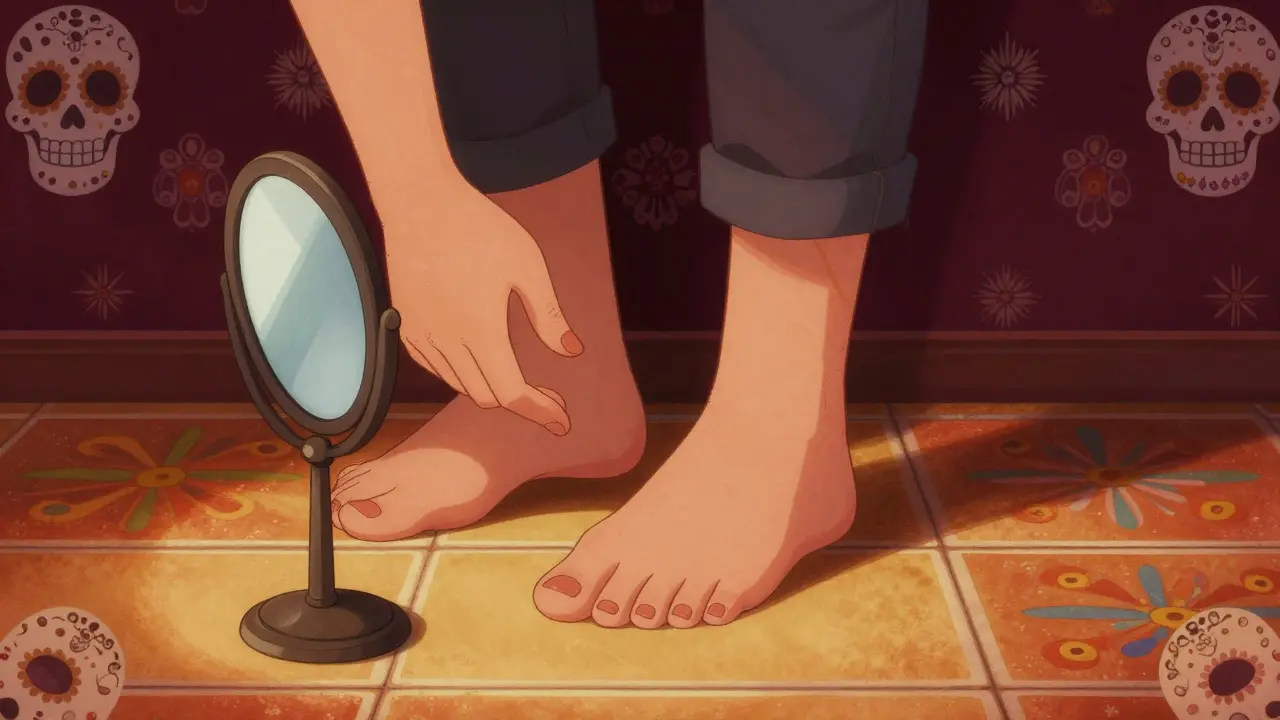
Every year, over 82,000 Americans lose a foot or leg to diabetes-related amputation. Most of these cases aren’t sudden. They start with a tiny cut, a blister, or a sore that goes unnoticed. For people with diabetes, even a small injury can turn into a life-altering problem - not because it’s infected, but because it was never seen in time. The good news? Diabetic foot ulcers are largely preventable. The key isn’t expensive treatments or complicated surgeries. It’s a simple, daily habit: checking your feet.
Why Diabetic Feet Are at Risk
Diabetes doesn’t just raise blood sugar. It damages nerves and blood vessels, especially in the feet. Nerve damage, called diabetic neuropathy, means you might not feel pain, heat, or pressure. You could step on a nail, rub a toe raw in your shoe, or burn your foot on a heater - and not know it. At the same time, poor circulation slows healing. A small break in the skin doesn’t get the blood flow it needs to repair itself. That’s how a minor irritation becomes a deep ulcer, then an infection, and sometimes, an amputation.The International Working Group on the Diabetic Foot (IWGDF) is an international panel of podiatrists, endocrinologists, and vascular surgeons that sets global standards for diabetic foot care estimates that 15% to 25% of all people with diabetes will develop a foot ulcer at some point in their lives. And once you’ve had one, your risk of another jumps dramatically. The good news? Daily inspection cuts that risk by more than half.
The 7-Step Daily Foot Inspection Checklist
This isn’t a suggestion. It’s a medical protocol backed by data from NYU Langone Health, the CDC, and the IWGDF. Do it every single day, same time, same way. Here’s how:- Wash feet in lukewarm water - between 90°F and 95°F. Too hot? You won’t feel it. Use your elbow or a thermometer. Mild soap only. No Epsom salts, no vinegar soaks. They can dry out skin and make cracks worse.
- Dry thoroughly - especially between toes. Moisture there invites fungal infections. Use a soft towel. Gently pat, don’t rub.
- Inspect every surface - top, bottom, sides, between toes. Use a mirror if you can’t see the bottom of your feet. A 12-inch handheld mirror works. If you can’t reach or see, ask a family member. Don’t skip this step. Over 68% of ulcers start from injuries you never noticed.
- Look for specific warning signs -
- Blisters larger than 3mm
- Cuts deeper than 1mm
- Abrasions or scrapes
- Ingrown toenails (especially if the nail is lifting or red around the edge)
- Fungal infections - white or yellow patches, flaky skin, odor
- Watch for infection signs -
- Redness larger than 1cm
- Swelling that increases foot circumference by 5% or more
- Warmth - if one foot feels noticeably warmer than the other, that’s a red flag. Normal skin temperature is around 98.6°F. Anything above 99°F in one spot is concerning.
- Moisturize - apply unscented lotion to dry skin. Avoid putting lotion between toes. That’s where moisture builds up and breeds fungus.
- Trim nails straight across - leave 1-2mm of nail beyond the tip of your toe. Don’t round the edges. Don’t cut too short. Use clippers designed for toenails. If your nails are thick or yellow, see a podiatrist. Don’t try to file them down yourself.
The CDC recommends doing this inspection between 10 a.m. and 2 p.m. Why? Your body temperature changes throughout the day. Checking in natural light during these hours gives you the clearest view and reduces false alarms from normal temperature shifts.
Footwear Isn’t Optional - It’s Life-Saving
You wouldn’t walk barefoot on gravel. But many people with diabetes do it - indoors, even. The CDC found that walking barefoot for just five minutes a day increases your risk of a foot ulcer by more than 11 times. Shoes aren’t just for outside.The 2023 IWGDF Guidelines state that inappropriate footwear causes 87% of forefoot ulcers and 79% of midfoot ulcers in people with neuropathy. That means your regular sneakers, flip-flops, or worn-out slippers are dangerous.
Here’s what to look for:
- Space - at least 0.5 inches (12.7mm) between your longest toe and the end of the shoe. If your toes touch the front, you’re asking for trouble.
- Width - your toes should have room to spread. A 15mm gap on the sides is ideal. If your foot feels squeezed, the shoe is too narrow.
- Heel support - the back of the shoe should be stiff enough to hold your heel without collapsing. A simple test: squeeze the heel counter. It shouldn’t flatten easily.
- Soles - thick, cushioned, and non-slip. Avoid thin soles. They don’t protect against pressure points.
If you have moderate or high risk (neuropathy with deformity, past ulcers, or amputation), you need therapeutic footwear custom-designed shoes and inserts that reduce plantar pressure by at least 25% during walking. Medicare and many private insurers cover these if your doctor prescribes them. Ask your podiatrist. Don’t wait until you have an ulcer.
What Not to Do
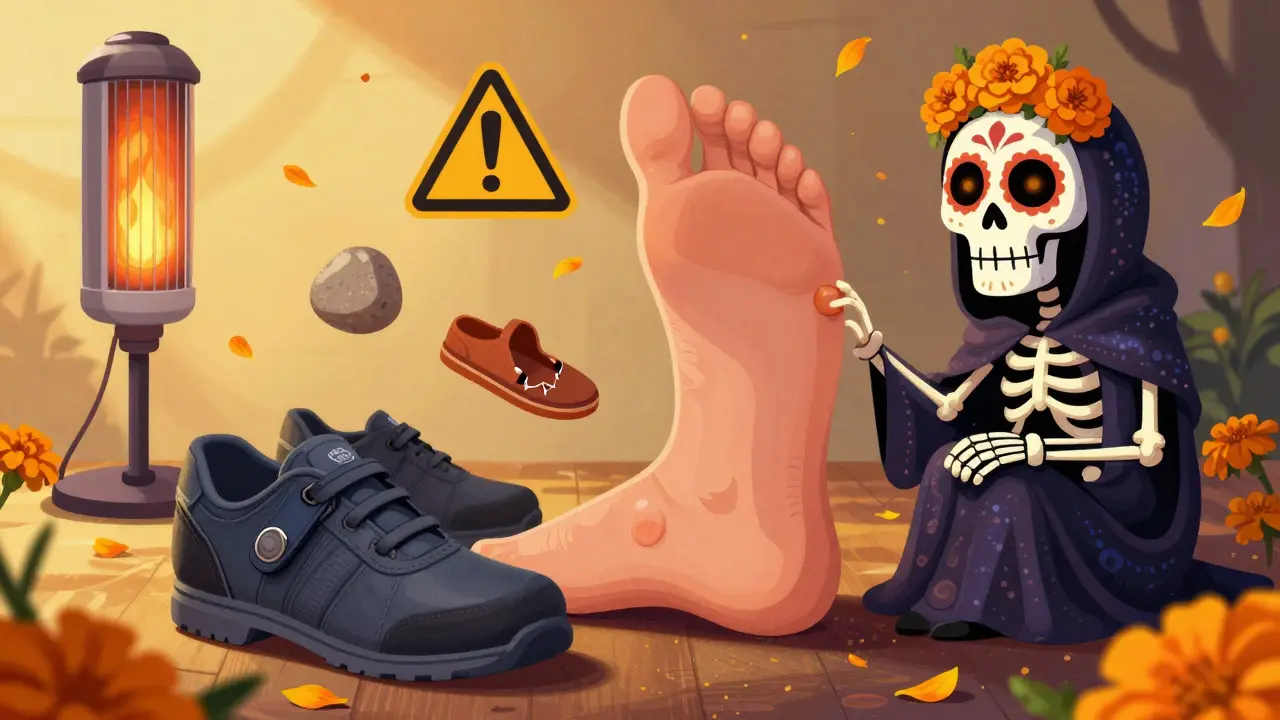
Some common advice sounds smart - but it’s not backed by science, and it can hurt you.- Don’t use heating pads or hot water bottles - you can’t feel how hot they are. Burns are common.
- Don’t cut calluses yourself - even with a pumice stone. You might cut too deep. Let a professional handle it.
- Don’t use over-the-counter corn removers - they contain acid that can burn skin. Your skin doesn’t heal the same way.
- Don’t go barefoot - not even in the house. Slippers with closed toes are better than nothing.
- Don’t ignore temperature changes - if one foot is colder than the other, it could mean poor blood flow. See your doctor.
The American Academy of Family Physicians (AAFP) notes that while foot care is widely recommended, evidence for some practices is weak - but daily inspection is one of the few with strong real-world outcomes. It’s not about doing everything perfectly. It’s about doing the basics, every day.
When to See a Doctor
You don’t need to panic over every little thing. But if you see any of these, call your doctor or podiatrist within 24 hours:- A blister, cut, or sore that doesn’t improve in two days
- Redness, swelling, or warmth that spreads
- Drainage or odor from a wound
- Any change in foot shape - a new arch, a dropped toe
- Foot pain that’s new or worse
Don’t wait for an emergency room. Early treatment stops ulcers from becoming infections. And infections? They’re what lead to amputations.

Real Barriers - And How to Overcome Them
Let’s be honest. Doing this every day is hard. A 2023 study found only 42% of people with diabetes stick to daily foot checks. Why? Vision problems, numbness, lack of time, or just forgetting.Here’s how to make it stick:
- Set a daily alarm - pair it with brushing your teeth. That’s a habit you already have.
- Use a checklist - print it. Tape it to your bathroom mirror.
- Ask for help - if you can’t see your feet, have someone do it with you. Make it part of your routine - like a morning coffee.
- Use technology - apps like FootCheck AI use your phone camera to detect changes in skin color or texture. They’re not perfect, but they help if you’re unsure.
- Get your shoes covered - if you’re on Medicare or have insurance, ask about therapeutic footwear. It’s often covered.
And don’t underestimate your doctor. Only 39% of primary care providers do the full annual foot exam. If yours doesn’t offer it, ask. You have the right to a comprehensive exam - including monofilament testing for nerve damage and ankle-brachial index (ABI) for circulation.
The Bigger Picture
Preventing a diabetic foot ulcer isn’t about avoiding one injury. It’s about changing your daily habits to protect your body. Every time you check your feet, you’re not just looking for cuts - you’re preventing amputation. You’re protecting your independence. You’re keeping your ability to walk, to work, to play with your kids or grandkids.The 2023 IWGDF Guidelines show that coordinated care - where your primary doctor, podiatrist, and diabetes educator work together - cuts ulcer rates by 36% and amputations by 42%. You don’t have to do this alone. But you do have to show up - every day.
It’s not about perfection. It’s about consistency. One day off can cost you your foot. One day of checking? It could save it.
How often should I check my feet if I have diabetes?
You should inspect your feet every single day. This isn’t optional - it’s medical protocol. The CDC and IWGDF both state that daily inspection is the single most effective way to prevent ulcers. Skipping even one day increases your risk. If you have high-risk factors like neuropathy, past ulcers, or poor circulation, your doctor may recommend checking twice a day - morning and night.
Can I use regular shoes if I have diabetes?
It depends on your risk level. If you have no nerve damage and no history of foot problems (Risk 0), well-fitting, supportive shoes may be okay. But if you have numbness, foot deformities, or past ulcers (Risks 1-3), you need therapeutic footwear. Regular shoes often cause pressure points that lead to ulcers. The IWGDF states that 87% of forefoot ulcers in neuropathic patients come from improper footwear. Don’t guess - get evaluated by a podiatrist.
Is it safe to soak my feet in Epsom salt or vinegar?
No. Soaking your feet in Epsom salt, vinegar, or other home remedies can dry out your skin and create cracks. These cracks are entry points for infection. The CDC and NYU Langone Health advise against soaking altogether. Just wash your feet with mild soap and lukewarm water. Dry thoroughly. That’s enough.
Do I need to see a podiatrist if I have no foot problems?
Yes - at least once a year. Even if your feet feel fine, you need a professional exam. This includes testing for nerve damage (using a 10g monofilament) and checking circulation (ankle-brachial index). Many people with diabetes have no symptoms until damage is advanced. A yearly exam catches problems early. If you’re at higher risk, you may need to go every 3 to 6 months.
Can I treat a small cut or blister at home?
Only if it’s truly minor - less than 1mm deep, no redness, no swelling, and no warmth. Clean it gently with water, cover it with a sterile bandage, and check it twice daily. If it doesn’t improve in 48 hours, or if you notice any redness, swelling, or drainage - call your doctor immediately. Don’t use antibiotic ointments unless prescribed. Overuse leads to resistance and delays healing.
Why is walking barefoot so dangerous for people with diabetes?
Because you can’t feel what’s happening. A tiny pebble, a hot floor, a sharp edge - none of it registers. The CDC found that walking barefoot for as little as five minutes a day increases ulcer risk by 11.3 times. Even indoors. Slippers without closed toes aren’t safe. Always wear shoes or socks with closed toes, even at home.
Are diabetic socks worth buying?
They can be helpful, but they’re not magic. Diabetic socks are seamless, non-constricting, and moisture-wicking. They reduce friction and prevent swelling. But they don’t replace proper shoes or daily inspections. If you have swelling or circulation issues, they may help. If you’re at low risk, regular cotton socks without seams work fine. Don’t spend extra money unless your doctor recommends them.
Can exercise cause foot ulcers?
Unsupervised exercise can. The Diabetic Medicine journal reported a 22% increase in ulcers among patients doing unsupervised ankle exercises without gait analysis. Walking is safe - if your feet are healthy. But repetitive stress on a foot with nerve damage can cause microtrauma that turns into an ulcer. Always get your feet checked before starting a new exercise routine. Use proper footwear. Stop if you feel pain or notice redness.
Irish Council
February 21, 2026 AT 09:43Freddy King
February 21, 2026 AT 19:46Ashley Paashuis
February 22, 2026 AT 03:47Davis teo
February 23, 2026 AT 23:18Michaela Jorstad
February 24, 2026 AT 02:01Danielle Gerrish
February 25, 2026 AT 20:55Liam Crean
February 26, 2026 AT 02:38Benjamin Fox
February 27, 2026 AT 16:31John Cena
February 27, 2026 AT 20:49aine power
March 1, 2026 AT 16:58