
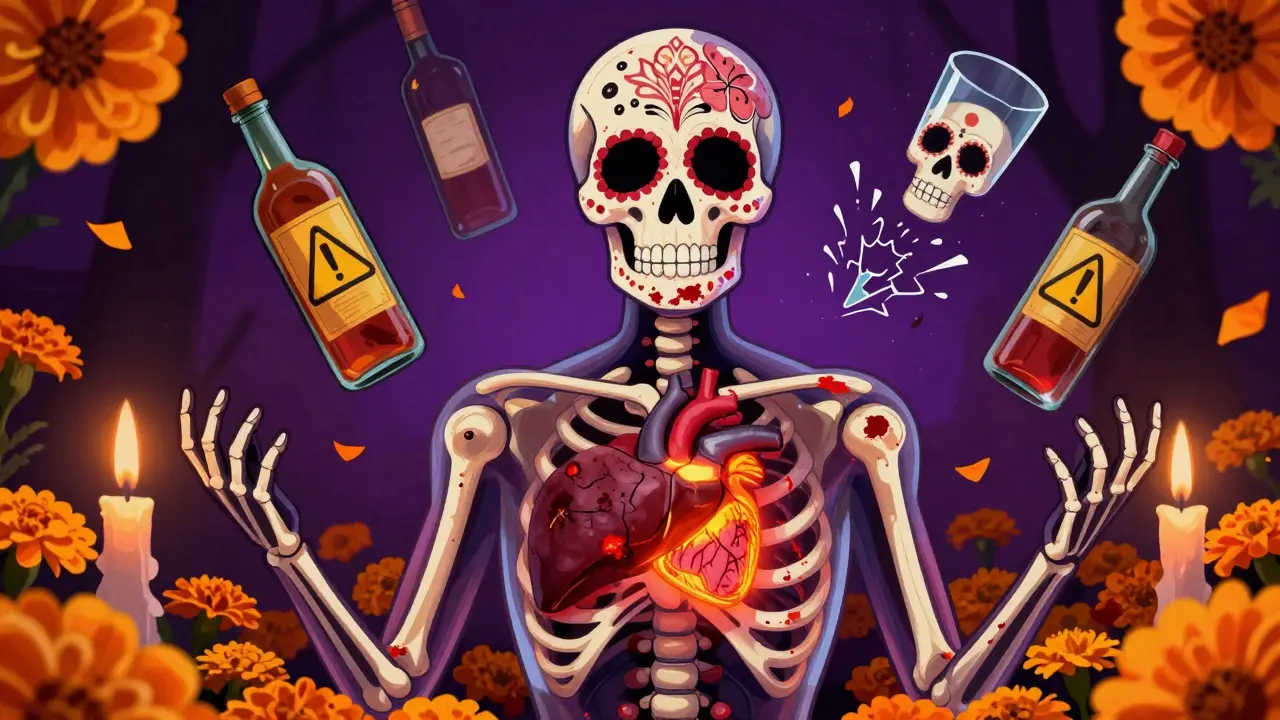
Chronic Alcohol Use Disorder (AUD) isn’t just about drinking too much. It’s a medical condition where your brain and body get stuck in a cycle of compulsive drinking-even when it’s destroying your health, relationships, or job. You might not realize it at first, but over time, your body starts needing alcohol just to feel normal. That’s not weakness. That’s biology. And the good news? It’s treatable.
What Happens to Your Body When You Drink Too Much for Too Long
Every time you drink, alcohol hits your brain, liver, heart, and immune system. At first, it might feel relaxing. But chronic use changes how your brain works. You build tolerance-meaning you need more to get the same effect. Then comes dependence. Skip a drink, and your body goes into overdrive: shaking, sweating, racing heart, nausea, even seizures. This isn’t just discomfort. It’s your nervous system screaming for alcohol.
Up to 90% of heavy drinkers develop fatty liver early on. That’s reversible-if you stop. But if you keep going, inflammation kicks in: alcoholic hepatitis. Your liver cells start dying. Then comes cirrhosis: scar tissue replaces healthy tissue. Once cirrhosis sets in, your liver can’t filter toxins, produce proteins, or store energy properly. Some damage can heal after quitting, but not all. The clock keeps ticking.
Your brain isn’t safe either. Chronic alcohol use shrinks brain tissue. Memory falters. Thinking slows. Some people develop Wernicke’s encephalopathy-a brain disorder caused by thiamine (vitamin B1) deficiency. Symptoms? Confusion, trouble walking, weird eye movements. Left untreated, it can lead to permanent dementia. Alcohol also damages nerves in your hands and feet, causing numbness and burning pain.
Heart problems? Common. Heavy drinking raises blood pressure by up to 16% in people with hypertension. It causes irregular heart rhythms-like atrial fibrillation-increasing stroke risk by 34%. Heart attacks become more likely. Your immune system weakens too. Alcoholics are nearly three times more likely to get pneumonia. Even minor infections can turn deadly.
Cancer Risk Goes Up With Every Drink
Alcohol is a known carcinogen. The American Cancer Society says it increases the risk of at least seven types of cancer. Mouth and throat cancer? Risk jumps fivefold for heavy drinkers. Liver cancer? Up there with hepatitis and obesity. Breast cancer? Each daily drink raises risk by 12%. Even moderate drinking adds up. There’s no safe level when it comes to cancer risk. The more you drink, the higher the chance-no exceptions.
It’s Not Just Physical-Mental Health Takes a Hit
Depression and anxiety don’t just coexist with AUD-they feed each other. People drink to cope with stress, but alcohol messes with serotonin and dopamine. Over time, your brain produces less of these naturally. You feel worse. You drink more. It’s a loop. Many people with AUD also struggle with suicidal thoughts. Studies show alcohol use triples the risk of suicide.
Relationships crumble. Jobs vanish. Finances collapse. One study found that nearly half of people with severe AUD experience homelessness or housing instability. Kids grow up in chaotic homes. Partners leave. Friends drift away. The isolation makes recovery harder. But it’s not too late.
How Is AUD Diagnosed?
Doctors don’t diagnose AUD based on how often you drink. They look at how it affects your life. The DSM-5, the standard guide used by clinicians, lists 11 criteria. If you’ve had two or more in the past year, you have AUD. Examples: drinking more than you planned, failing to cut back, spending lots of time getting or recovering from alcohol, giving up hobbies because of drinking, continuing to drink even when it causes health problems.
There’s no blood test for AUD. But doctors can spot signs: liver enzyme changes, low thiamine levels, brain imaging showing shrinkage, or physical symptoms like jaundice or tremors. If you’re asking yourself if you have a problem-you probably do. And that’s the first step.
Treatment Isn’t One-Size-Fits-All
There’s no magic pill. But there are proven tools. Treatment works best when it combines medicine, therapy, and support.
Medications: Three FDA-approved drugs help. Naltrexone blocks the pleasurable effects of alcohol, reducing cravings. Acamprosate helps stabilize brain chemistry after quitting. Disulfiram makes you sick if you drink-so you avoid it. These aren’t cures, but they give your brain time to reset.
Therapy: Cognitive Behavioral Therapy (CBT) is the gold standard. It helps you spot triggers-stress, boredom, social pressure-and replace drinking with healthier responses. Studies show CBT cuts heavy drinking days by 60%. Motivational Enhancement Therapy helps if you’re unsure you want to quit. It’s not about forcing change-it’s about helping you find your own reasons.
Detox: If you’ve been drinking heavily for months or years, quitting cold turkey can be deadly. Seizures and delirium tremens (DTs) can happen within 48 hours. Medically supervised detox in a hospital or clinic is essential. Doctors monitor your vitals and give medications to ease withdrawal safely.
Support Groups: Alcoholics Anonymous (AA) has helped millions since 1935. Their 12-step program isn’t for everyone, but it works for many. One 2014 survey found 27% of members stayed sober after a year. Newer groups like SMART Recovery focus on science-backed tools instead of spirituality. Both offer community-something most people in recovery say they couldn’t have done without.

New Treatments Are Emerging
Science is catching up. In 2022, a JAMA Psychiatry study found transcranial magnetic stimulation (TMS)-a non-invasive brain stimulation technique-led to 50% abstinence rates after 12 weeks. The FDA approved the reSET app in 2017. It’s a digital therapy tool that delivers CBT on your phone. In trials, users had 40.7% abstinence rates versus 17.4% in the control group.
The MATTERS study showed combining medication with therapy boosted abstinence by 24% compared to either alone. That’s huge. It proves that treating the brain and the behavior together works better than either alone.
Why So Few People Get Help
Only 19.2% of the 14.5 million Americans with AUD get treatment. Why? Shame. Fear. Cost. Lack of access. Many think they can quit on their own. They try. They fail. They feel broken. But AUD isn’t a character flaw-it’s a brain disease. Just like diabetes or asthma, it needs ongoing care.
Insurance often doesn’t cover enough therapy or medication. Treatment centers are scarce, especially outside big cities. And many doctors still don’t screen for AUD. If you’re seeing a doctor for high blood pressure or liver issues, they should ask about alcohol. But they often don’t.
Recovery Is Possible-Even After Years
I’ve seen people in their 50s, after 30 years of heavy drinking, rebuild their lives. Their liver healed. Their memory improved. They got their kids back. They got jobs. They stopped hiding. It wasn’t easy. But it was worth it.
Recovery doesn’t mean never having a drink again. For some, it means cutting back. For others, it means total abstinence. There’s no right way-only what works for you. The key is starting. Even one day sober gives your body a chance to heal.
Alcohol doesn’t have to be your ending. It can be the beginning of something better.
Can you reverse liver damage from alcohol?
Yes, in early stages. Fatty liver and mild inflammation can reverse within weeks of stopping alcohol. But once cirrhosis (scarring) develops, the damage is permanent. Still, quitting can stop further harm and improve liver function. Some people with advanced cirrhosis live for years after quitting, especially if they get medical care.
Is AUD the same as alcoholism?
Yes, but AUD is the modern medical term. Before 2013, doctors used "alcohol abuse" and "alcohol dependence" as separate diagnoses. Now, they’re combined into one condition: Alcohol Use Disorder. It’s graded as mild, moderate, or severe. "Alcoholism" is still used in everyday language, but it’s not a clinical term anymore.
How long does alcohol withdrawal last?
Symptoms start 6-12 hours after your last drink. Mild symptoms like anxiety and tremors peak at 24-72 hours. Severe symptoms like seizures or delirium tremens can happen 48-96 hours in. Most physical symptoms fade after a week, but sleep problems, irritability, and cravings can last months. Medical supervision during detox reduces risks dramatically.
Do medications for AUD just replace one addiction with another?
No. Medications like naltrexone and acamprosate don’t create euphoria or dependence. They help reduce cravings and stabilize brain chemistry so you can focus on therapy and lifestyle changes. Think of them like insulin for diabetes-they treat the condition, not cause it. They’re safe for long-term use under medical supervision.
Can you drink moderately after recovering from AUD?
For most people with moderate to severe AUD, the answer is no. The brain changes from chronic use make controlled drinking extremely risky. Studies show over 80% of people who try to drink moderately relapse within a year. Abstinence is the safest path. For a very small group with mild AUD, moderation might work-but only under strict medical guidance and with ongoing monitoring.
What’s the most effective treatment for AUD?
The most effective approach combines medication with behavioral therapy. The MATTERS study showed this combo increased abstinence by 24% compared to either alone. CBT, motivational interviewing, and support groups like AA or SMART Recovery are all proven. The best treatment is the one you stick with-so find what fits your life.
Is AUD more common in men or women?
Men are more likely to be diagnosed with AUD, but women are more vulnerable to alcohol’s physical damage. Because of body composition, women absorb more alcohol per drink and metabolize it slower. This means they develop liver disease, brain damage, and heart problems faster than men-even with less alcohol over time. The gap is closing as drinking rates rise among women.
Can AUD lead to dementia?
Yes. Chronic heavy drinking is one of the leading preventable causes of early-onset dementia. Alcohol destroys brain cells and shrinks the frontal lobe, which controls decision-making and impulse control. Thiamine deficiency can cause Wernicke-Korsakoff syndrome, a form of dementia marked by memory loss and confusion. Quitting can slow or stop progression-but some damage may be permanent.
Rob Deneke
January 16, 2026 AT 06:03Stop waiting for rock bottom. You’re already on it.
evelyn wellding
January 16, 2026 AT 23:30Chelsea Harton
January 17, 2026 AT 17:53Nick Cole
January 18, 2026 AT 13:29Isabella Reid
January 20, 2026 AT 10:40Jody Fahrenkrug
January 22, 2026 AT 06:32Ryan Hutchison
January 22, 2026 AT 23:22Samyak Shertok
January 23, 2026 AT 21:39Corey Chrisinger
January 23, 2026 AT 22:44