
C. difficile Risk Calculator
Assess Your Risk of C. difficile Infection
C. difficile infections are often linked to antibiotic use. This calculator helps you understand your personal risk based on medical factors. Use this information to discuss prevention with your healthcare provider.
Your C. difficile Risk Assessment
When you take an antibiotic to fight a bacterial infection, you expect to feel better. But for many people, the cure comes with a painful side effect: diarrhea. Sometimes, it’s mild and goes away on its own. Other times, it’s severe, persistent, and signals something far more dangerous - a C. difficile infection. This isn’t just a bad stomach bug. It’s a life-threatening condition that’s become more common, more resistant, and harder to treat than ever before.
What Exactly Is C. difficile?
Clostridioides difficile (C. diff) is a bacterium that lives harmlessly in the guts of some people - until antibiotics wipe out the good bacteria that keep it in check. Once it takes over, it releases toxins that attack the lining of the colon, causing severe diarrhea, cramping, fever, and in the worst cases, life-threatening inflammation.
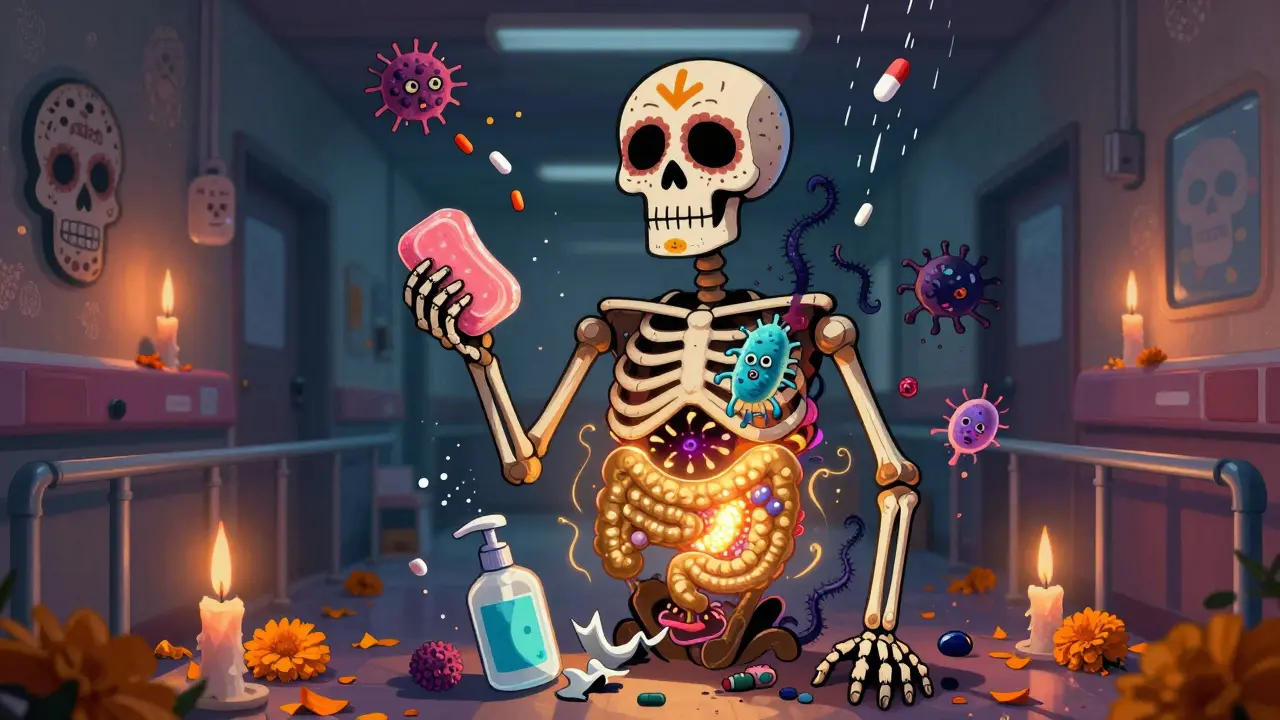
It’s not just any bacteria. C. diff forms spores - tiny, tough shells that can survive for months on doorknobs, bed rails, and even toilet seats. Standard hand sanitizers don’t kill them. Only soap and water do. That’s why hospitals see so many outbreaks. And it’s why you’re at higher risk if you’ve been in a nursing home, hospital, or long-term care facility for more than three days.
Not every antibiotic causes this. But some are far more likely to trigger C. diff than others. Fluoroquinolones like ciprofloxacin, clindamycin, and third- or fourth-generation cephalosporins like ceftriaxone are the biggest culprits. Even a short course - three to five days - can be enough to throw your gut microbiome out of balance. The CDC estimates that 30% to 50% of antibiotic prescriptions in hospitals are unnecessary. That’s half of all cases potentially avoidable.
How Do You Know It’s C. diff and Not Just a Tummy Bug?
Diagnosing C. diff isn’t straightforward. Many patients are first told they have a virus or irritable bowel syndrome. In fact, a 2023 analysis of patient forums found that nearly 4 out of 10 people with C. diff were misdiagnosed at first.
The symptoms are similar to other GI issues: watery diarrhea (three or more times a day), abdominal pain, fever, nausea, and loss of appetite. But there are red flags:
- Diarrhea started within days or weeks of taking antibiotics
- Stool is foul-smelling and contains mucus or blood
- You’ve been hospitalized or in a care facility recently
- You’re over 65 or have a weakened immune system
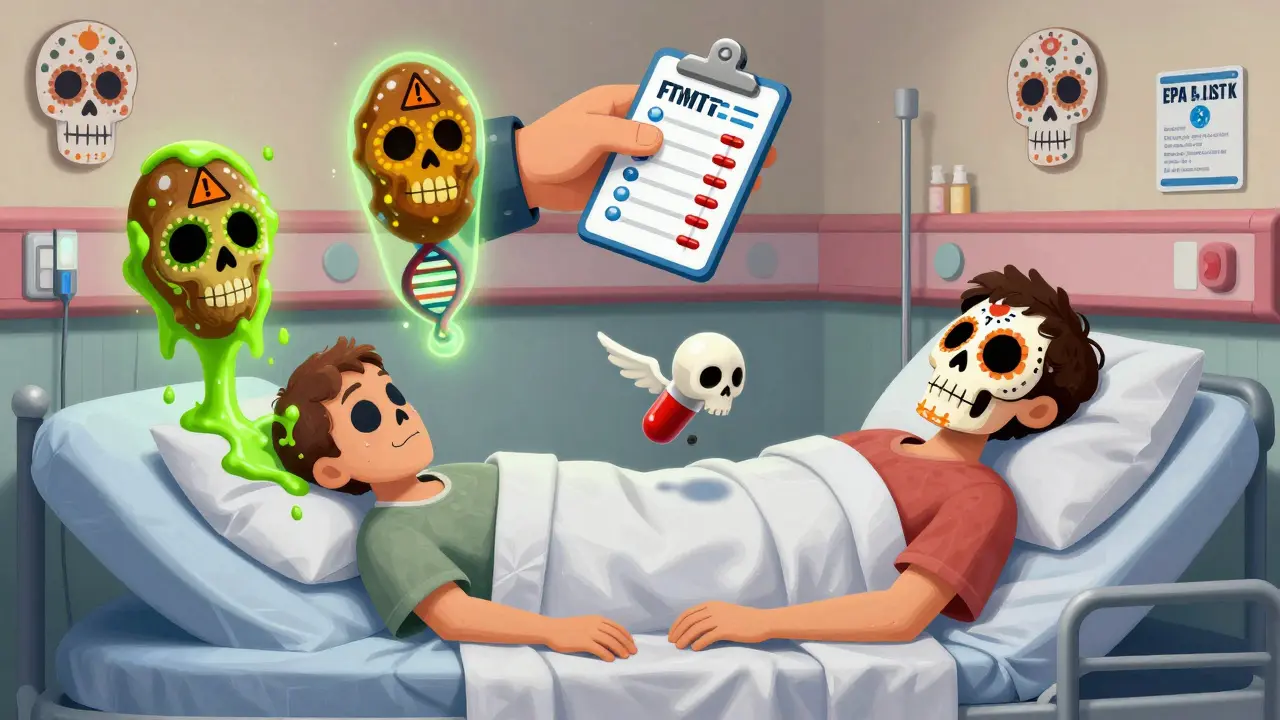
Doctors don’t rely on symptoms alone. They test stool samples using a two-step process: first, a screening test for a C. diff enzyme called GDH, then a toxin test or a DNA test (NAAT) to confirm the presence of the actual toxin-producing strain. The test only works if the stool is unformed - no laxatives in the last 48 hours. If you’re taking anti-diarrheal meds like loperamide (Imodium), stop them. They trap the toxins inside your colon and can make things worse.
What Are the Treatment Options Today?
Treatment has changed dramatically in the last decade. Ten years ago, metronidazole (Flagyl) was the go-to drug. Now, it’s barely used.
Why? Because it’s failing. Studies show its failure rate has jumped from under 15% to 30-40% in recent years. The CDC and Infectious Diseases Society of America (IDSA) stopped recommending it as first-line therapy in 2017. It’s now only considered if vancomycin or fidaxomicin aren’t available.
Here’s what’s used now:
- Vancomycin: 125 mg four times a day for 10 days. It’s effective, widely available, and costs about $40 for a full course.
- Fidaxomicin: 200 mg twice a day for 10 days. It’s more expensive - around $3,350 - but it’s better at preventing recurrence. In clinical trials, only 13% of patients on fidaxomicin had a second infection, compared to 22% on vancomycin.
For severe cases - defined by a white blood cell count over 15,000 or elevated creatinine - doctors use higher doses of vancomycin (500 mg four times daily) and may add intravenous metronidazole. If the patient has ileus (a paralyzed bowel), rectal vancomycin enemas are sometimes used to deliver the drug directly to the colon.
For the most stubborn cases - those with multiple recurrences - doctors turn to advanced options:
- Fecal microbiota transplantation (FMT): This involves transferring healthy donor stool into the patient’s colon. It restores the gut microbiome and has an 85-90% success rate for people who’ve had three or more recurrences. In 2022, the FDA approved Rebyota, the first FDA-approved FMT product delivered as a rectal suspension.
- Bezlotoxumab (Zinplava): This is a monoclonal antibody that neutralizes one of C. diff’s main toxins. Given as a single IV infusion alongside antibiotics, it reduces recurrence risk by 10 percentage points. It’s used for high-risk patients - those over 65, with prior recurrences, or with serious underlying conditions.
- Vowst: Approved in April 2023, this is a new oral capsule made of freeze-dried bacterial spores. It’s designed to prevent recurrence after antibiotic treatment and is easier to use than FMT.
One patient on a health forum wrote: “After seven recurrences over 18 months, one FMT cleared me for good. I wish I hadn’t waited so long.” That’s not an outlier. For many, FMT is life-changing.
Why Do Some People Keep Getting It Back?
Recurrence is the biggest challenge. Up to 20% of people who get C. diff once will get it again. After that, the chance of another recurrence jumps to 40-60%. Why?
Antibiotics don’t just kill bad bacteria - they destroy the good ones that protect your gut. If the microbiome doesn’t recover, C. diff spores can reactivate. That’s why continuing antibiotics after the infection is gone can make things worse. Some patients are on multiple antibiotics for other conditions - urinary infections, pneumonia, skin infections - and each one resets the clock.
For second recurrences, doctors often use a tapered vancomycin schedule: 125 mg four times daily for 10-14 days, then twice daily for 7 days, then once daily for 7 days, then every 2-3 days for up to 8 weeks. This slowly rebuilds the gut environment instead of shocking it.
Another option is fidaxomicin followed by rifaximin - a non-absorbable antibiotic that targets gut bacteria without affecting the rest of the body. It’s not FDA-approved for this use, but it’s used off-label with growing success.
How Can You Prevent C. diff in the First Place?
Prevention is simpler than treatment - but harder to do in practice.
1. Use antibiotics only when necessary. If your doctor says you have a viral infection - like a cold or flu - don’t push for antibiotics. They won’t help. And they could put you at risk.
2. Practice good hand hygiene. Alcohol-based sanitizers don’t kill C. diff spores. Wash your hands with soap and water for at least 20 seconds, especially after using the bathroom and before eating. This is critical for patients and caregivers.
3. Clean surfaces properly. In hospitals, disinfectants must be on the EPA’s List K - specifically approved to kill C. diff spores. Bleach-based cleaners work. Regular disinfectants don’t.
4. Consider probiotics - but don’t count on them. Some studies show that Saccharomyces boulardii or Lactobacillus rhamnosus GG may reduce C. diff risk by up to 60% in certain high-risk groups. But the IDSA doesn’t recommend routine use because the evidence isn’t consistent. If you do use them, start them the same day you start antibiotics.
5. Talk to your doctor about alternatives. For some infections, narrow-spectrum antibiotics like penicillin or amoxicillin are safer than broad-spectrum ones. Ask: “Is this antibiotic really needed? Is there a gentler option?”
What Happens After You Recover?
Recovery isn’t just about the diarrhea stopping. Many patients report lingering symptoms:
- Brain fog: 45% of patients say they feel mentally sluggish for weeks after the infection clears.
- Chronic fatigue: 37% say they’re exhausted long after the bowel symptoms end.
- Dietary changes: 82% avoid dairy, spicy foods, caffeine, or high-fiber meals for weeks or months.
Some people never fully regain their pre-infection gut health. That’s why diet matters. Focus on easily digestible foods: bananas, rice, applesauce, toast. Gradually add fermented foods like plain yogurt or kefir to help rebuild good bacteria. Avoid sugar and processed carbs - they feed bad bacteria.
And don’t rush back to antibiotics. If you need another course later, tell your doctor about your history. They may choose a different drug or add a preventive strategy.
Why This Problem Is Getting Worse
C. diff is no longer just a hospital problem. The CDC now classifies it as an “urgent threat.” Community-acquired cases - infections caught outside hospitals - have jumped 24% since 2012. More people are getting it after outpatient antibiotic use. More strains are becoming resistant. More recurrences are happening.
Hospitals with strong antibiotic stewardship programs - teams that review prescriptions and reduce unnecessary use - have cut C. diff rates by 26% since 2011. But only 78% of U.S. hospitals have such programs. And many don’t have fidaxomicin or FMT available due to cost or logistics.
The financial burden is huge. C. diff costs the U.S. healthcare system nearly $5 billion a year. A single case can add $20,000 to $30,000 in hospital costs. And that’s before accounting for lost workdays, long-term care, or the emotional toll on patients and families.
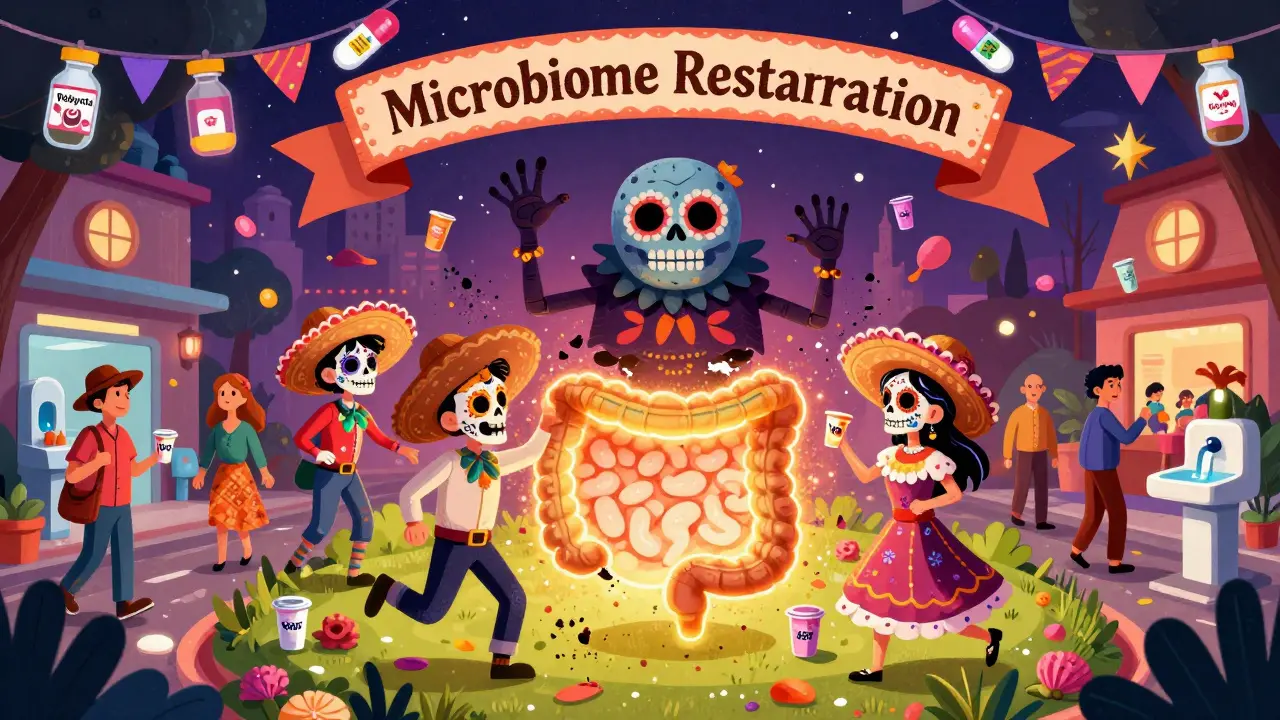
But there’s hope. New drugs like ridinilazole - currently in phase III trials - show better results than vancomycin and fewer recurrences. Point-of-care tests that can diagnose C. diff in under an hour are in development. And microbiome-targeted therapies are becoming the new standard.
As one CDC expert put it: “Microbiome-targeted therapies will become standard of care for recurrent C. diff within five years.” That’s not science fiction. It’s the next frontier.
Frequently Asked Questions
Can probiotics prevent C. difficile infection?
Some probiotics, like Saccharomyces boulardii and Lactobacillus rhamnosus GG, have shown promise in reducing C. diff risk by up to 60% in high-risk patients - especially those on broad-spectrum antibiotics. But the evidence isn’t strong enough for major medical groups to recommend them routinely. If you choose to use them, start on the same day as your antibiotic and continue for a week after finishing the course.
Is C. difficile contagious?
Yes. C. diff spreads through spores in feces. If someone with the infection doesn’t wash their hands properly, they can contaminate surfaces, food, or objects. Others touch those surfaces and then touch their mouth. That’s how it spreads - especially in hospitals, nursing homes, and other close-contact settings. You can catch it even if you’re not sick yourself.
Can I get C. difficile without taking antibiotics?
It’s rare, but possible. About 20% of C. diff cases now occur in people who haven’t taken antibiotics in the past 3 months. These are called community-associated cases. Risk factors include older age, recent hospital visits, chronic illness, or living with someone who has C. diff. The bacteria can also be present in food or water, though this is less common.
Why can’t I take Imodium or other anti-diarrhea meds?
Anti-diarrheal drugs like loperamide slow down your bowels, which traps the C. diff toxins inside your colon. Instead of flushing them out, your body absorbs more of them - making the inflammation worse. In severe cases, this can lead to toxic megacolon, a life-threatening condition. Always check with your doctor before taking any diarrhea medicine if you suspect C. diff.
How long does it take to recover from C. difficile?
Most people start feeling better within 2-3 days of starting the right antibiotic. But full recovery can take weeks. Diarrhea may stop, but fatigue, brain fog, and dietary sensitivity can linger. Some patients report feeling off for months. Recurrence is common - up to 20% after the first episode. That’s why follow-up care and avoiding unnecessary antibiotics afterward are just as important as the initial treatment.
Is FMT safe? What are the risks?
FMT is considered safe when done through FDA-approved products like Rebyota or Vowst, which use screened donor material. The biggest risk is introducing unknown pathogens - which is why donor screening is strict. In rare cases, patients have developed infections from contaminated material. But in properly regulated settings, serious side effects are extremely rare. Most patients report no side effects beyond mild bloating or cramping.
What Comes Next?
If you’ve had C. diff, your next steps matter. Keep a log of your symptoms, diet, and medications. Talk to your doctor about whether you need stool testing before starting any new antibiotics. Ask about probiotics or microbiome-supporting foods. And if you’re in a care facility, remind staff to wash their hands - even if they’re wearing gloves.
For everyone else: Don’t take antibiotics lightly. Ask questions. Push back if you’re told you need one for a virus. Your gut microbiome is more important than you think - and it’s the first line of defense against C. diff.
Kitty Price
December 17, 2025 AT 04:42So glad this got posted. I had C. diff after a 5-day course of amoxicillin for a sinus infection I didn’t even need. Took me 6 months to feel like myself again. 🙃
Randolph Rickman
December 18, 2025 AT 02:06Let me tell you something real - most doctors treat antibiotics like candy. I’ve seen patients get cipro for a sore throat that was clearly viral. C. diff isn’t some rare horror story - it’s the direct result of lazy prescribing. And now we’ve got FDA-approved poop pills? That’s not science fiction, that’s just what happens when we ignore the microbiome for 50 years. Fidaxomicin is expensive? So’s a 3-month hospital stay. Stop treating symptoms and start treating the whole damn system. Your gut isn’t a separate room - it’s your second brain, your immune HQ, your emotional thermostat. If you’re still on metronidazole in 2024, you’re practicing medicine from 2009.
sue spark
December 18, 2025 AT 12:46My mom got C diff after her hip surgery and they gave her Flagyl first like it was 2010. She was in agony for weeks. When they switched to vancomycin she started eating again. I wish I’d known then about the stool tests and not letting her take Imodium. Now I tell everyone I know to ask about antibiotics before they take them
Billy Poling
December 19, 2025 AT 14:04It is imperative to underscore the significance of antibiotic stewardship as a foundational pillar in the mitigation of Clostridioides difficile infections, particularly within institutional healthcare environments where the prevalence of spore transmission remains alarmingly elevated due to inadequate disinfection protocols and the routine utilization of broad-spectrum antimicrobial agents. The data presented in this article, while comprehensive, fails to adequately address the systemic failures in hospital policy that perpetuate this crisis, including the absence of mandatory microbiome screening prior to antibiotic administration and the lack of standardized protocols for fecal microbiota transplantation accessibility across regional healthcare networks. Furthermore, the economic burden, estimated at five billion dollars annually, represents not merely a fiscal concern but a moral indictment of a medical industrial complex that prioritizes profit over preventive care.
Kayleigh Campbell
December 21, 2025 AT 08:26So we’re saying the cure is now… poop in a capsule? 🤯 I mean, I guess if your gut’s been nuked by antibiotics, the only thing left is to invite a stranger’s colon to move in. At least Vowst doesn’t require a colonoscopy. I’d take a pill over a tube any day. Still, I’m just glad we’re finally treating the gut like it’s part of the body and not a magical black box that just poops when you say the magic word ‘antibiotics’.
Dave Alponvyr
December 22, 2025 AT 17:25Stop taking antibiotics for a cold. That’s it. That’s the whole post.
Josias Ariel Mahlangu
December 23, 2025 AT 03:24People these days think their gut is a temple. It’s not. It’s a sewer. You take antibiotics, you get diarrhea. That’s nature’s way of saying you messed up. No one needs a 2000-word essay on microbiomes. Just stop being lazy and don’t demand pills for every sniffle.
Aditya Kumar
December 25, 2025 AT 00:56lol i just took amoxicillin last week and now my stomach feels weird. maybe i should’ve just slept it off
James Rayner
December 25, 2025 AT 19:56There’s something deeply human about this - how we’ve forgotten that our bodies aren’t machines to be fixed with chemicals, but ecosystems to be respected. We kill the bad, but we don’t rebuild the good. We treat symptoms, not stories. C. diff isn’t just a bacterium - it’s the echo of our arrogance. We thought we could conquer infection with a pill, but we forgot we’re part of a web. And when you pull one thread, the whole thing trembles. Maybe the real cure isn’t in the lab… it’s in humility.
Kim Hines
December 26, 2025 AT 01:20I had three recurrences. FMT was the only thing that worked. Now I eat sauerkraut every day and I don’t even think about antibiotics unless I’m literally dying. And I still wash my hands like I’m in an ICU.
Arun ana
December 26, 2025 AT 01:46Just want to add - if you’re on antibiotics, start probiotics same day. I’ve done it for my dad and my sister. No C diff so far. Not magic, but worth a shot. And yes, soap and water > sanitizer. Learned that the hard way 😅
Andrew Sychev
December 27, 2025 AT 15:11Oh wow, so now we’re giving people poop pills? That’s the future? What’s next - blood transfusions from strangers to cure anxiety? This is why I don’t trust modern medicine. First they give you antibiotics like water, then they say ‘oops, we broke your gut’ and now they’re selling you fecal smoothies. I’m not surprised. The system is broken. And you people just keep clicking ‘yes’ to every pill they hand you. Wake up.